
The most read Vietnamese newspaper
Edition: International | Vietnamese
© Copyright 1997 VnExpress.net. All rights reserved.
These three 2025 honorees, featured on the unranked list for their philanthropic contributions over the past two years, share a common emphasis on supporting education as their way of giving back.
Malaysia’s Jeffrey Cheah
 |
|
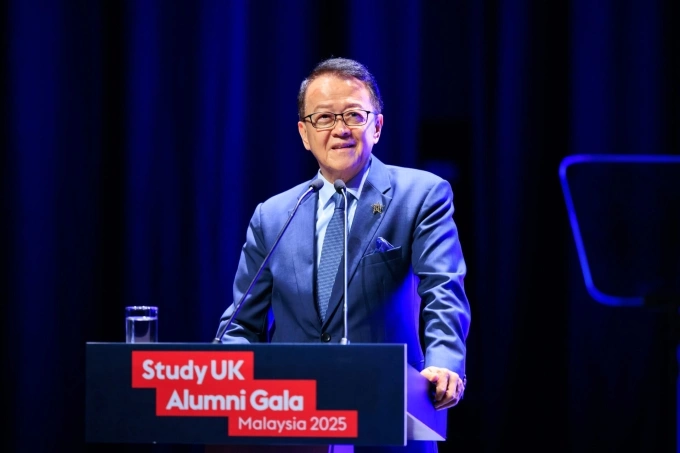
Jeffrey Cheah. Photo from Sunway Group's website |
Jeffrey Cheah, 80, made the list for the fifth time. The tycoon last month announced a RM500 million (US$121 million) education endowment, one of Malaysia’s largest, to drive academic excellence, world-class research and innovation at Sunway University, which he started in 2004.
Earlier in August, he gave RM5 million to establish the Tan Sri Sir Jeffrey Cheah Distinguished Chair at Universiti Kebangsaan Malaysia’s Faculty of Medicine and RM7 million to upgrade facilities at two primary schools in Malaysia’s western state of Selangor.
The tycoon’s Jeffrey Cheah Foundation, established in 2010, has distributed over RM967 million in scholarships and grants to date, benefiting tens of thousands of students including many from underprivileged households, according to The Star.
Cheah is the founder and chairman of Sunway Group, one of Malaysia’s largest conglomerates with interests in construction, education, healthcare, infrastructure and property. His net worth is estimated at US$4.4 billion.
He once said in an interview with CNBC that he hopes to "do good for mankind" and that his guiding motto has long been: "I aspire to inspire before I expire."
"To help bring better prospects, better future, better health, better well-being, (eradicate) poverty and all these things. That’s my hope, as my legacy," he said.
Singapore’s Wee family
 |
|
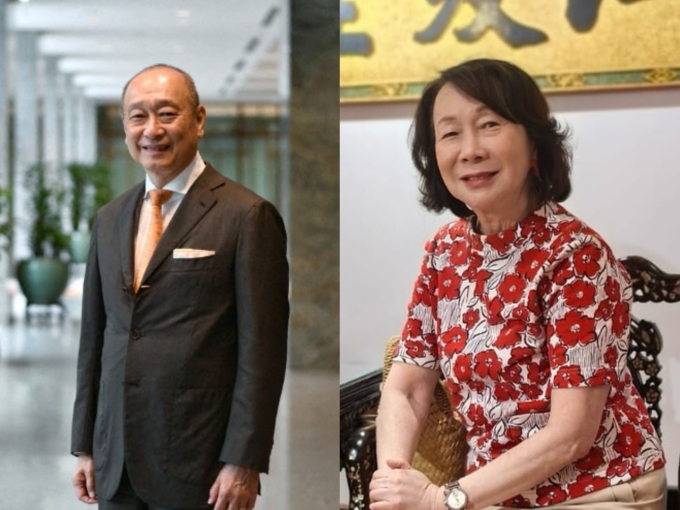
Wee Ee Cheong (L) and Wee Wei Ling. Photo by SPH Media via AFP and from Wee Wei Ling's Instagram |
The billionaire Wee family’s philanthropic arm, Wee Foundation, and banking empire United Overseas Bank in April donated S$110 million (US$86 million) to Singapore’s Nanyang Technological University. The contribution forms an endowment of up to S$275 million thanks to a matching grant from the city-state’s government.
A few months later, it donated another S$5.7 million to the Nursing Academic Fund, which it launched in 2022 to back graduate studies and professional training for nurses at SingHealth hospitals.
The foundation is represented by siblings Wee Ee Cheong, 73, and Wee Wei Ling, 72, both children of the late billionaire banker Wee Cho Yaw, who passed away in early 2024.
"Our late Chairman Emeritus and Honorary Adviser Dr Wee Cho Yaw always emphasised the importance of remembering our roots and giving back to society," Ee Cheong said in a press release for the NTU donation.
The Wee family is Singapore’s richest banking dynasty, according to Bloomberg. They ranked 8th among the city-state’s 50 richest in September, boasting a combined net worth of US$10 billion.
Besides UOB, their wealth also stems from holdings in other major firms, including Haw Par, the manufacturer of the iconic Tiger Balm analgesic, and property developers UOL Group and Kheng Leong.
Individually, Ee Cheong has a net worth of US$2.3 billion, while Wei Ling’s fortune was estimated at US$800 million last year.
Indonesia’s Low Tuck Kwong
 |
|
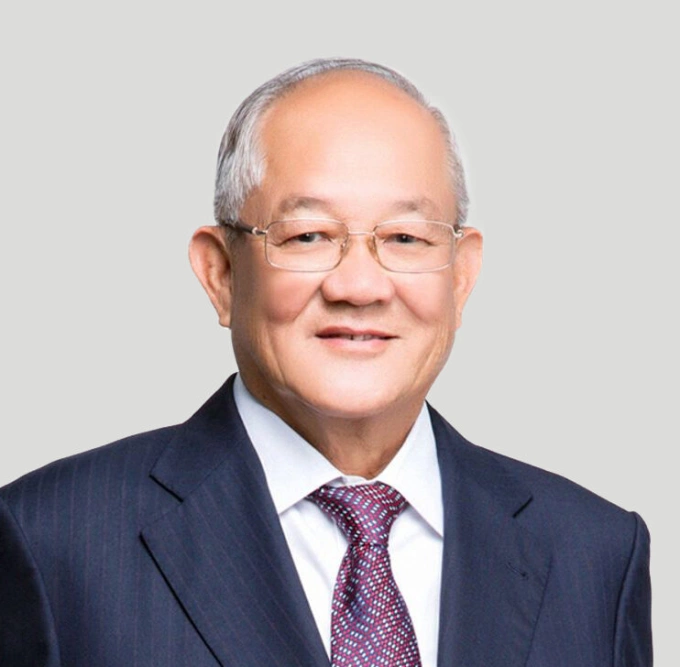
Low Tuck Kwong. Photo courtesy of SEAX Global |
Nicknamed the "coal king," Low Tuck Kwong built his fortune through Banyan Resource, the coal production and port operation company he founded in 2004. His net worth is estimated at US$24.4 billion.
Born in Singapore, Low moved to Indonesia at 24 in 1972, where he established the construction firm Jaya Sumpiles Indonesia before branching into coal mining. He became an Indonesian citizen in 1992 and acquired his first coal mine in Kalimantan five years later.
While Low, now 77, has renounced his Singaporean citizenship, he retains strong ties to the city-state. In March, he donated S$8 million to NTU via the Low Tuck Kwong Foundation, which was set up in late 2022 to support education, healthcare and social welfare.
NTU said the funds will create a bursary for Singaporean undergraduates in financial need and scholarships for Indonesian graduate students.
The Straits Times reported in May that the foundation has given over $160 million since its inception.
The coal magnate has made similar contributions in Indonesia, including to the Bandung Institute of Technology and the University of Indonesia, citing a desire to secure better opportunities for the next generation.


