




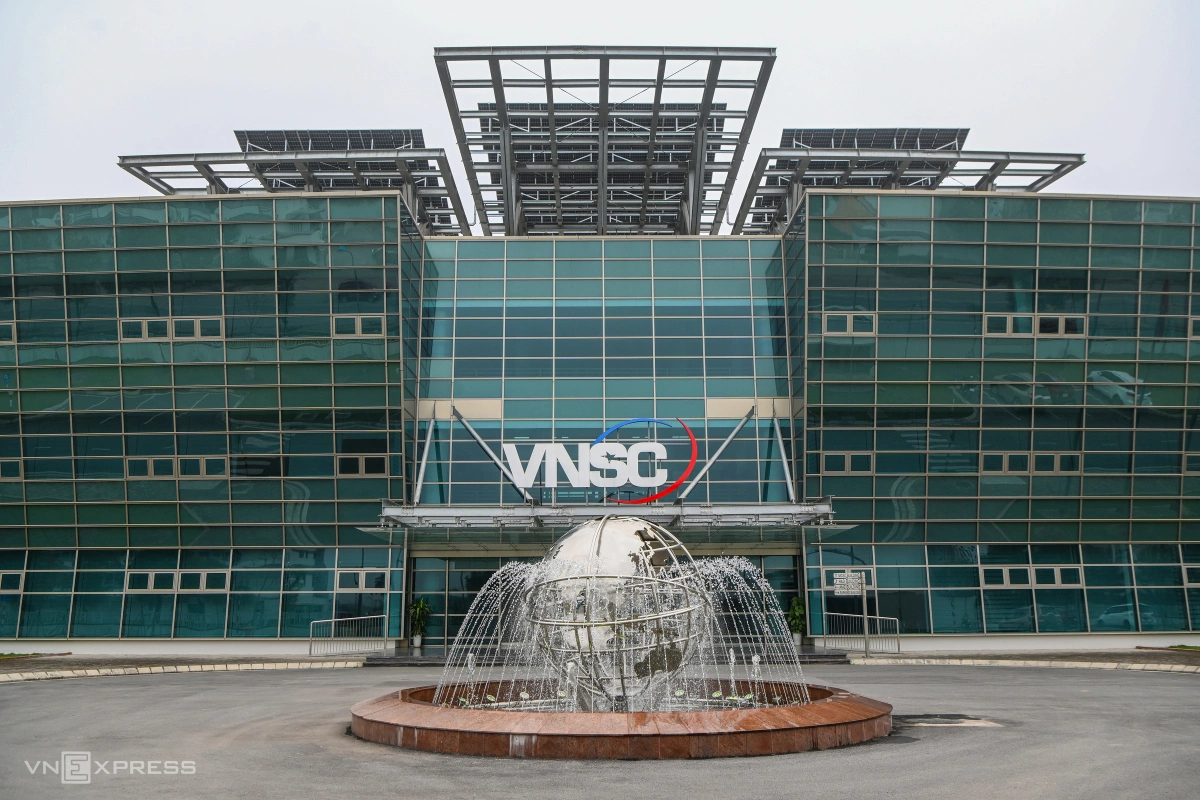
The Vietnam Space Museum, opened Thursday morning, belonging to the Vietnam Space Center, uses interactive displays for space technology and astronomy.
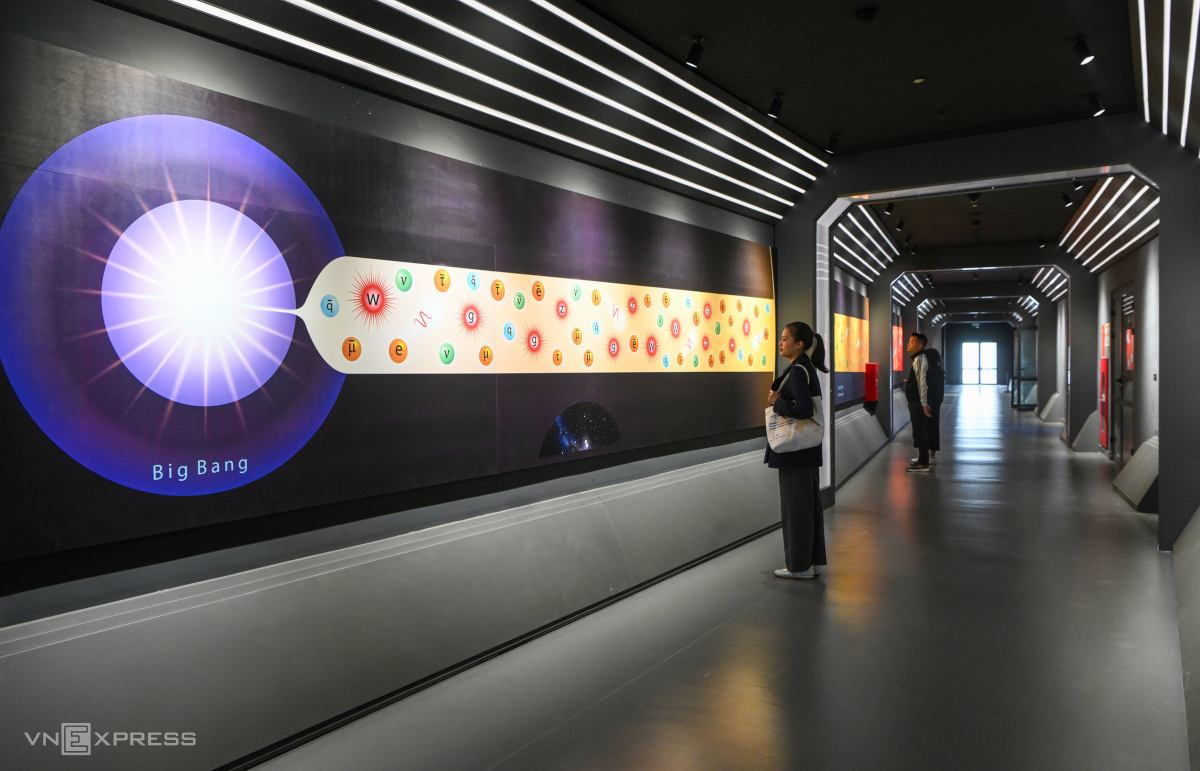
The indoor section begins with a corridor featuring information on ancient constellations used in Vietnamese folk culture, alongside the 13.7-billion-year history of the universe.
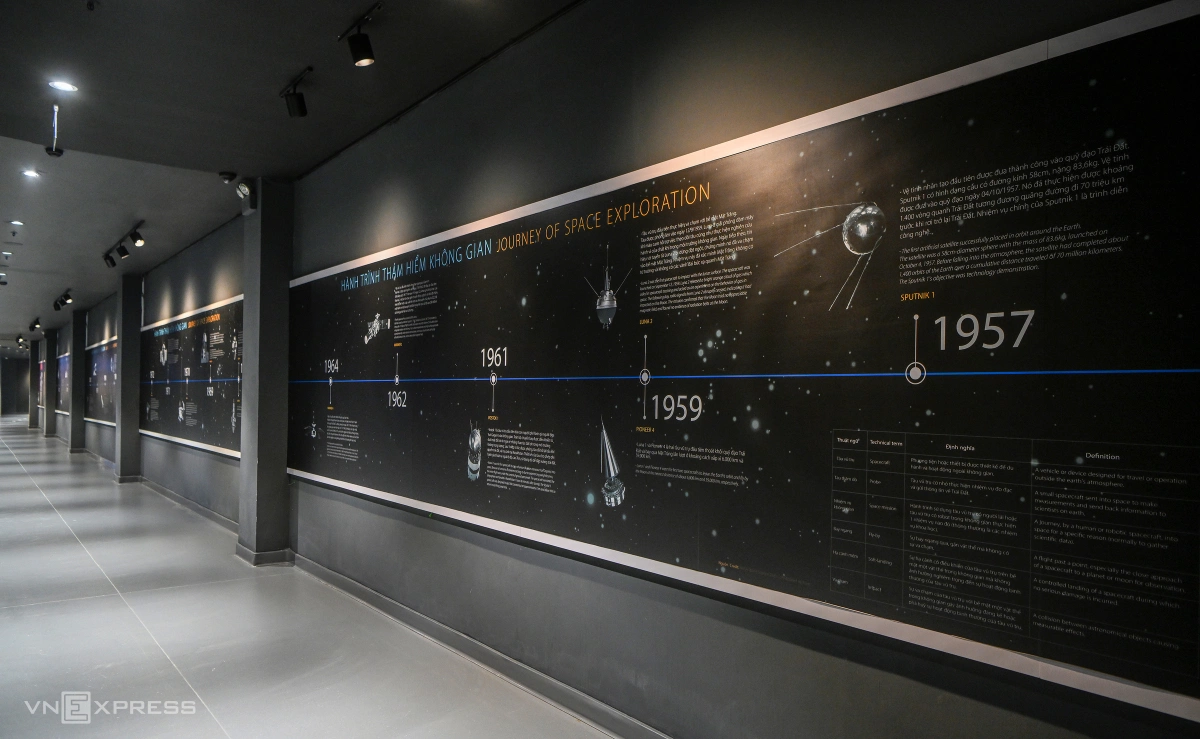
The universe’s formation and its past, present and future milestones are presented along a timeline in the corridor.
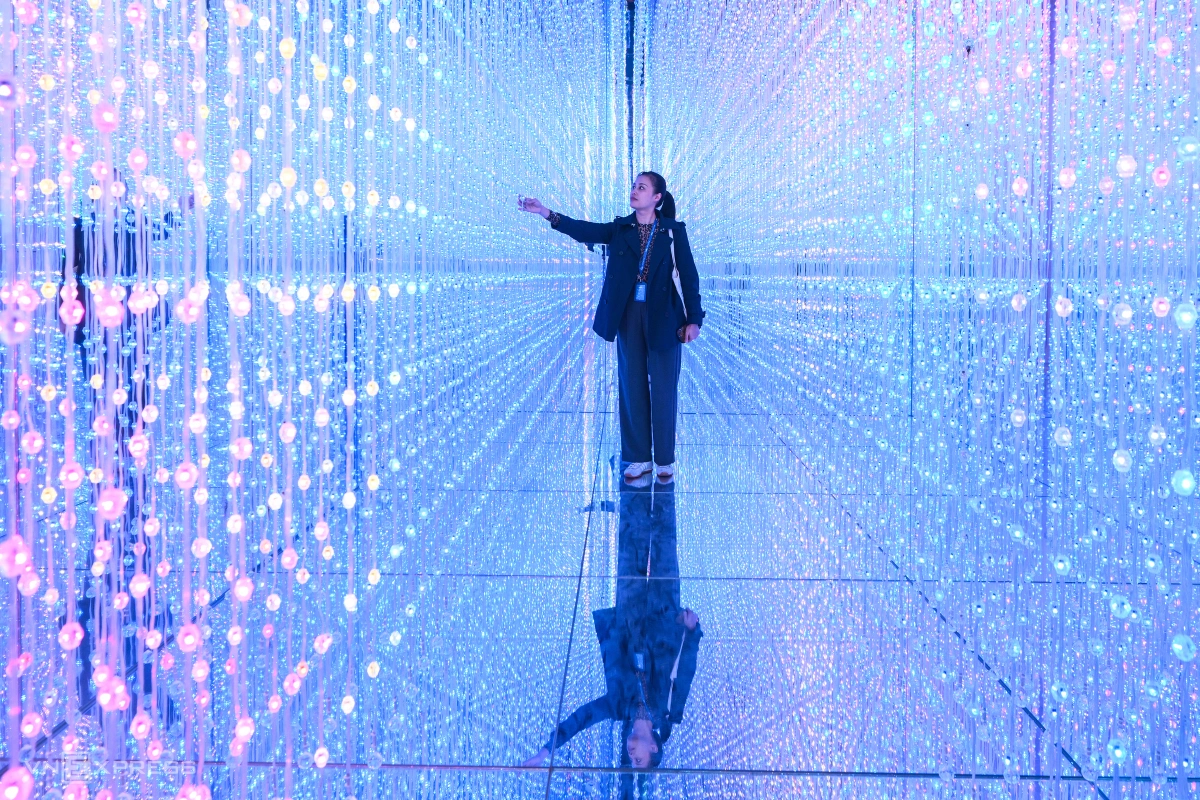
The “Mysterious Vast Universe” room features six glass walls with LED lights hanging from the ceiling flashing in sync with music and infinity mirrors to create an endless space effect.
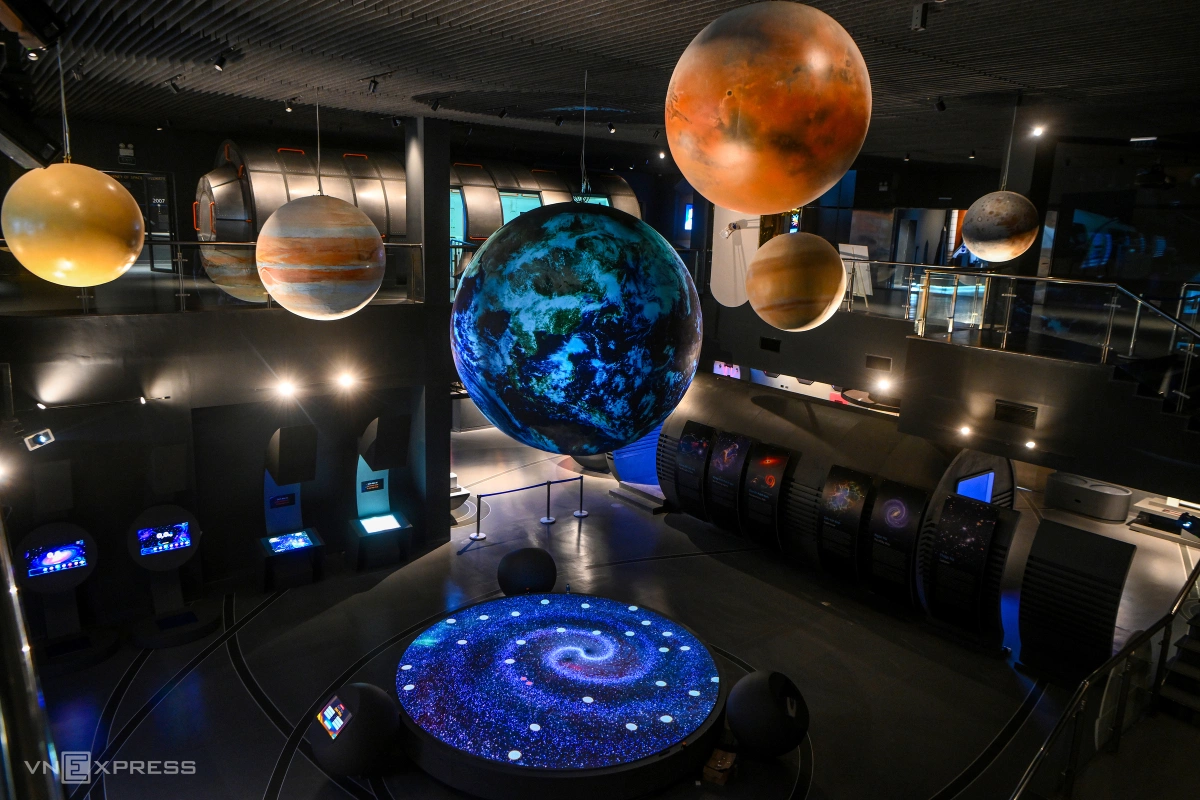
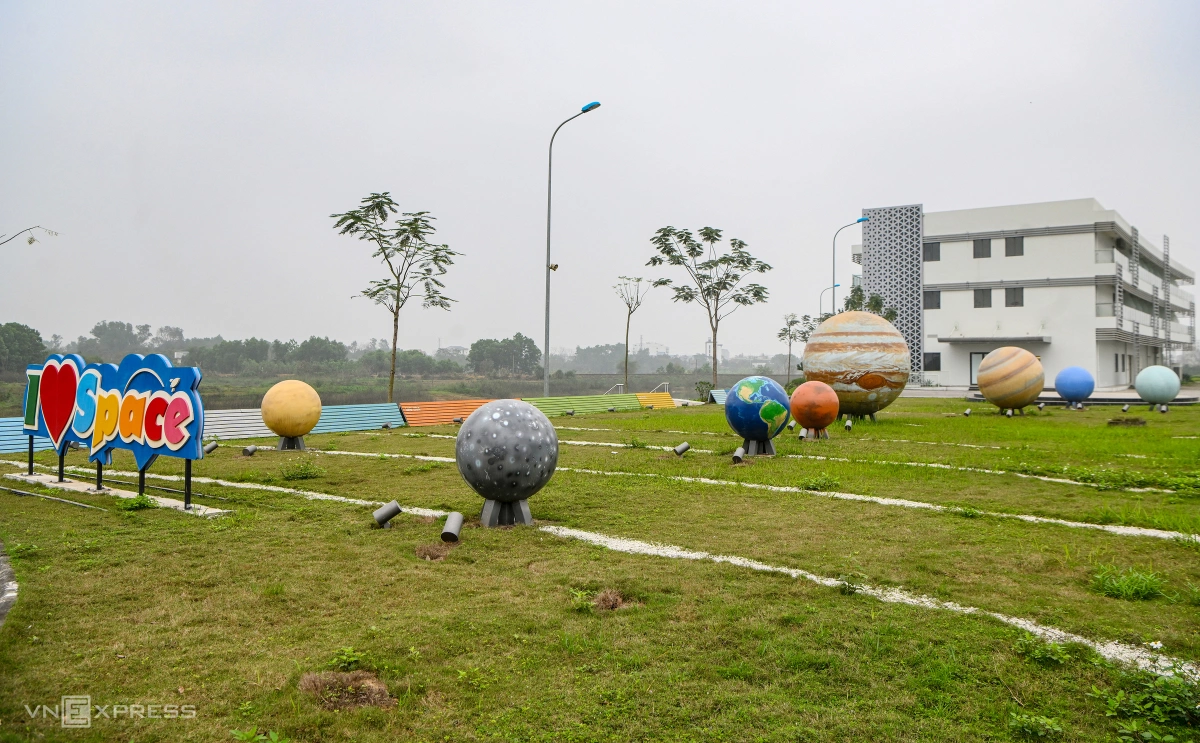
Models of the Sun and planets connect the museum’s two floors. They use lighting effects to give visitors the impression of standing in space and viewing the universe up close.
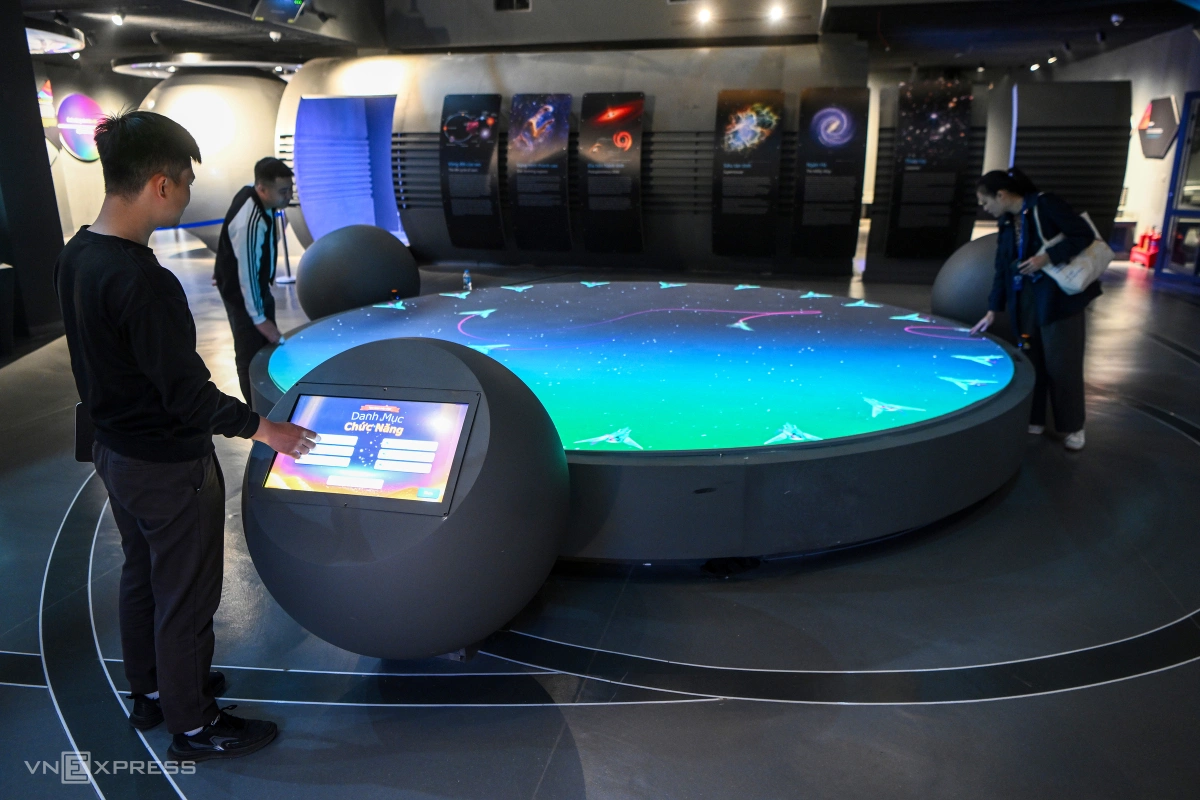
The “Wonders of Science” exhibit lets visitors perform hands-on experiments on light, gravity and motion in space, and has information panels about the solar system.
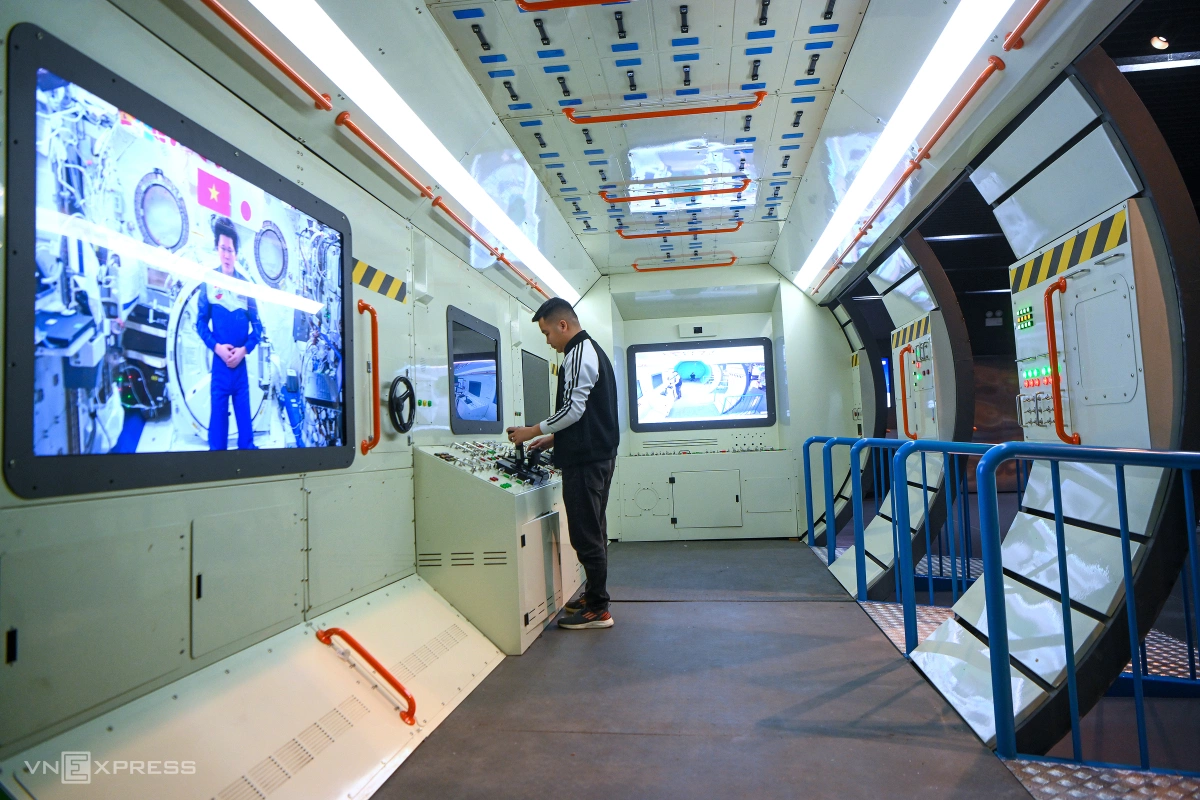
The museum has a spacecraft module replica that realistically simulates 24 hours on a space station.
Visitors can operate a robotic arm using a joystick to collect space debris. Computer and simulation screens installed inside the spacecraft replica provide visuals of the process.
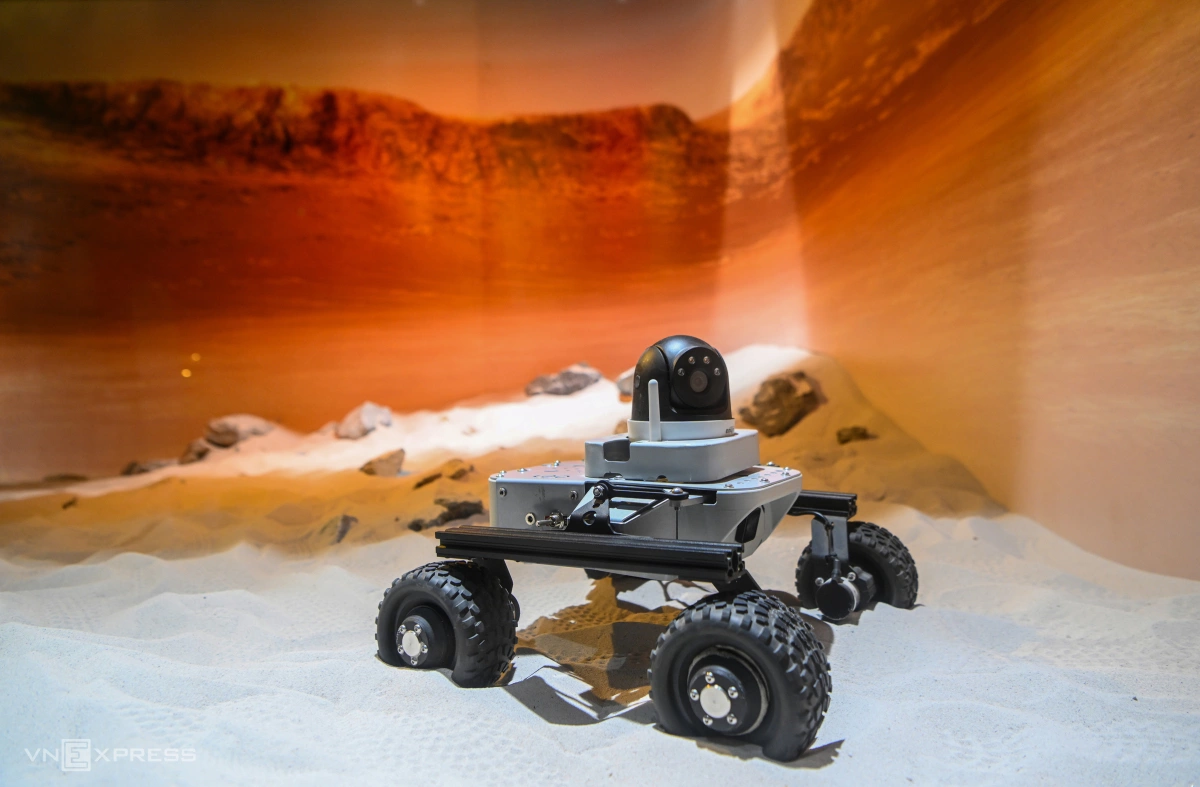
Another activity lets them operate a Mars exploration robot on dry red sandy terrain. The robot is programmed to navigate uneven surfaces and collect samples.
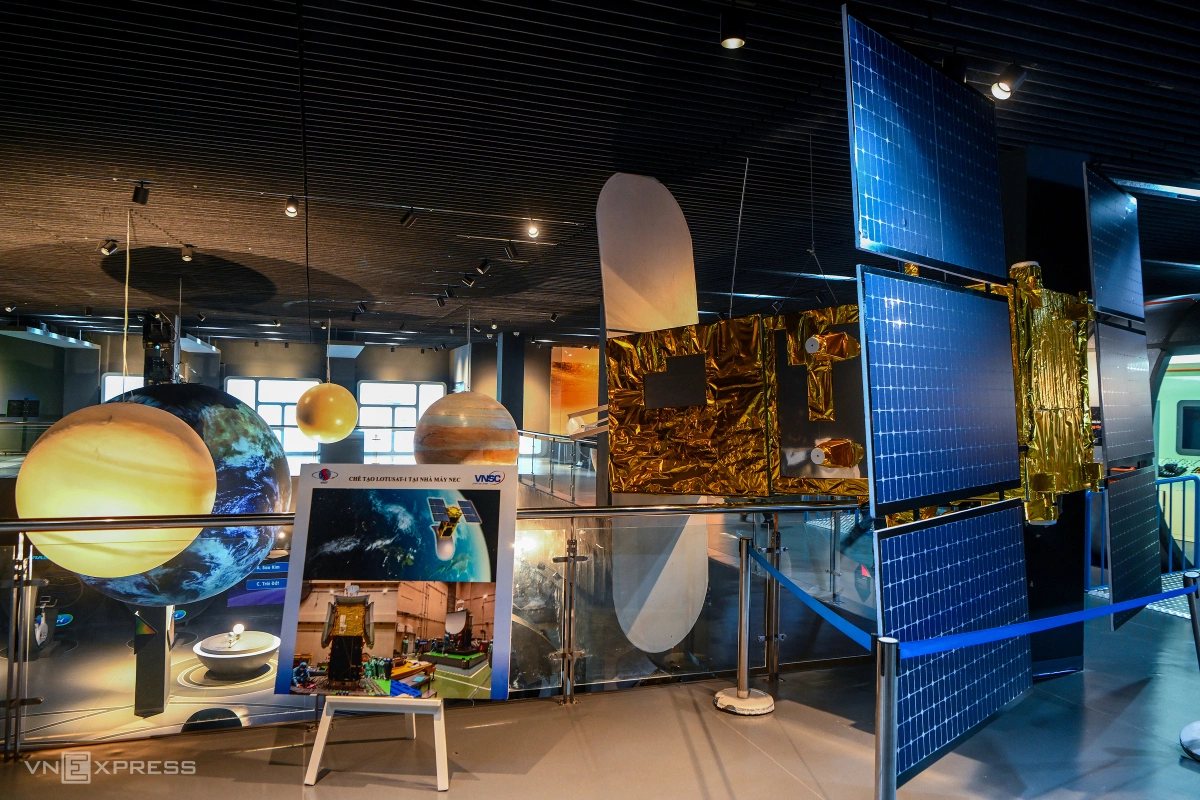
Another exhibit highlights advances in space technology, including Vietnam’s progress in it.
The LOTUSat-1, a 600-kilogram radar satellite developed by the Vietnam Space Center, is also on display. Scheduled for launch in 2025, it can detect ground objects on earth as small as one meter across.
It will capture images and provide data to support disaster response, climate change adaptation, resource management, and environmental monitoring.
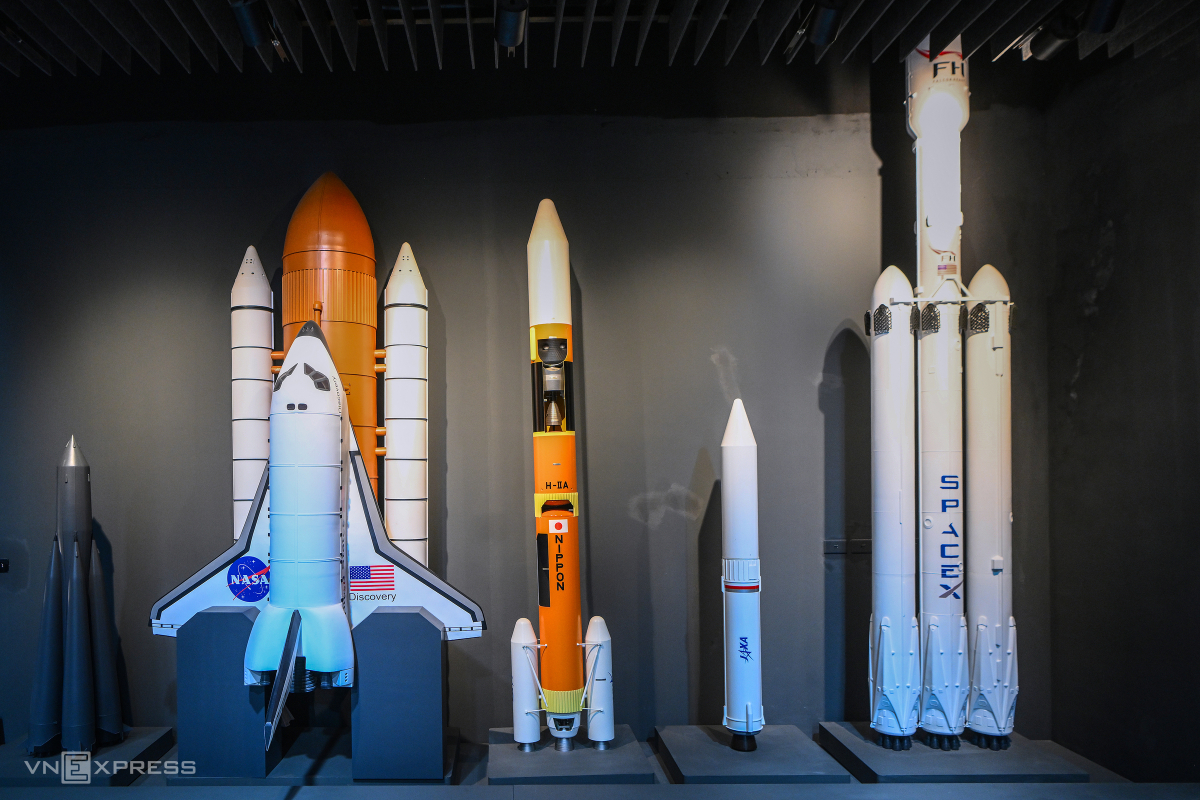
One section features models of notable rockets built in the U.S., Russia and Europe along with cross-sections showing their structure and how they work.
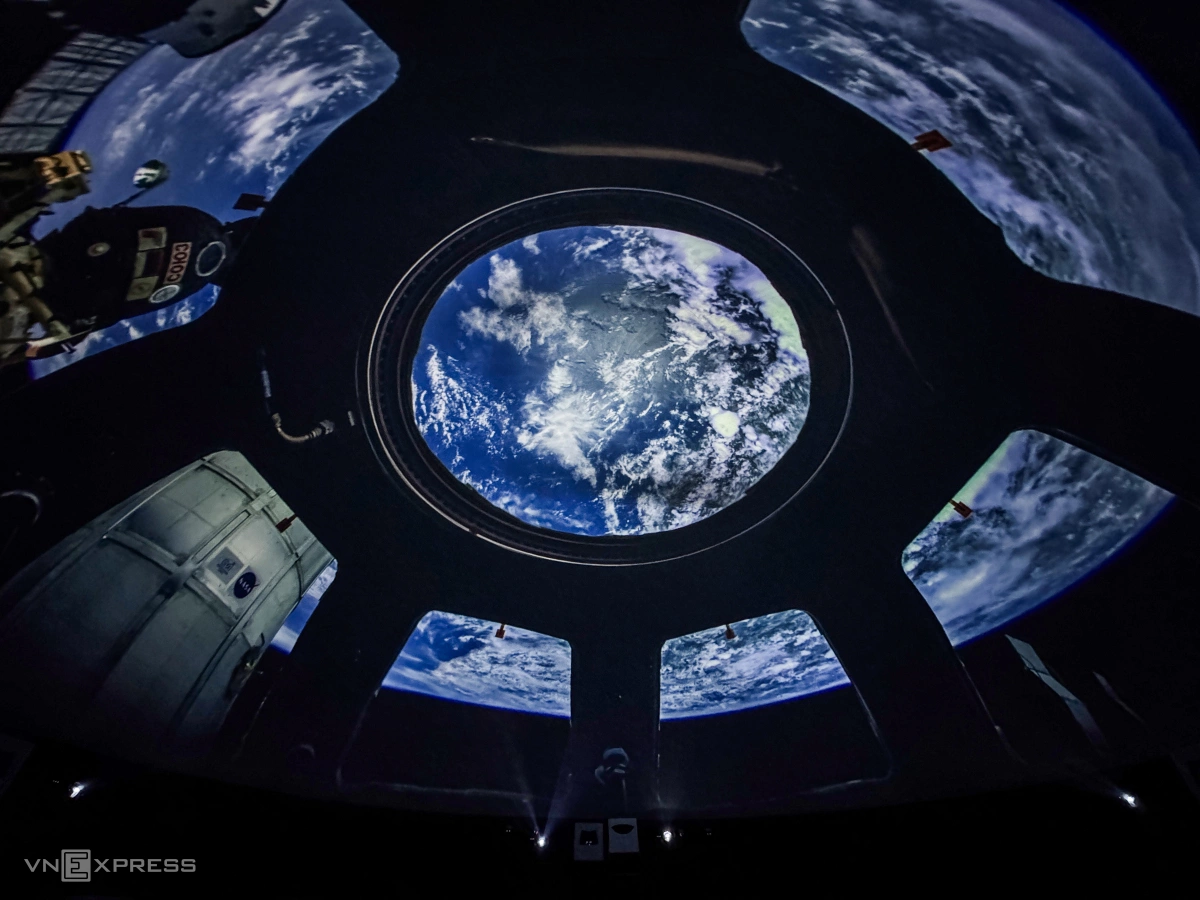
The museum also has a 100-seat planetarium with six high-resolution projectors and a curved ceiling that creates a 3D-like depth effect. It shows realistic images of the sky and stars to give viewers the feeling of flying into space.
Le Xuan Huy, deputy director of the Vietnam Space Center, says the museum will experiment with welcoming visitors after the opening ceremony on Thursday.


