




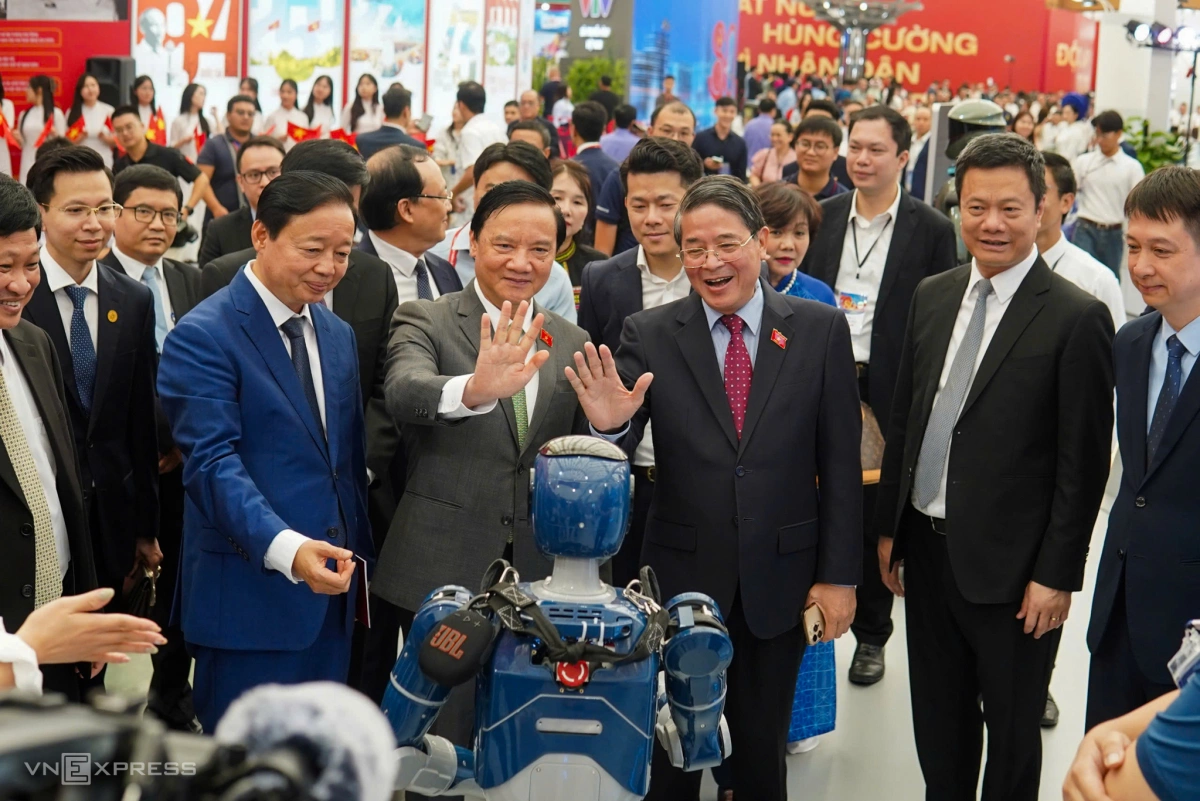
At the exhibition, which runs from Aug. 28 to Sept. 5 at the Vietnam Exposition Center, robots appeared not only at technology-focused booths such as those of the Ministry of Science and Technology but also across sectors including manufacturing and services.
At the booth on science, technology, innovation, and digital transformation, Deputy Prime Minister Tran Hong Ha, along with National Assembly Vice Chairmen Nguyen Khac Dinh and Nguyen Duc Hai, viewed new products and interacted with a humanoid robot.
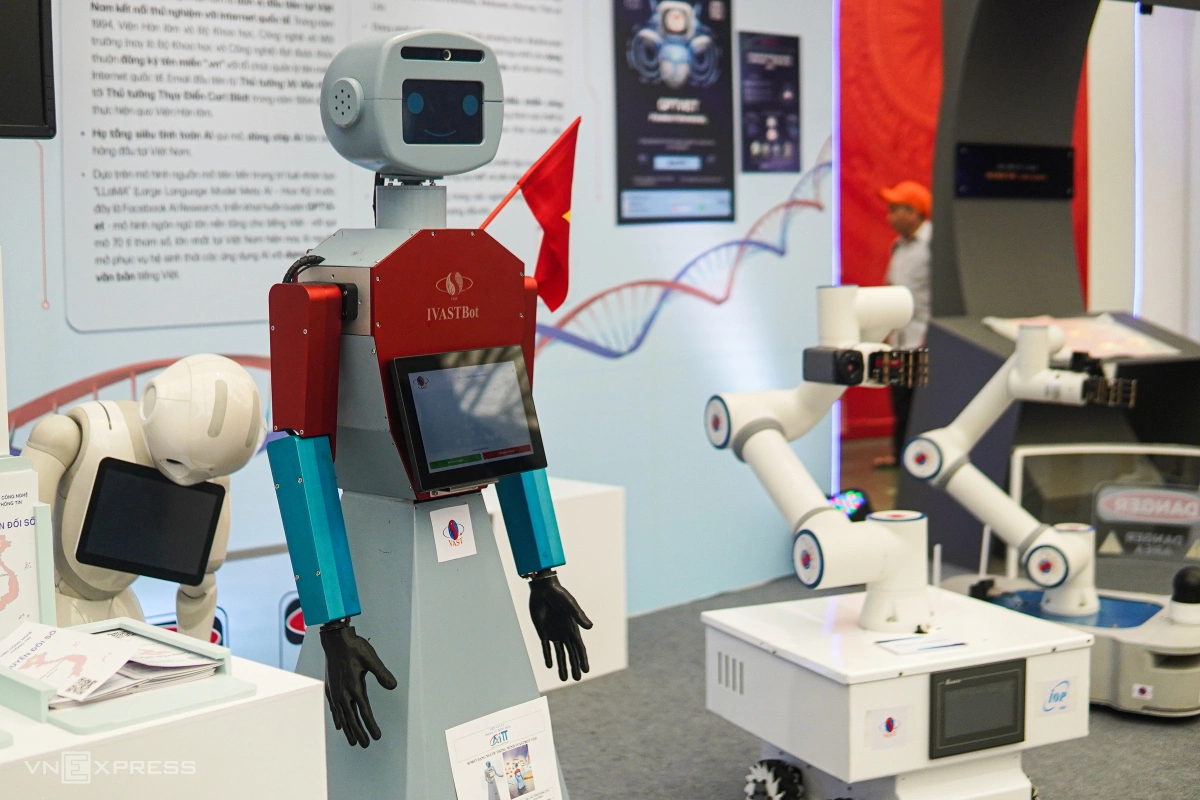
Some robots were for display purposes, while others have been applied in real-life settings. Robots developed by the Institute of Physics under the Vietnam Academy of Science and Technology included a humanoid capable of moving, performing simple arm gestures, and interacting via a screen, as well as an industrial robotic arm.

Robotics and automation are among 11 strategic technology groups listed by the Prime Minister Pham Minh Chinh in June, with the goal of mastering the technology and developing products.
Two transport robots by Phenikaa-X, already commercialized and used in factories, were presented at the event. The company said the model on the right can carry up to one ton.

Vietnam Electricity showcased a uniquely designed robot that monitors the operating status of electrical equipment in power plants, replacing humans in hazardous, high-precision environments.
The robot follows preset routes, using cameras and sensors to record equipment indicators and transmit them to a central system.
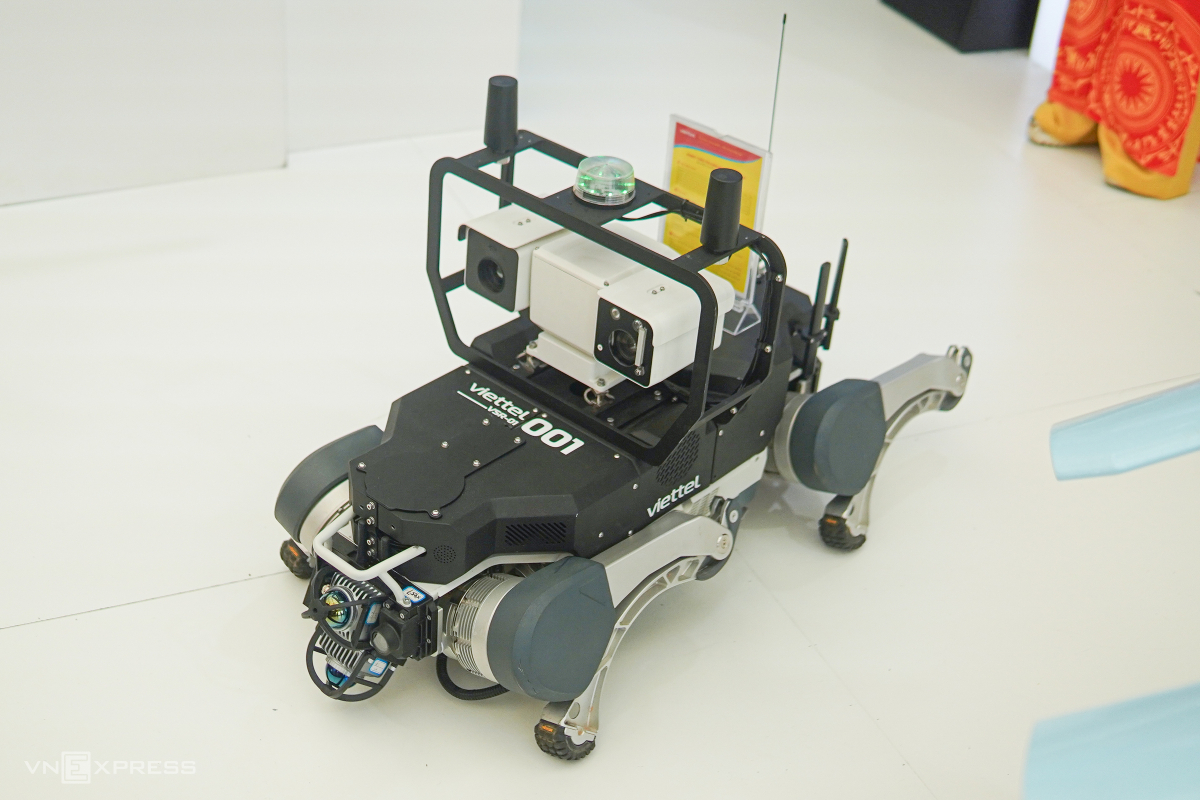
In the defense and security sector, mobility and flexibility are also factors for adopting robots, such as Viettel’s VSR 01 four-legged patrol robot.
It can traverse difficult terrain, conduct intelligent monitoring through sensors, and transmit real-time signals to a control center. The robot can also be deployed for fire detection, emergency exit monitoring, and light transport.

Robot dogs and patrol vehicles at the Ministry of Public Security’s booth attracted attention. Produced by automation provider Astec, these products have been showcased at several technology events.

Robot dogs capable of gestures, movement, and interactive responses particularly appealed to children, though their performance still requires human control. Video by VnExpress/Van Phu

At Misa’s booth, a humanoid robot drew notice despite lacking practical applications. Similar to the robot dogs, the humanoid is mostly imported, then fine-tuned by Vietnamese firms with software adjustments to meet demonstration needs.
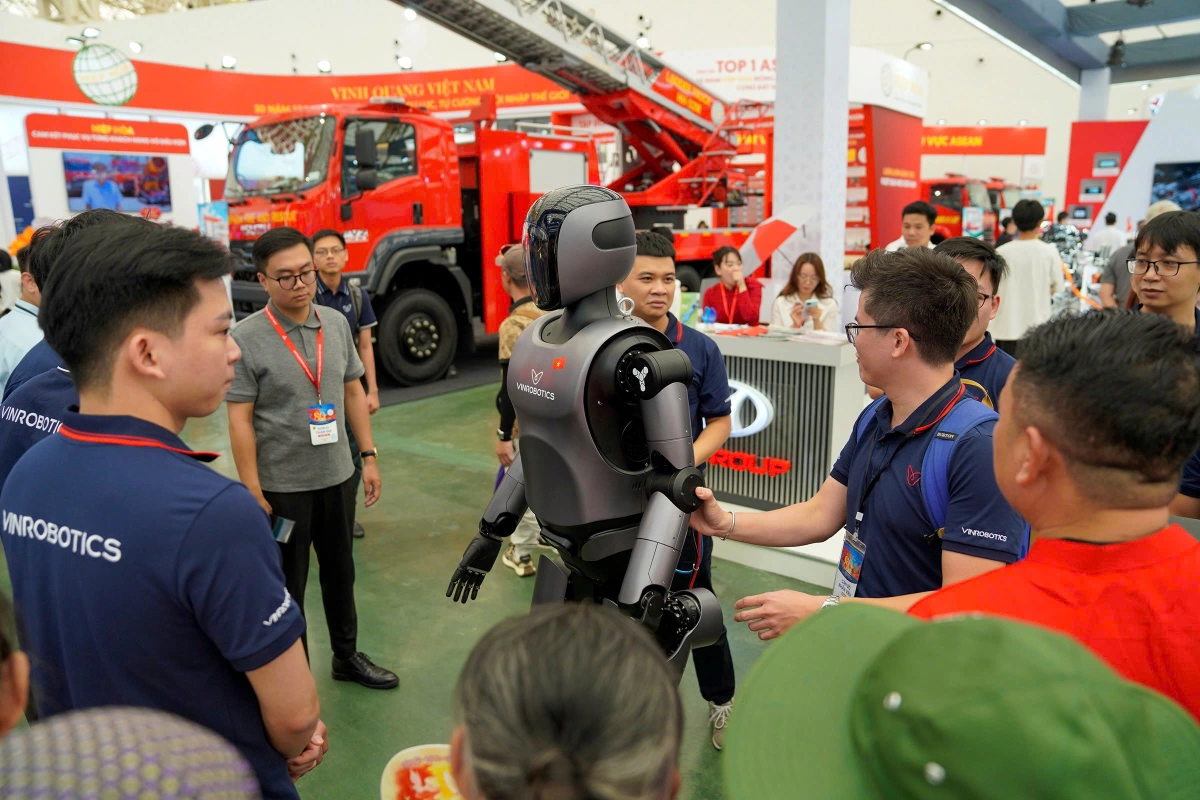
VinRobotics presented humanoid robots both at its own booth and within the Ministry of Science and Technology’s space. These machines can walk, wave, and simulate conversations with users.

Vietnamese universities are also investing heavily in robotics. Hanoi University of Science and Technology has acquired a bipedal robot, as pictured, for student research and feature development.
Though simple in design, it operates flexibly and stably.

The Ministry of Education displays small humanoid robots for students to study AI and control systems.

VNPT introduced customer service robots that can move steadily, transport items, and integrate large screens for user interaction.

Beyond demonstration models, several robots developed in Vietnam have achieved commercialization. One example is a high-speed smart sorting robot developed by Delta X-Smart, which has sold more than 500 units, according to the company.

Robotic arms of different sizes were also presented, including six-axis models used in industrial cutting and welding.
A company representative demonstrating a robotic arm noted that while Vietnam has made progress, most arms in use are still imported, with local engineers focusing on software optimization and application systems.


