




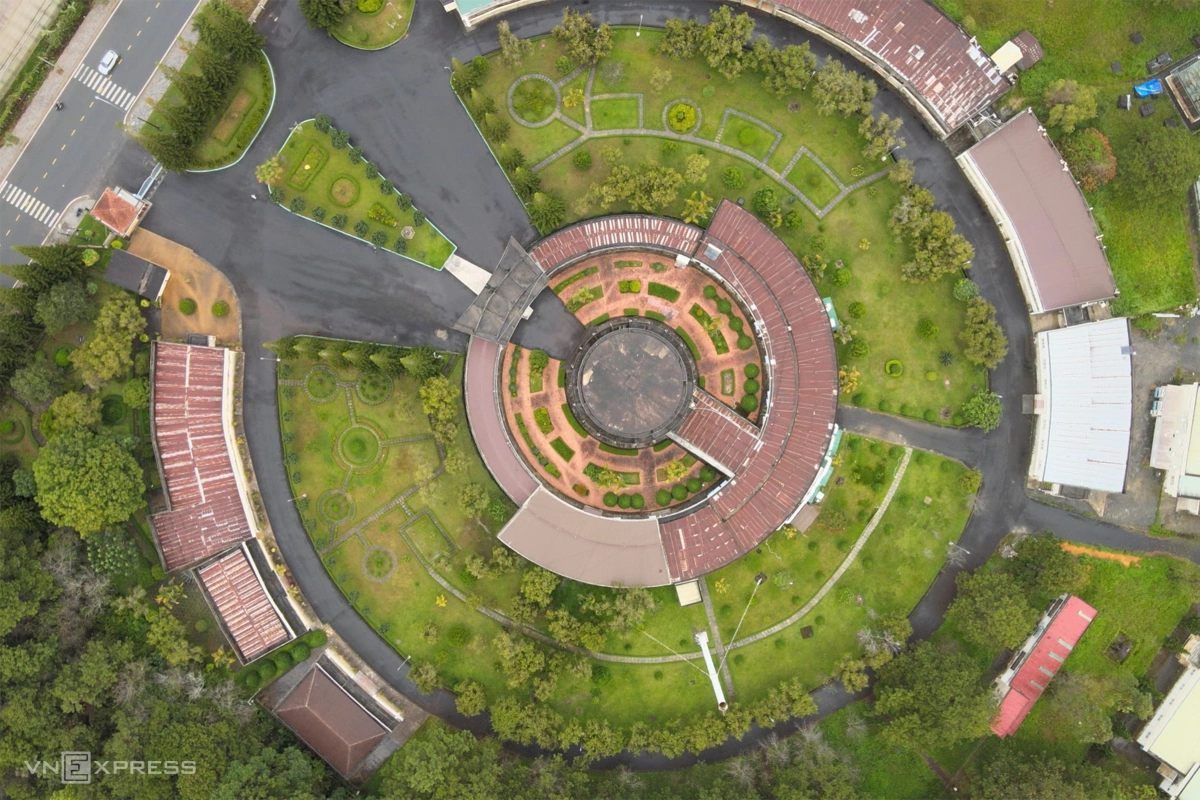
Located on a 14-hectare site on Nguyen Tu Luc Street in Lam Dong Province, Central Highlands, the reactor is designed in a concentric circular layout.
From above, its architecture stands out with a central round building housing the reactor, surrounded by semicircular wings and internal roads.
Vietnam’s first nuclear reactor was built by the U.S. in early 1961 under the name TRIGA Mark II. Two years later it went into operation with a capacity of 250 kWt, mainly for training, research and radioisotope production.
Its operations were halted between 1968 and 1975, and by March 1975 all TRIGA fuel rods—uranium-containing elements used to power the reactor—had been removed and returned to the U.S.

The two-story reactor has stairs on both sides leading to the reactor chamber, with large ventilation ducts that draw in outside air and pass it through filtration systems.
In 1979 Vietnam signed an agreement with the former Soviet Union to restore and expand the reactor. The upgraded facility, renamed IVV-9 and known locally as just the Da Lat nuclear reactor, was inaugurated in March 1984 with double the previous capacity at 500 kWt.
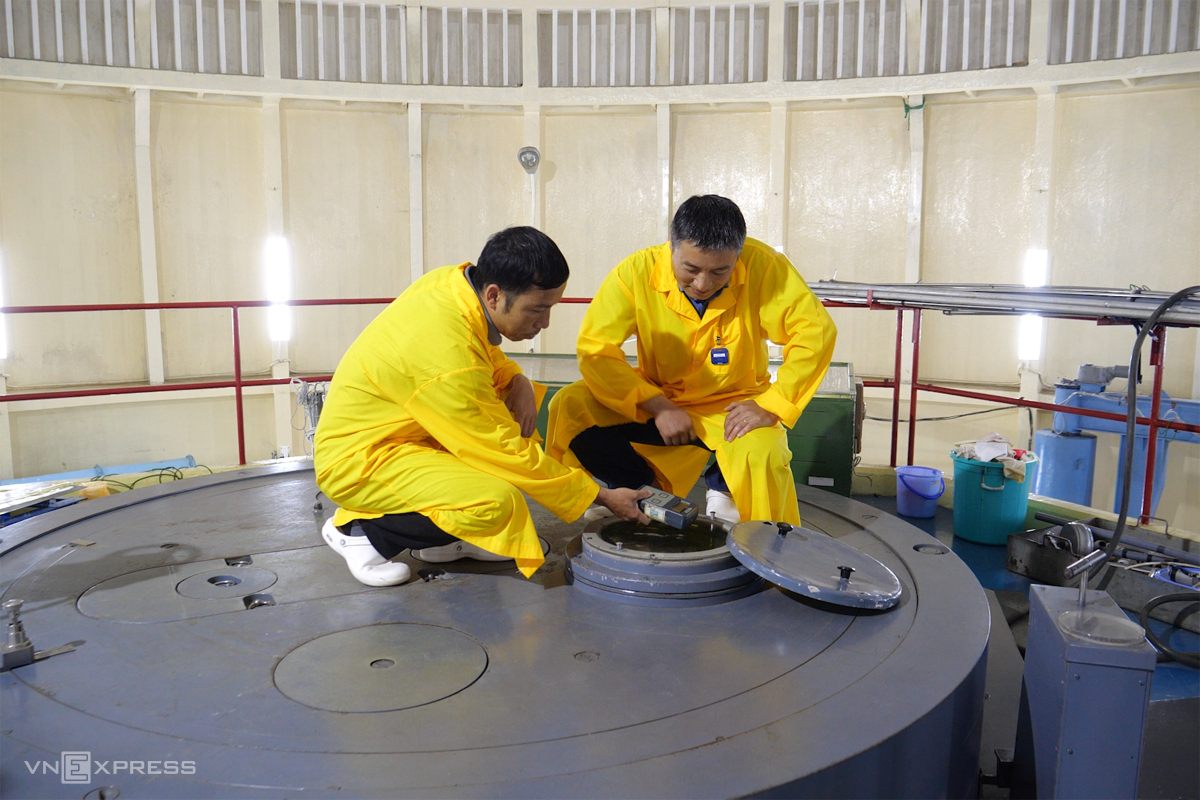
Technicians at the Nuclear Research Institute measure radiation levels at the reactor opening.
Since resuming operations, it has become Vietnam’s sole nuclear research center, producing radioisotopes for medicine, conducting material research and training engineers and scientists.
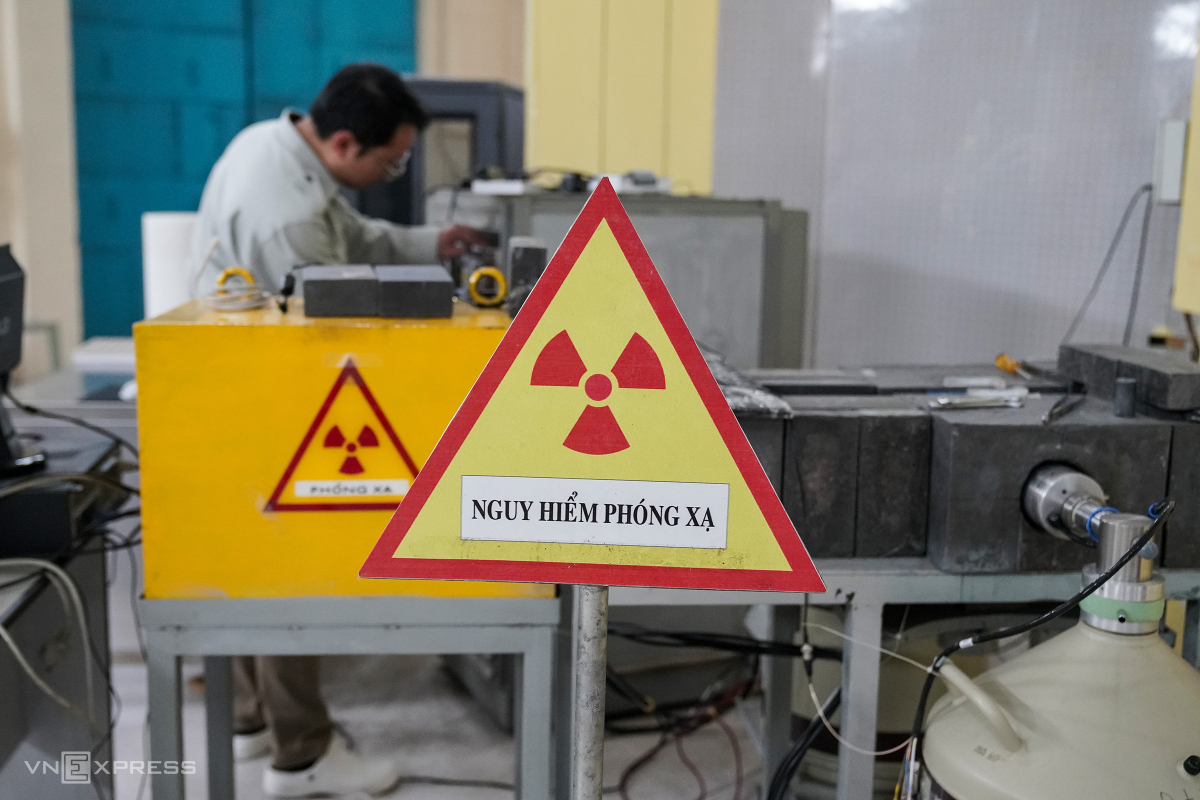
Warning signs are placed throughout the facility to remind staff of radiation safety protocols.
From 2007 to 2011 the reactor operated with two types of fuel, one with high uranium content and the other lower. By the end of 2011 it fully transitioned to low-enriched uranium fuel and has since run stably at its designed capacity.

The central control room is where engineers monitor and manage reactor operations through a system of screens, indicators and safety equipment.

Engineer Pham Huu Tam, 26 (right), and his supervisor monitor operating parameters at the central control desk.
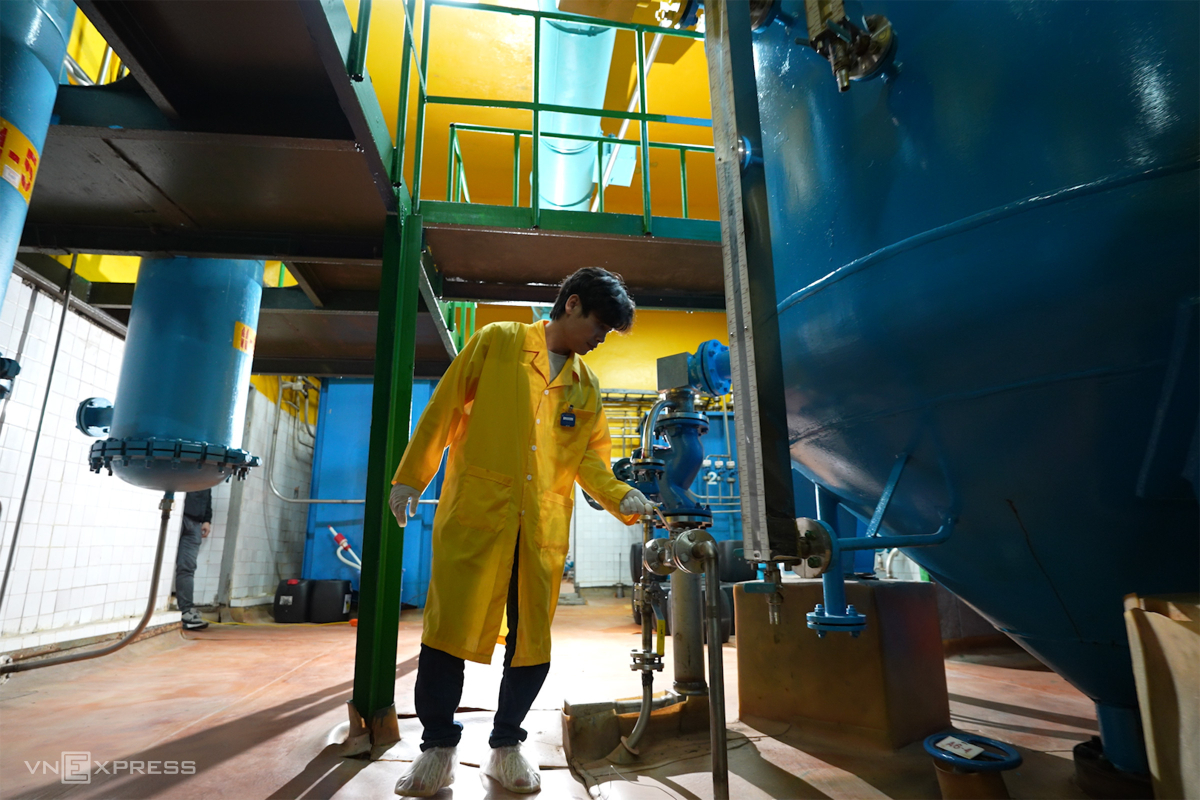
A technician inspects the water treatment system.
The reactor runs up to 45 weeks a year, operating 85–130 hours weekly to produce radioisotopes.
The remaining time is dedicated to maintenance and training.

A technician at the automated INAA laboratory at the Nuclear Research Institute.
The reactor has six research and production centers dedicated to radioisotopes, environmental analysis, radiation safety, and nuclear applications with over 190 personnel.
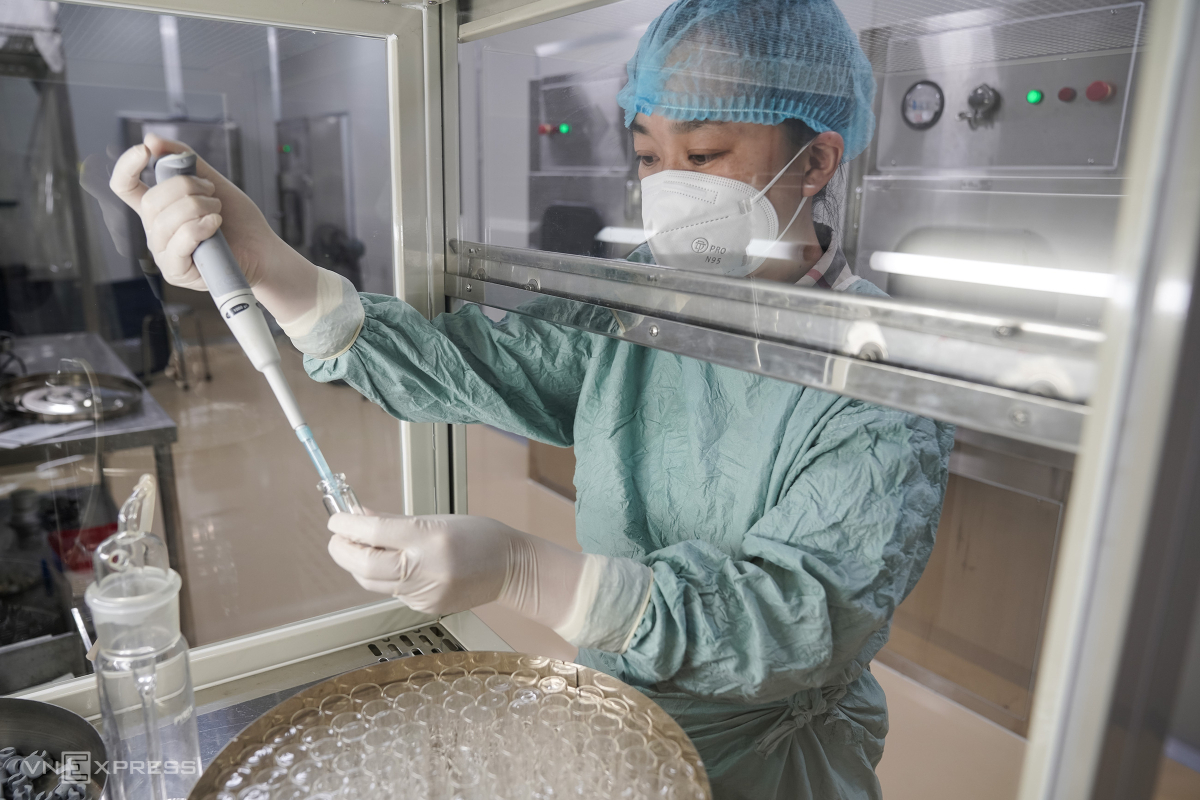
Technician Nguyen Thi Ngoc prepares a solution in a clean room during the production of freeze-dried injectable radiopharmaceuticals.
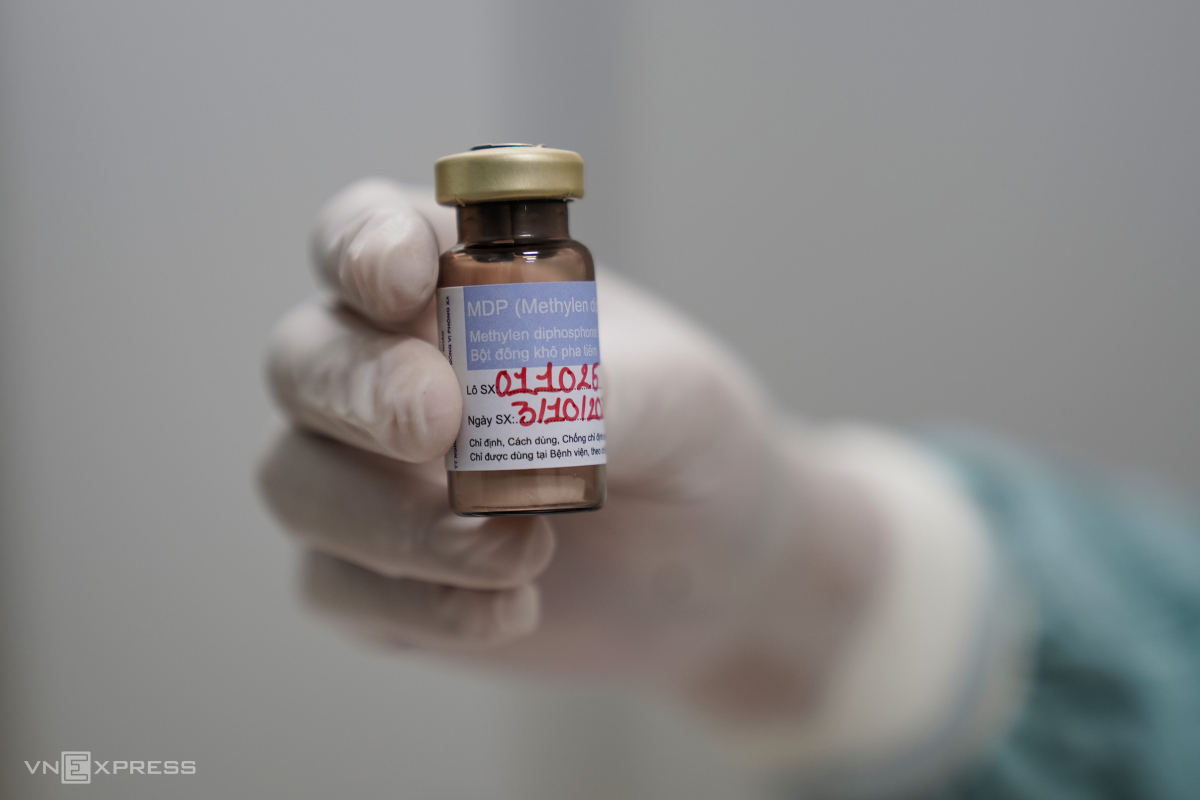
A vial of the finished MDP radiopharmaceutical product.
According to Dr. Cao Dong Vu, director of the Da Lat Nuclear Research Institute, the reactor produces 1,000–1,500 curies (Ci) of radiopharmaceuticals annually for 23 of Vietnam’s 40 nuclear medicine departments, many times higher than when it first reopened in 1984.


