





Le Loi Boulevard, the nearly one-kilometer stretch from Lam Son Square to Ben Thanh Market, is undergoing a major transformation. The 50-meter-wide thoroughfare has been renovated and repainted since early this month, with completion expected next week through private funding.
Many early 20th-century houses have had their facades refurbished and sidewalks paved with granite, giving the area a neat, refreshed appearance ahead of the Lunar New Year (Tet) in mid-February.
Originally a canal dug by the French following their occupation of Saigon, the waterway was filled in around 1870 to create Bonard Boulevard. Renamed Le Loi Street in 1955, it has since evolved into one of the busiest and most vital commercial arteries in central HCMC.

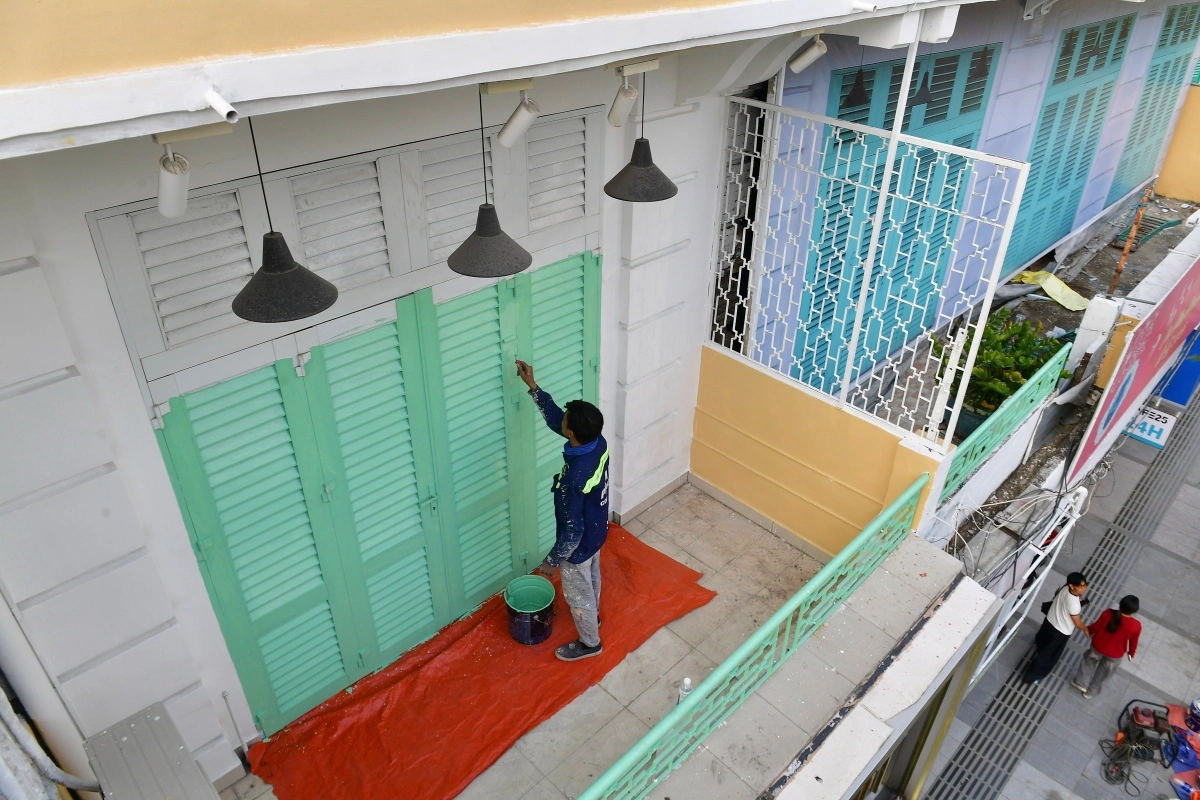
A key highlight of the renovation is the revitalization of a centuries-old row of houses stretching hundreds of meters. Their roofs and facades have been repainted to create a harmonious aesthetic.
These buildings have endured decades of change while maintaining a vibrant commercial atmosphere that continues to draw tourists from around the world.

A fully renovated section of Le Loi Street now appears cleaner and more modern.
This site was the Tay Hoa Hotel at 88 Le Loi during the early 20th-century.
In 1928, it hosted the pivotal conference that established the Cochinchina regional committee of the Vietnam Revolutionary Youth League, a key predecessor to the Communist Party of Vietnam.


A few hundred meters from the historic row, workers are cleaning and reorganizing signage and advertisements in a uniform layout in front of the Rex Hotel.
Around 1925, the site of the hotel was a two-story automobile garage at the Nguyen Hue–Le Loi corner, managed by the French. From 1959 to 1965, it was rebuilt into a six-story building named Rex Trade Center. After 1975, the Rex Hotel was upgraded and renovated into a five-star hotel.


In addition to refurbishing buildings along the route, the medians and sidewalks on Le Loi Street have also been paved with granite to enhance aesthetics and match the central urban landscape.


Tree planters have been clad in stone and planted with additional ornamental foliage to create visual accents.

The section of Le Loi Street in front of Saigon Centre shopping mall is bustling with renovation and upgrades.
This area frequently hosts major events, attracting large crowds of residents and tourists. However, many townhouses and apartment buildings along the route had deteriorated, with peeling paint and damaged sidewalks and medians.
HCMC Department of Construction said the comprehensive refurbishment of the entire boulevard will improve the cityscape and create a modern urban space for the central area.


