





A corner of Hoi An's ancient town along the Hoai River remains under about two meters of floodwaters at noon on Nov. 3.
Floodwaters began inundating the historic quarter in the early hours of Oct. 27 and rose 1–2 meters within hours, forcing boats to evacuate tourists and residents from the worst-affected areas.
Hoi An was inscribed on UNESCO's World Heritage List on Dec. 4, 1999, in recognition of its outstanding historical, architectural and cultural value as a thriving international trading port in the 16th and 17th centuries.


The Japanese Pagoda Bridge, a symbol of Hoi An, was cut off by floodwaters on Oct. 30, when water submerged the relic by about 0.5 meters.
Officials said this was the highest flood level ever recorded at the relic.

Because it stands at the highest point along the Hoai River, the covered bridge becomes a makeshift wharf for people evacuating from low-lying areas to higher ground.


The Hoi An market area near the Hoai River was flooded almost to the roof on Oct. 29, while the previous day the water was only about 30 cm.
Warning tapes were put up on the pedestrian streets around the market to ensure safety.
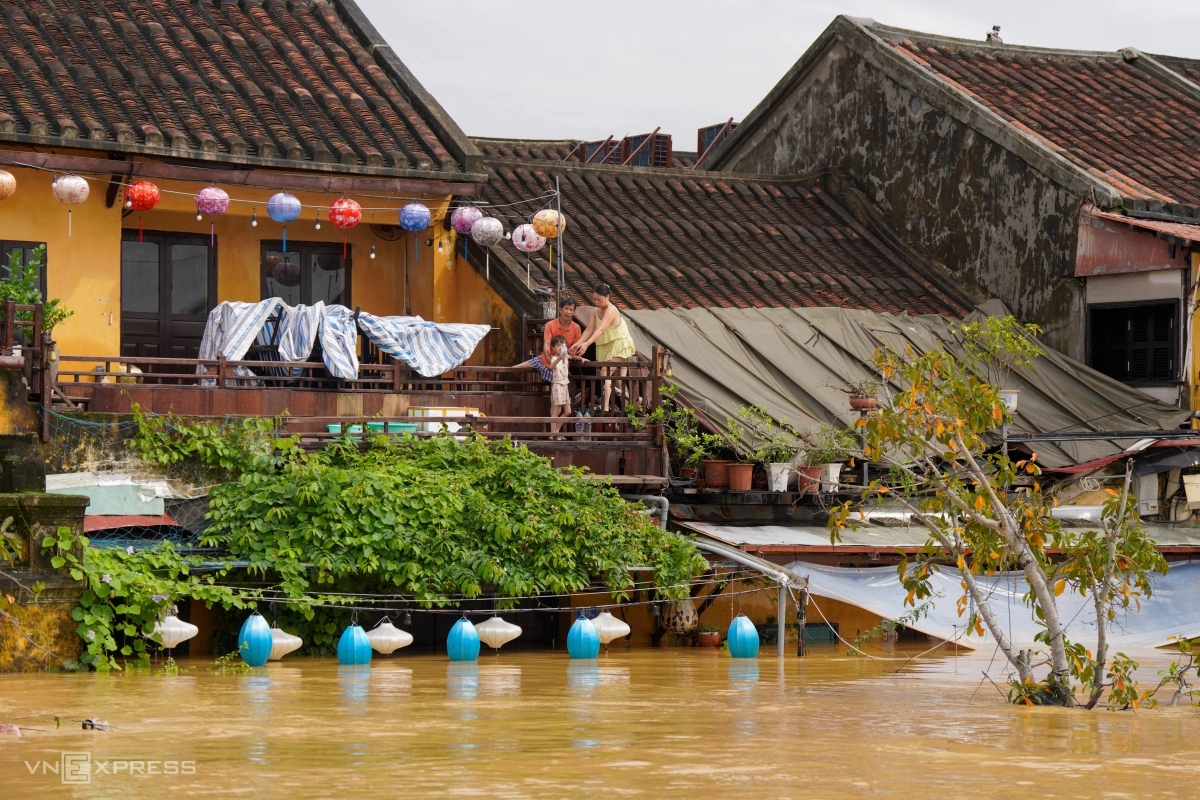

Business owners on Bach Dang, Tran Phu and Nguyen Thai Hoc streets reported heavy losses after floodwaters reached about 2 meters, with many retailers of silk, souvenirs and luggage claiming losses of VND2–4 billion (US$75,990-152,000).

Three days ago, when the floodwaters recede, business owners brought goods outside to dry, trying to save whatever they could.
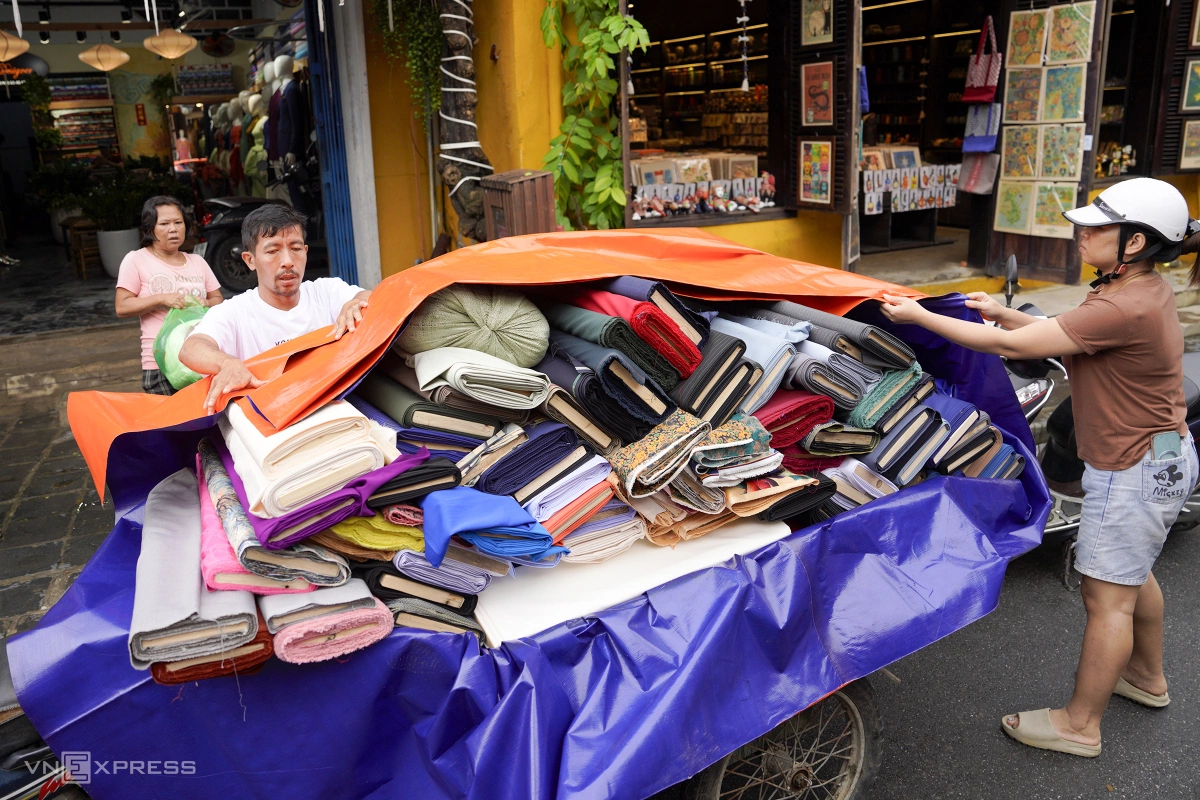
By Monday afternoon, the water level on many roads continued to rise.
A fabric shop owner loads dozens of fabric items onto a cart and moves them to higher ground to protect them from potential overnight flooding.
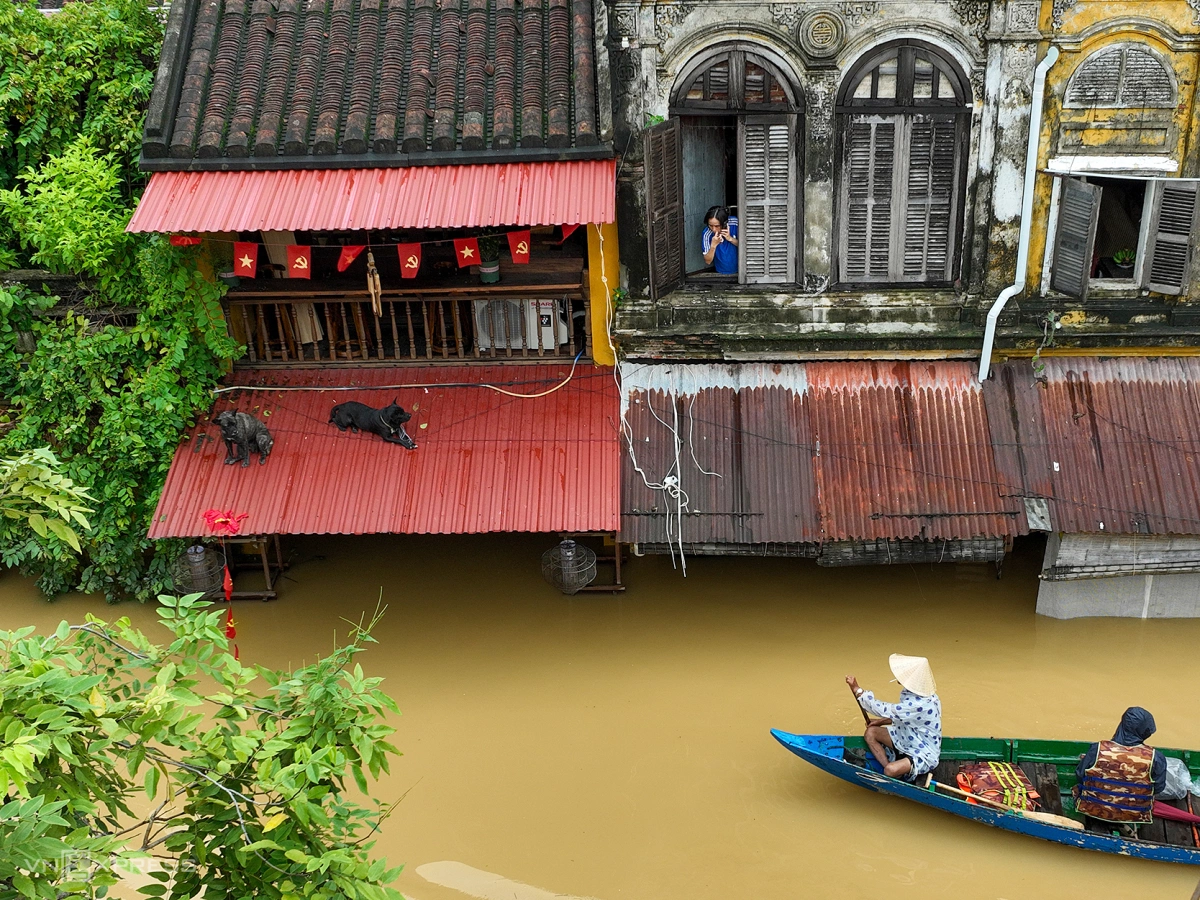
Floodwaters rise more than a meter on Hoang Van Thu Street on Monday, forcing people to use boats to travel.

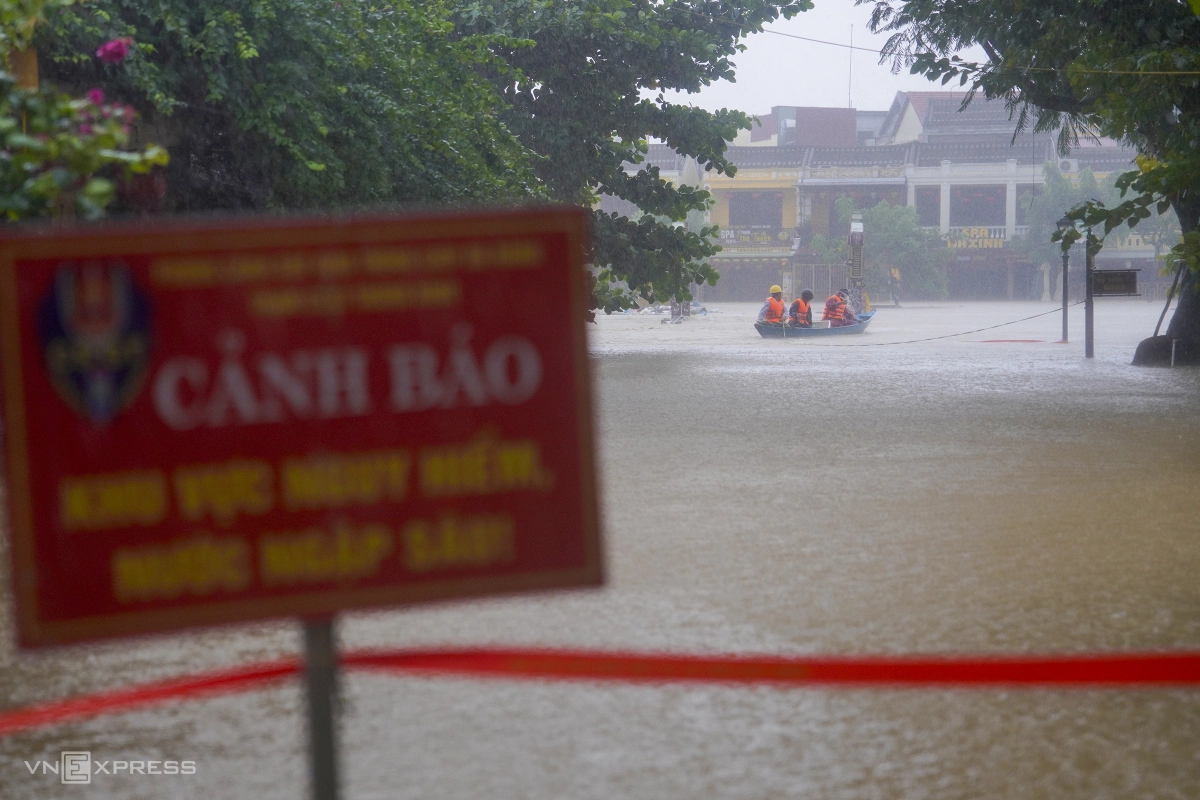
Authorities have stretched ropes, put warning signs in hazardous areas along the Hoai River, and deployed personnel to guard key locations, including the An Hoi Bridge.
Le Ngoc Quang, Secretary of the Da Nang City Party Committee, said this flooding has lasted far longer than in previous years, when inundations typically lasted only two or three days, leaving residents exhausted and unprepared.
He added that preventing floods in Hoi An is extremely difficult because it lies in an estuary, and stressed the need for long-term adaptation measures.


