





Cave pearls take the form of spheres or oval masses, varying in size and appearing in different colors.
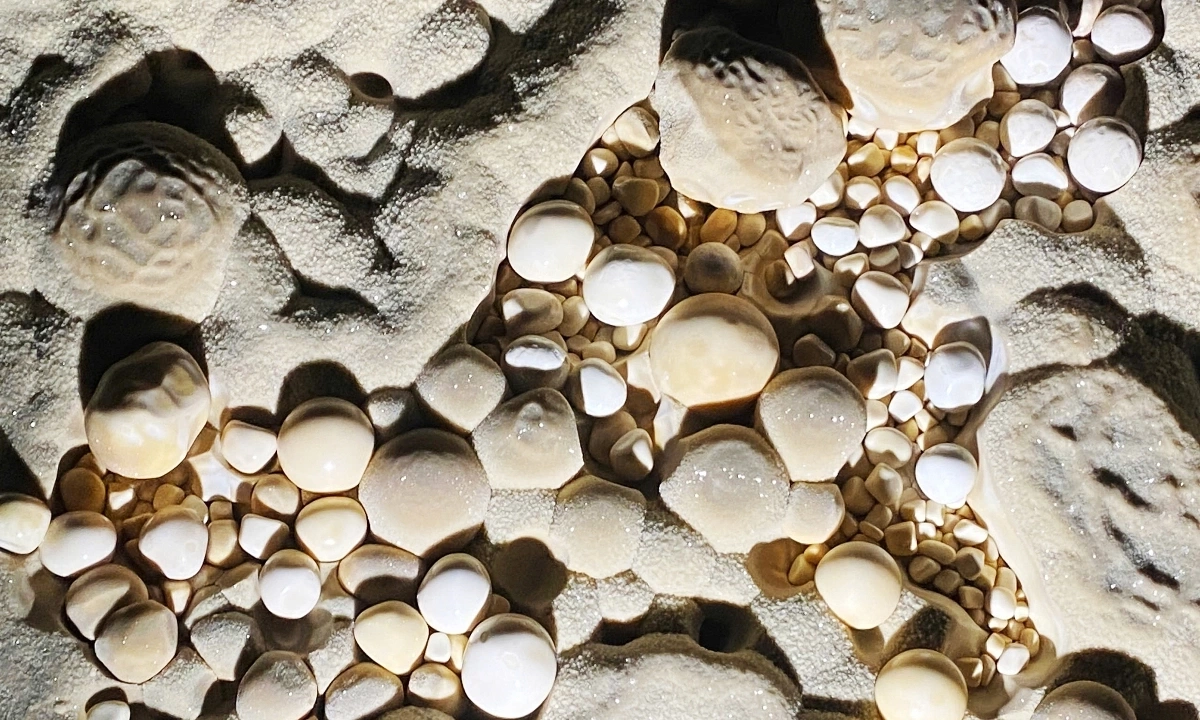
According to experts, the formation of cave pearls is rare in Vietnam. They are created when water seeps through limestone walls, carrying calcium carbonate. This water then drips down onto a nucleus, which is typically a grain of sand or a pebble.
Over thousands of years, layers of calcium build up to form concentric rings around that core. As water flows through the pools on the cave floor, the pearls roll in place and rub against one another. This friction polishes their surfaces until they are smooth.
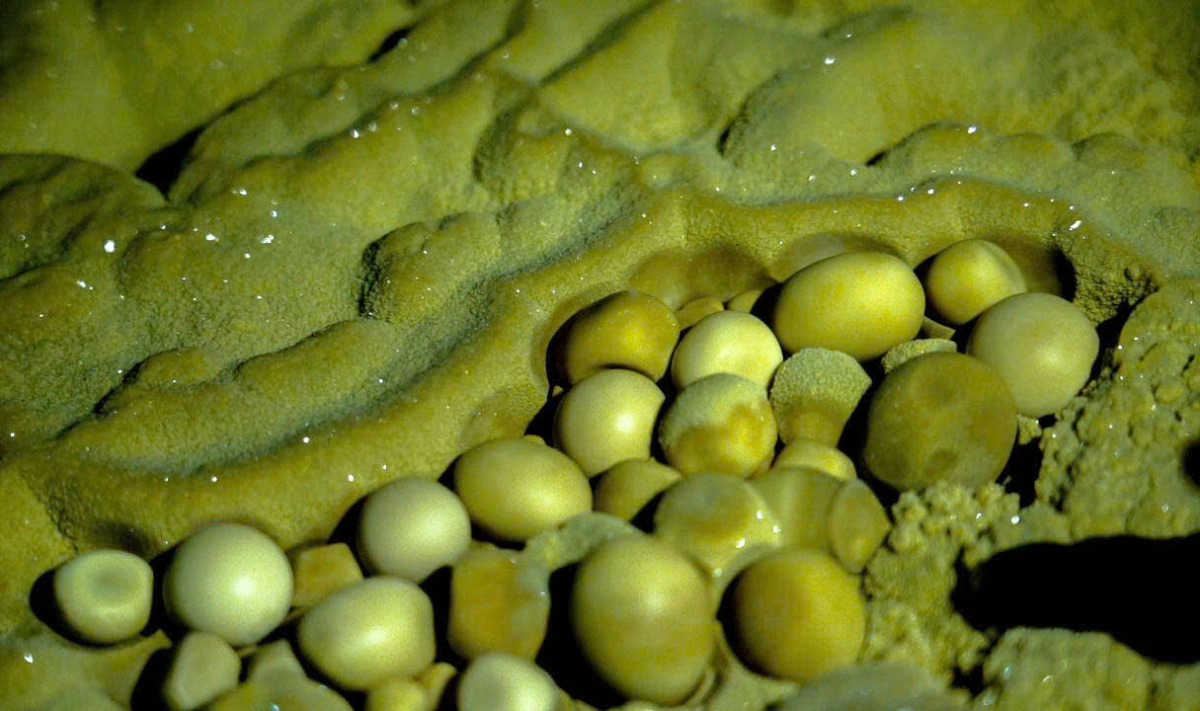
These areas are fed by a constant flow of water, creating ideal conditions for calcium and minerals to precipitate and accumulate around each pearl's nucleus.
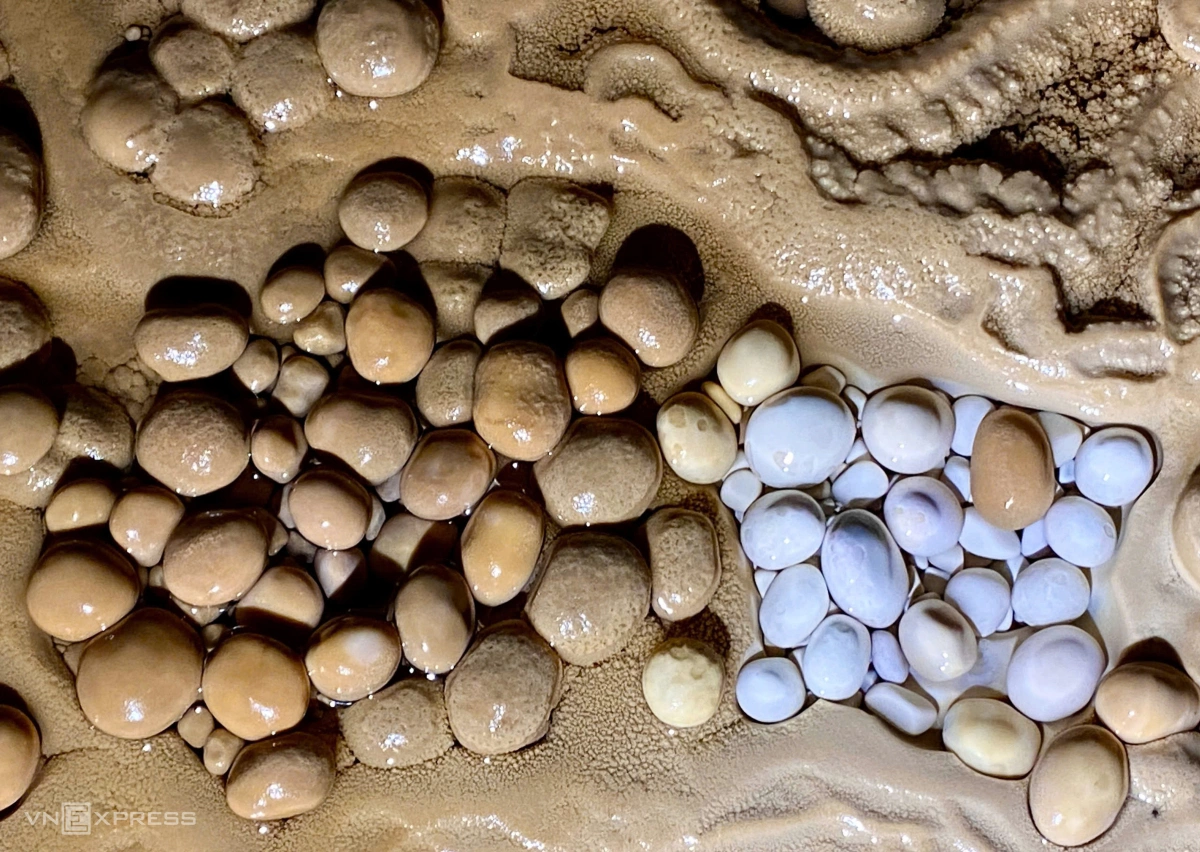
Inside Hung Cave, the pearls are concentrated in circular clusters on the floor, each cluster spanning two to three square meters.
Phong Nha - Ke Bang has more than 400 caves of various sizes, but cave pearls are found in only some of them. Beyond Hung Cave, they also appear in Over Cave and Son Doong. But Hung Cave holds the greatest number, and its pearls are larger.
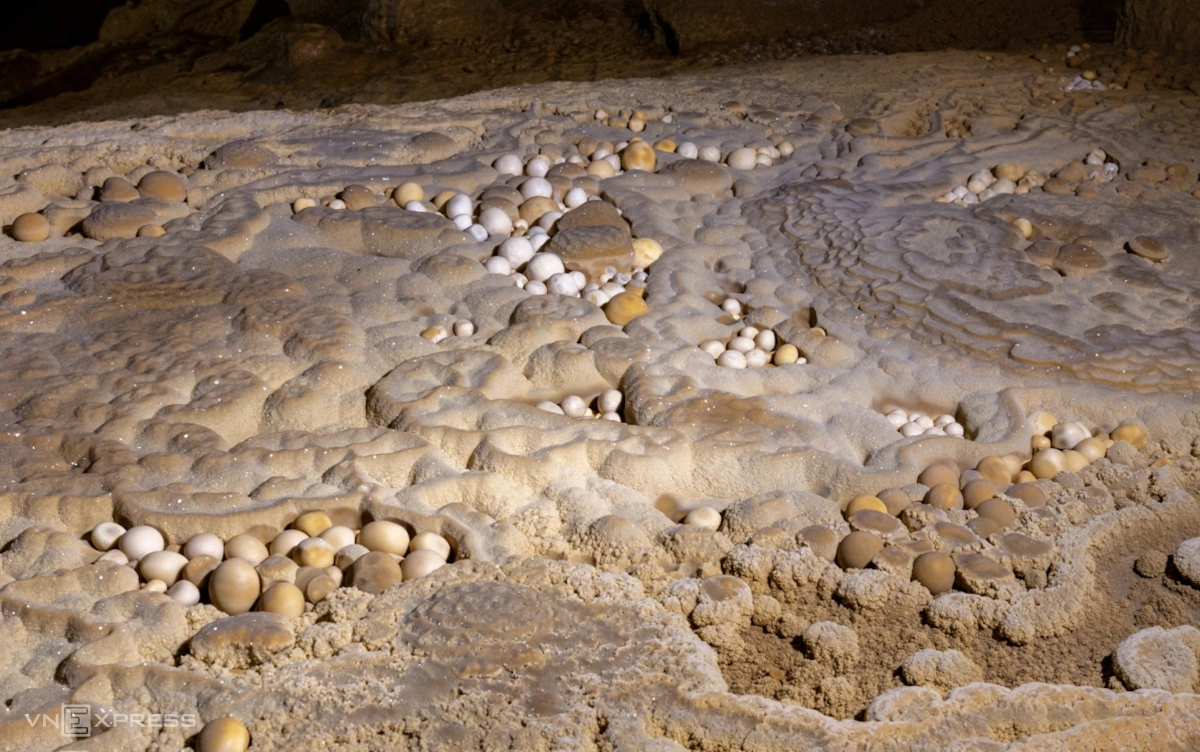
Most of the pearls form within the pools where water percolates through the cave ceiling and drips to the floor below. Depending on the mineral content, the pearls are either yellow or white.
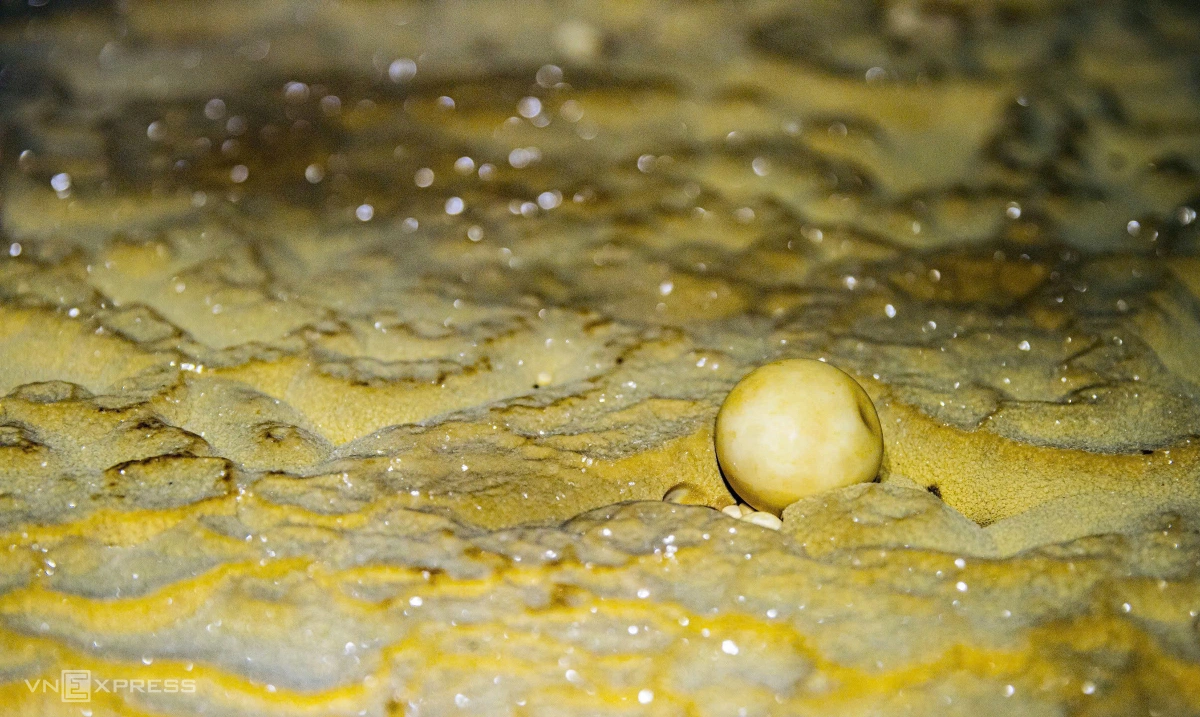
Alongside the formations, many pearls are also found scattered individually across the cave. Their formation depends on factors: the cave's structure, its water supply, mineral composition, and temperature.
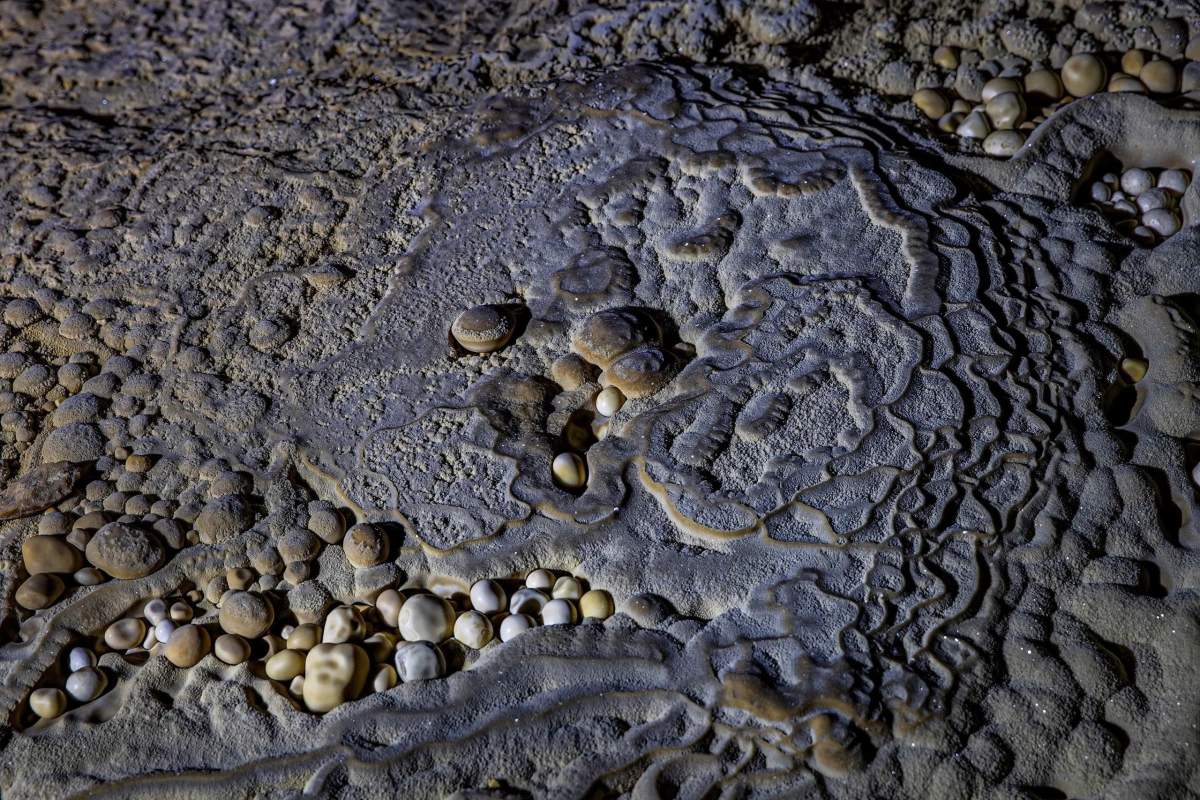
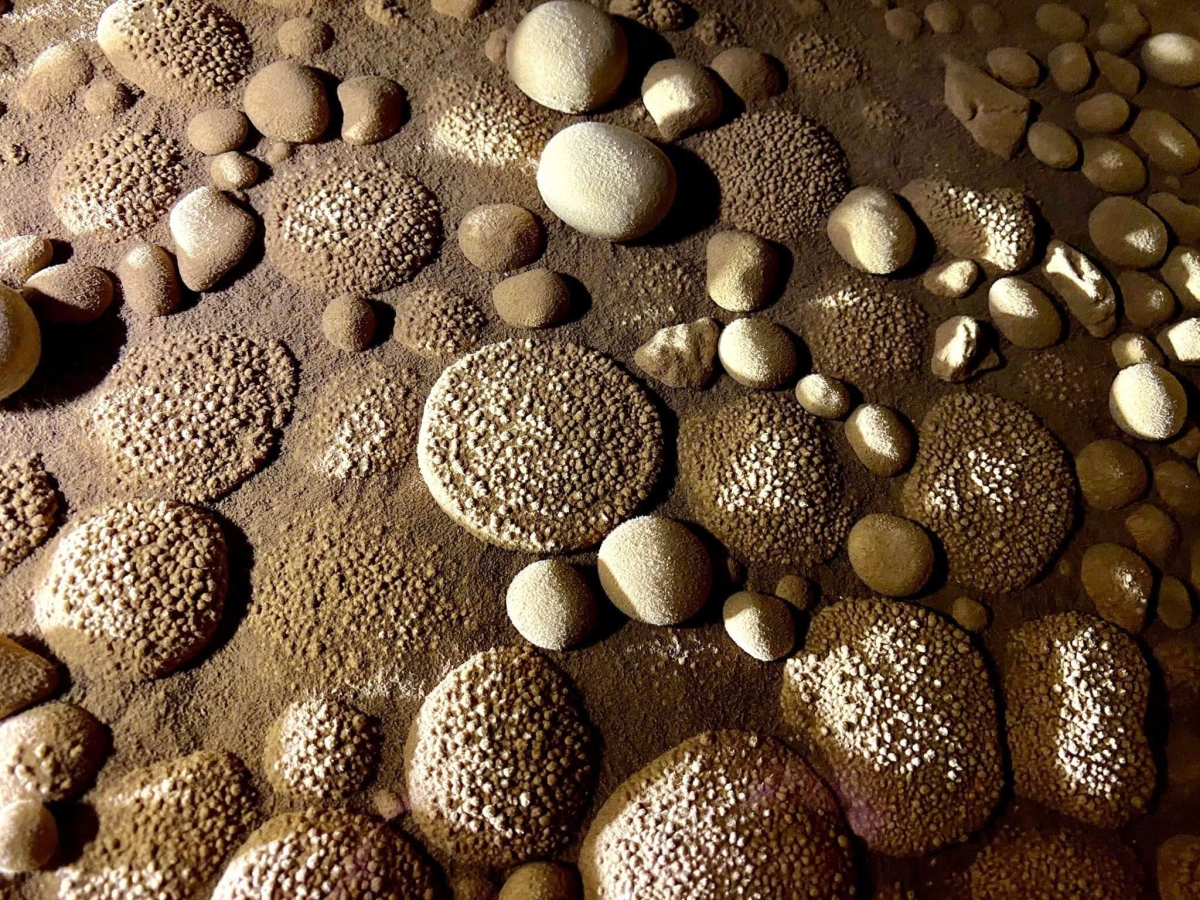
Darker-colored pearls can also be found, some with spiky surfaces.
Experts explain that cave pearls are not gemstones and have no value as jewelry. They are a type of cave speleothem, distinguished by their shape and the way they form.
They are beautiful only within the cave environment. Outside it, a cave pearl is just a rock. Exposed to changes in temperature, humidity, and physical stress, they can crack or lose their color within a short time.

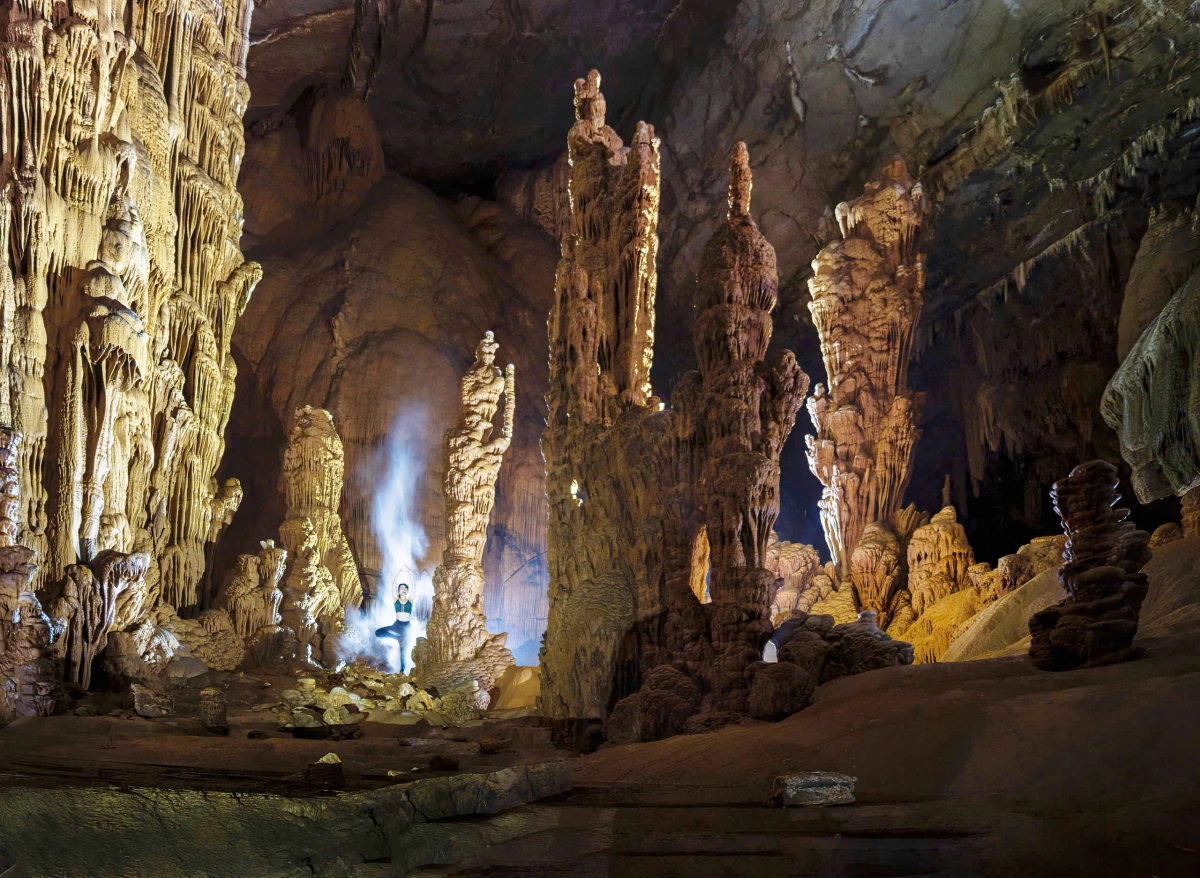
Stalactite columns inside the cave stand more than five meters tall.
Hung Cave, part of the Hung Thoong system, was discovered in 2002. In early 2023, the Quang Binh provincial authority issued a permit for Jungle Boss Company, in collaboration with the Phong Nha - Ke Bang National Park Management Board, to develop the site for tourism.
This is not a mass-tourism destination. The experience is organized as an adventure tour, with groups capped at a maximum of 15 visitors. Participants pay around VND12 million (US$456), trek more than 17 kilometers through jungle terrain, and are required to be in good physical condition.
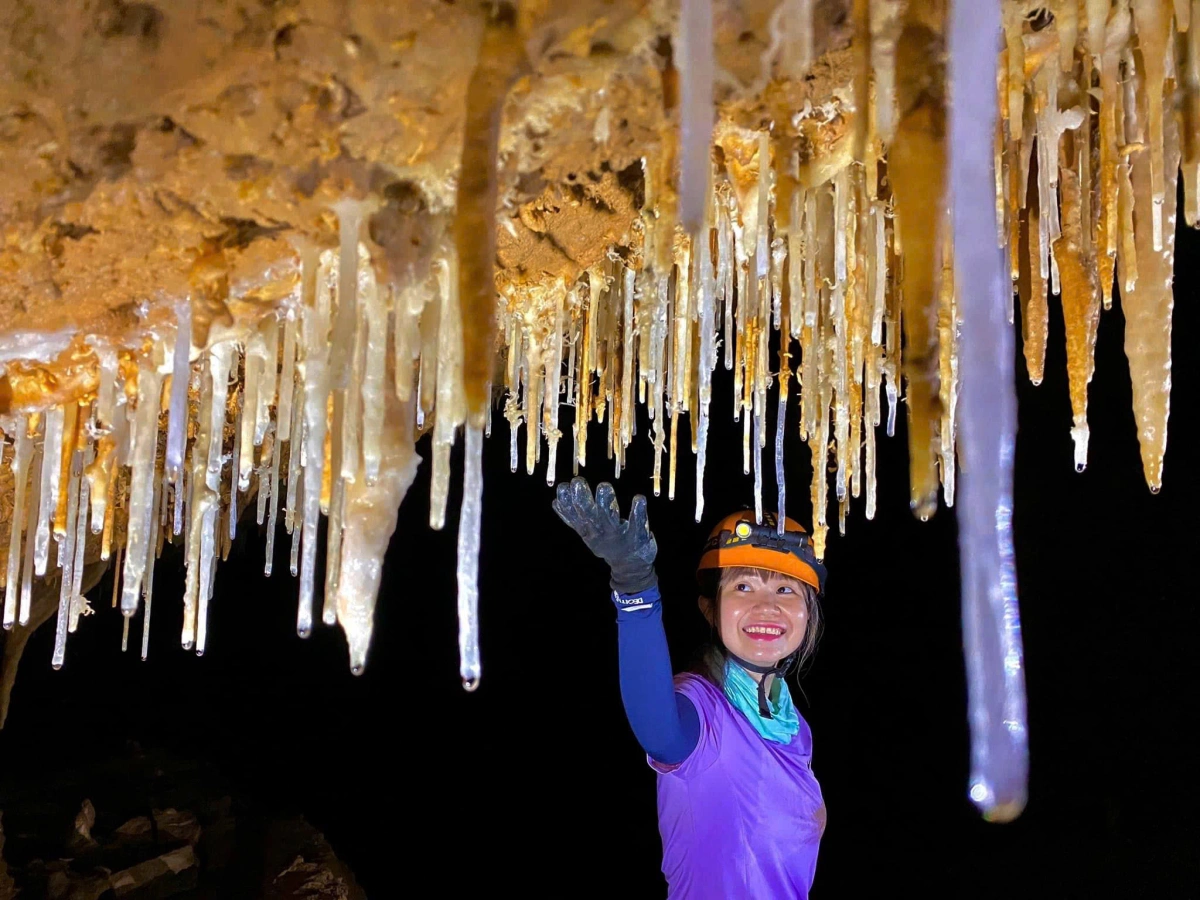
The peak visitor season runs from April to August. The three-day, two-night trip includes trekking through forest, wading through streams, navigating terrain, and exploring the cave system.
Before each trip, visitors are equipped with gear, briefed on regulations, and asked to sign an environment commitment, all under the supervision of a guide and a safety assistant.
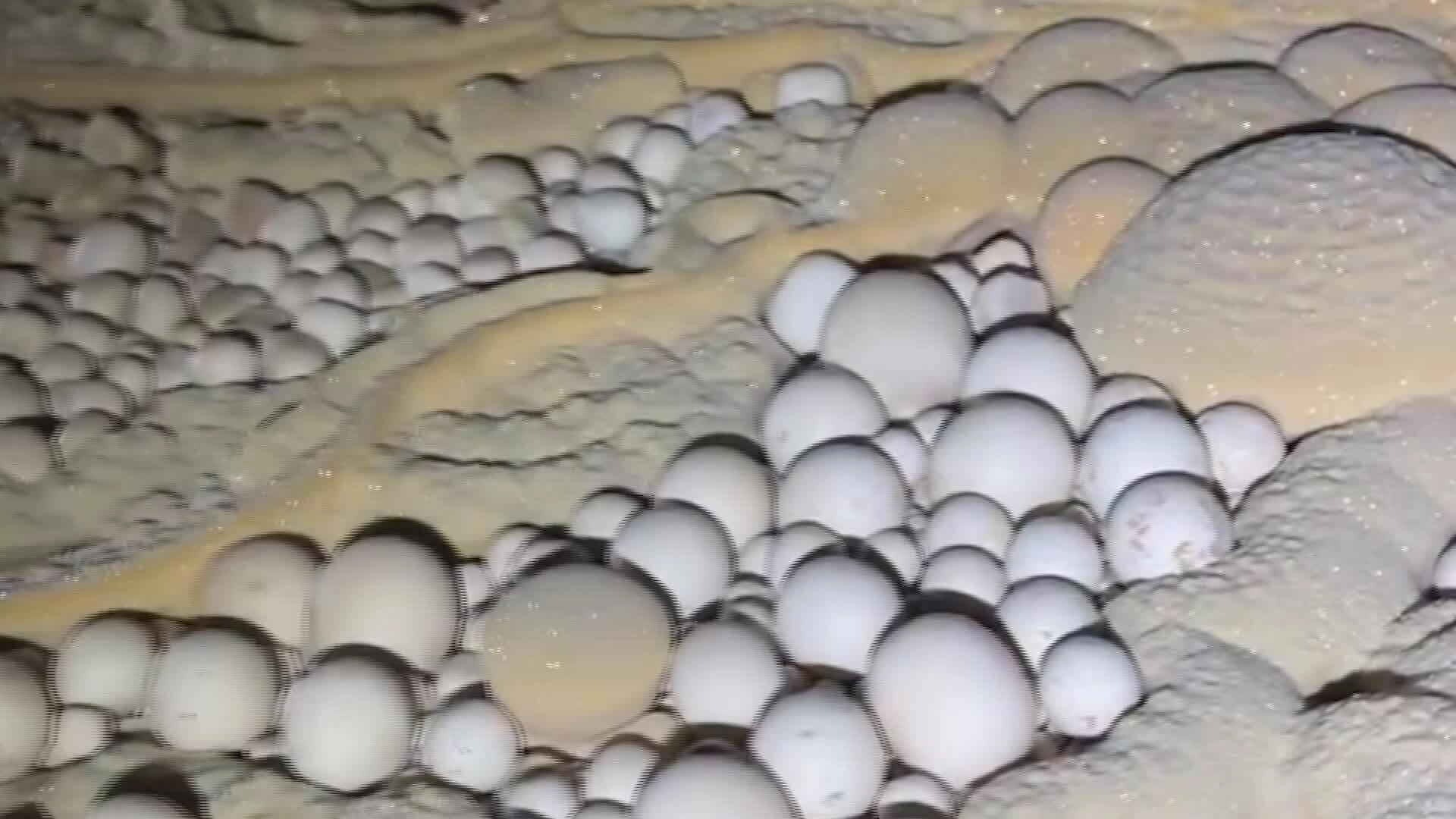
Hundreds of cave pearls found within Hung Cave. Video by Uy Jang Jong


