


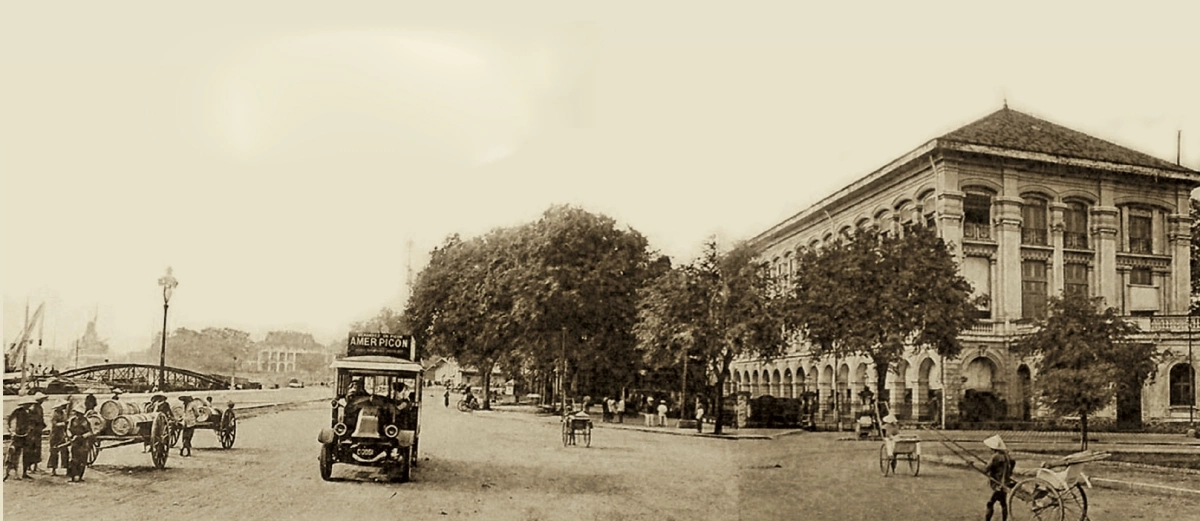
A view of people traveling along Ton Duc Thang Street in the early 20th century. In 1865 the French named this road Boulevard de la Citadelle. At that time the main means of transportation were hand-pulled rickshaws, of which there were 400 in Saigon.
This photo is in the book "Heritage of Saigon – Ho Chi Minh City", edited by Nguyen Hanh and recently published by the Ho Chi Minh City General Publishing House.

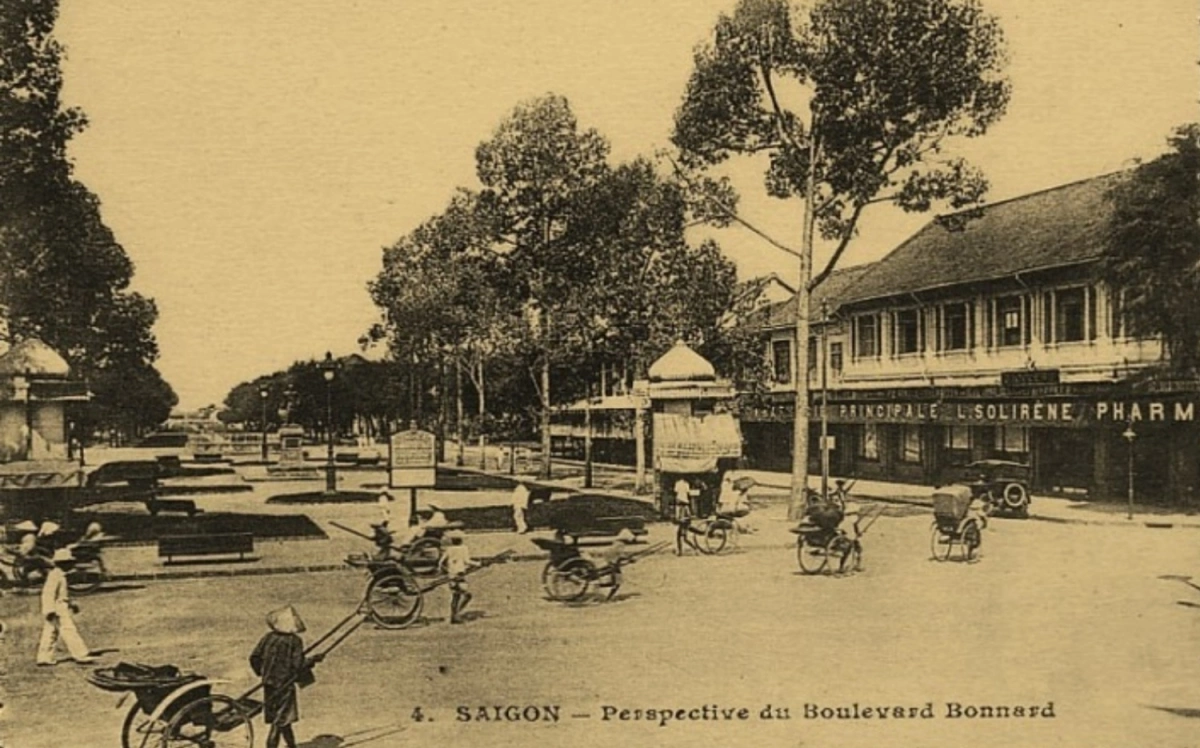
Le Loi Street is among the oldest and most typical streets in the city. Initially it was a canal some 0.8 km long dug in 1862. The road running along the canal was named Street No. 13 and changed to Bonard Street in 1865.

Le Loi was also one of the busiest streets in old Saigon, home to many hotels and stores belonging to well-known brands.
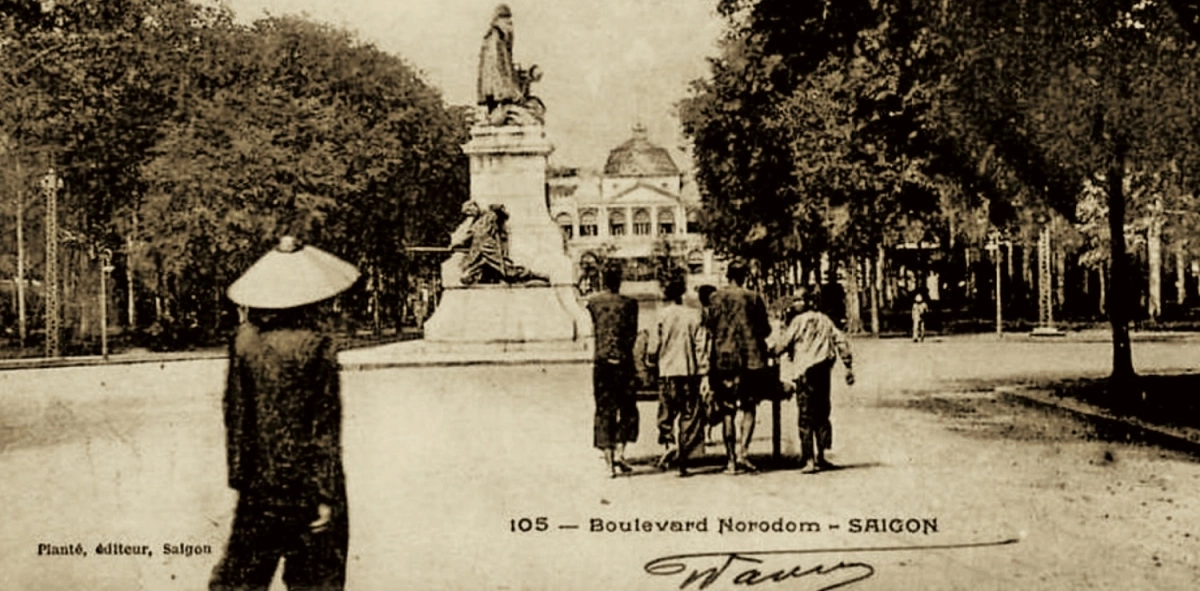
Le Duan Street was built in the 1870s and originally called Boulevard Norodom because it led to Norodom Palace (now Independence Palace). Along this nearly two-kilometer-long street are many of the city's oldest landmarks such as Notre Dame Cathedral, Onzième barracks (Ong Dem Barracks) and the Saigon Zoo and Botanical Gardens.
The "Onzième barracks" in Saigon refers to the Caserne de l'Infanterie, also known as the 11th Colonial Infantry Barracks. It was built by the French in the 1870s on the site of the former Phoenix Citadel. Following the Japanese coup in 1945, it was briefly used to imprison French soldiers. In 1956 it was renamed Cong Hoa (Republic) barracks and became the headquarters and barracks of the Presidential Guard under President Ngo Dinh Diem.
The barracks were heavily damaged during the 1963 coup and the only remaining parts are the two gatehouses at 2a Le Duan Boulevard.

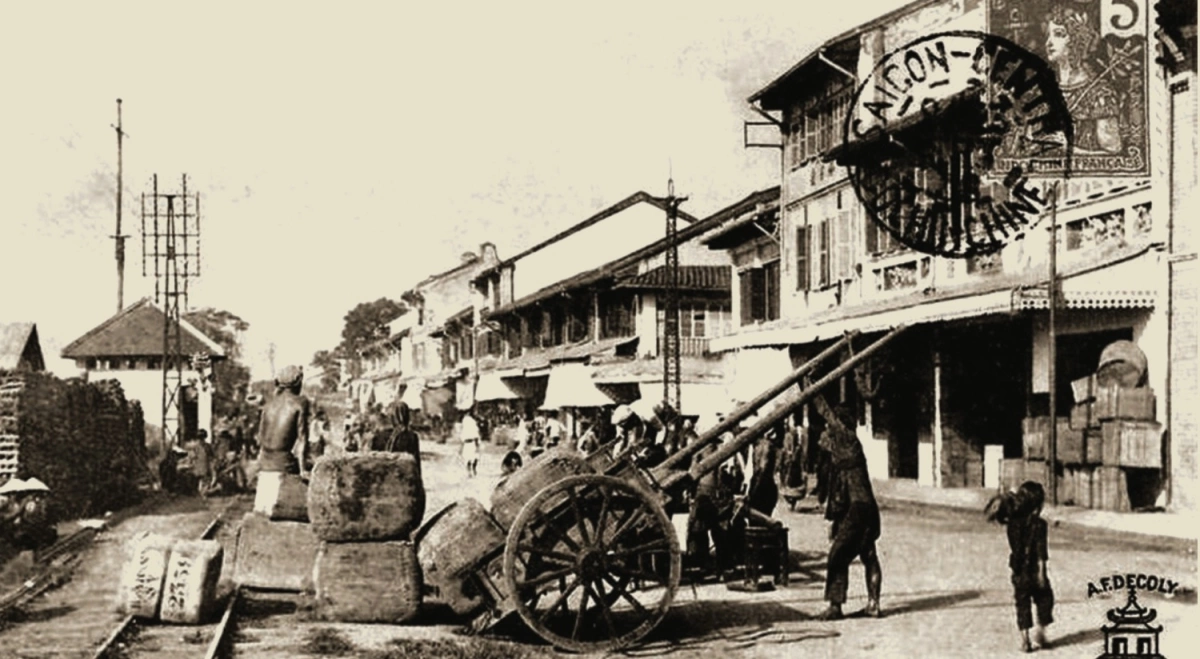
Workers in Cho Lon (Chinatown) in the early 20th century.
Until 1865 Saigon and Cho Lon were still two separate cities, divided by several villages and marshy fields. The French built a road through the marshes; the road from the Cho Lon side was called Rue des Marins (Sailors' Street).
In 1916 the two cities were connected by Galliéni Boulevard. At first it was paved with laterite stone before being asphalted, and got a row of electric lights in the middle and tram rails on both sides.
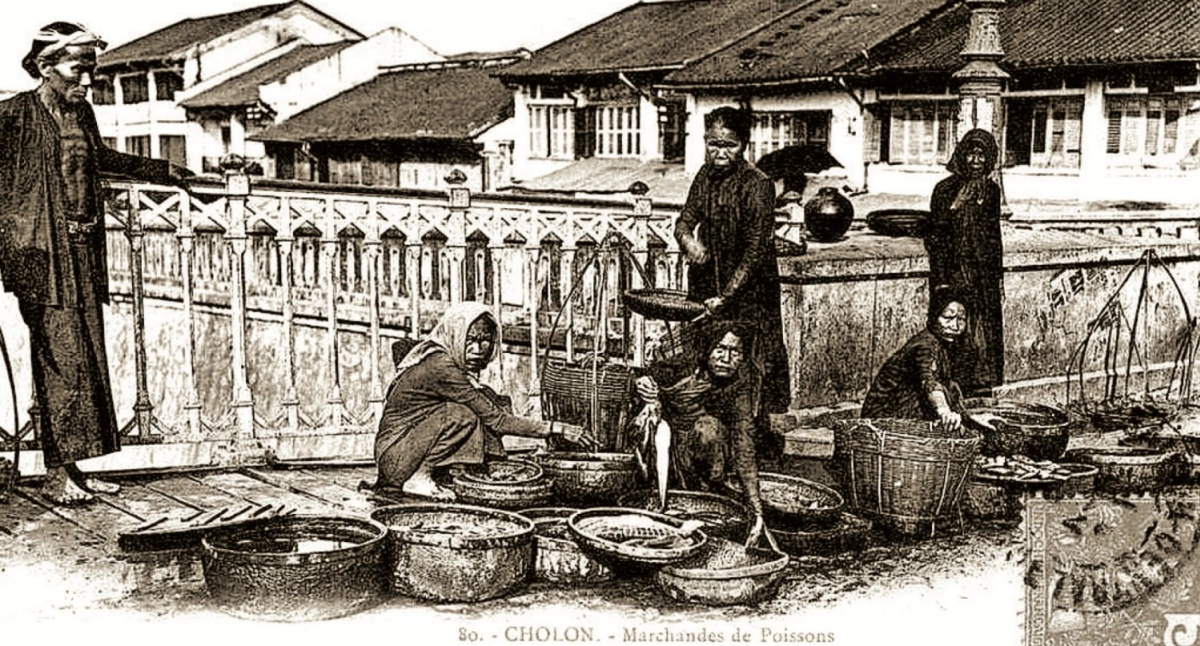
Locals trading on Cha Va Bridge, which has over 100 years of history, between the former Districts 5 and 8 across the Tau Hu Canal.
The area near the bridge was a market street for Indians who sold fabrics. According to editor and author Nguyen Hanh, the French originally named the bridge Malabar, after a coastal region in eastern India from where many of the Indians came to Saigon.
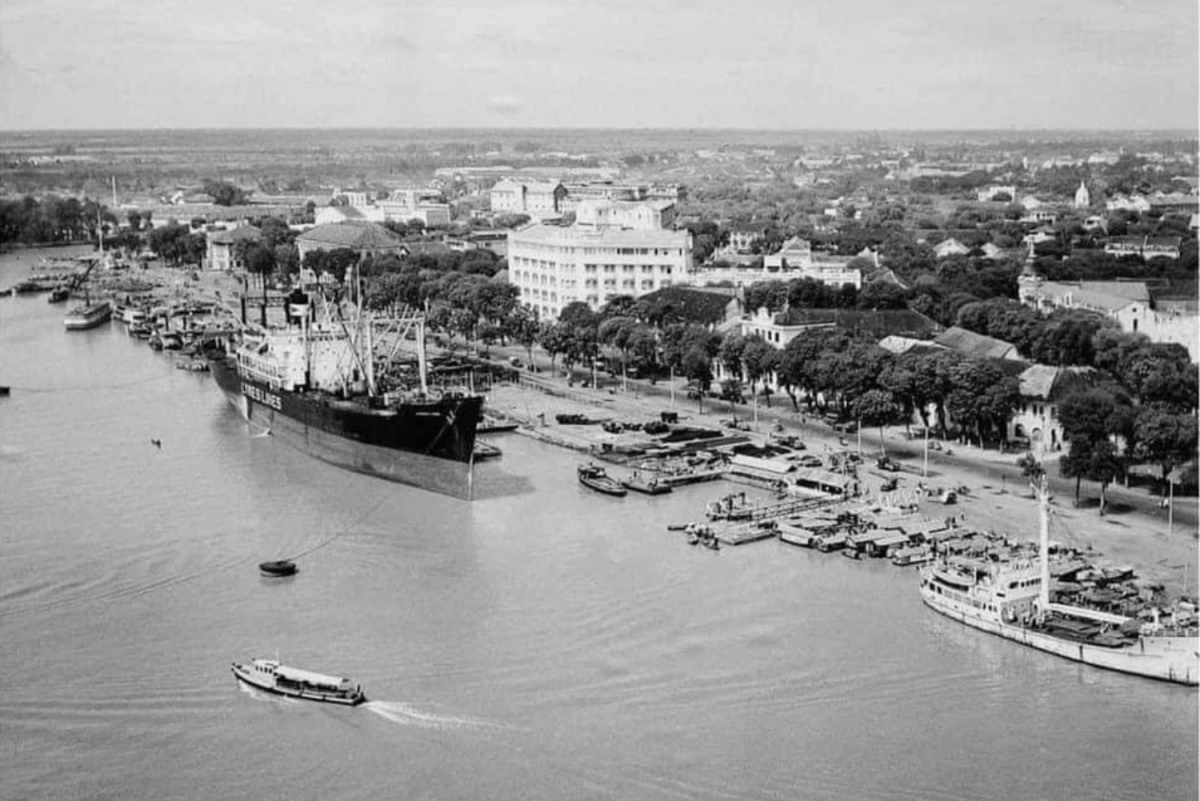
Bach Dang Wharf on the Saigon River. It lies along Ton Duc Thang Street, facing the river, stretching from Khanh Hoi Bridge to the Ba Son shipyard. According to researcher Vuong Hong Sen, Bach Dang is associated with the history of three great victories over the Mongol invasions, and so the name was chosen to commemorate the heroic feats of the Dai Viet (the former name of Vietnam) people.
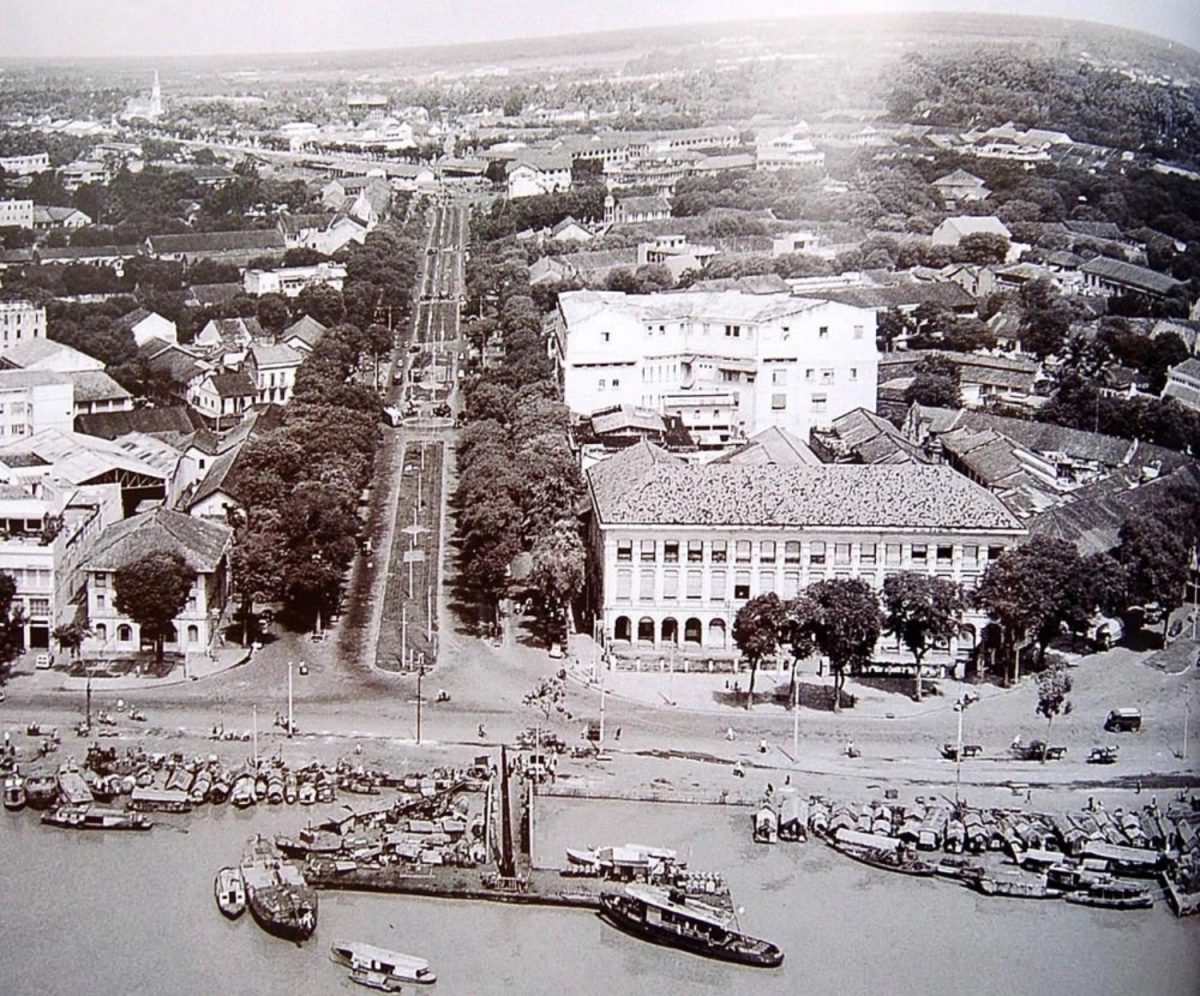
Scenes of trade and other activities on the Saigon River.
This area later became Me Linh Circle, with the statue of Tran Hung Dao, one of the greatest military strategists in Vietnam's history, in the middle.
During the French colonial era, this square was called Rigault de Genouilly, named after a French admiral who served as governor of southern Vietnam.
