





At 7 p.m., nearly 20 officers and soldiers from Engineer Battalion 544 of the High Command of Capital Hanoi, joined by Area Defense Command 4 - Gia Lam and the Bo De Ward militia - set out to recover the two bombs on an islet in the middle of the Red River, a short distance from the city center.
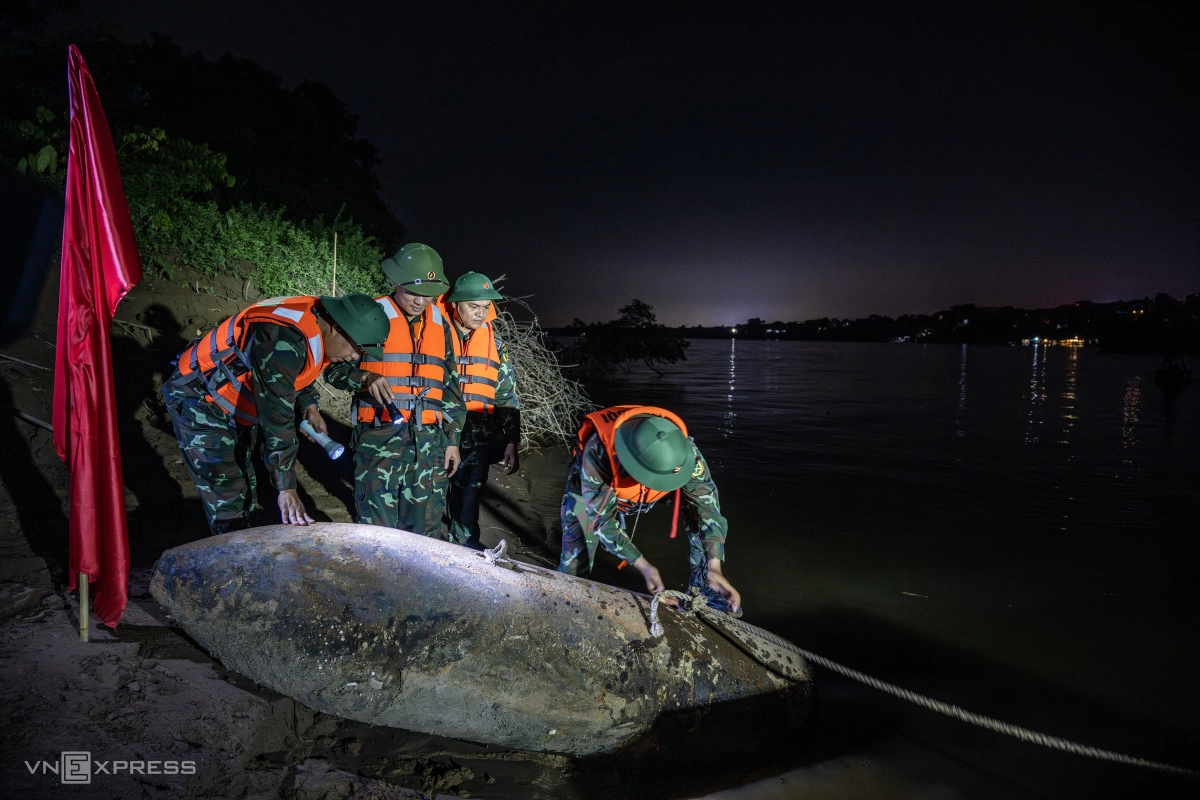
Flags are planted to mark the sites. The bombs were discovered Monday afternoon about 300 meters upstream from pier P10 of Long Bien Bridge, within Bo De Ward. After receiving the report, the Capital High Command ordered the Engineering Department to verify the discovery. Inspectors confirmed they were M118 demolition bombs, marked 3,000 lbs (about 1,362 kg), with both nose and tail fuzes intact.
“These are the largest demolition bombs ever found unexploded near Long Bien Bridge, dropped by the U.S.,” said Colonel Nguyen Chien Thang, head of the Capital Command’s Engineering Department.
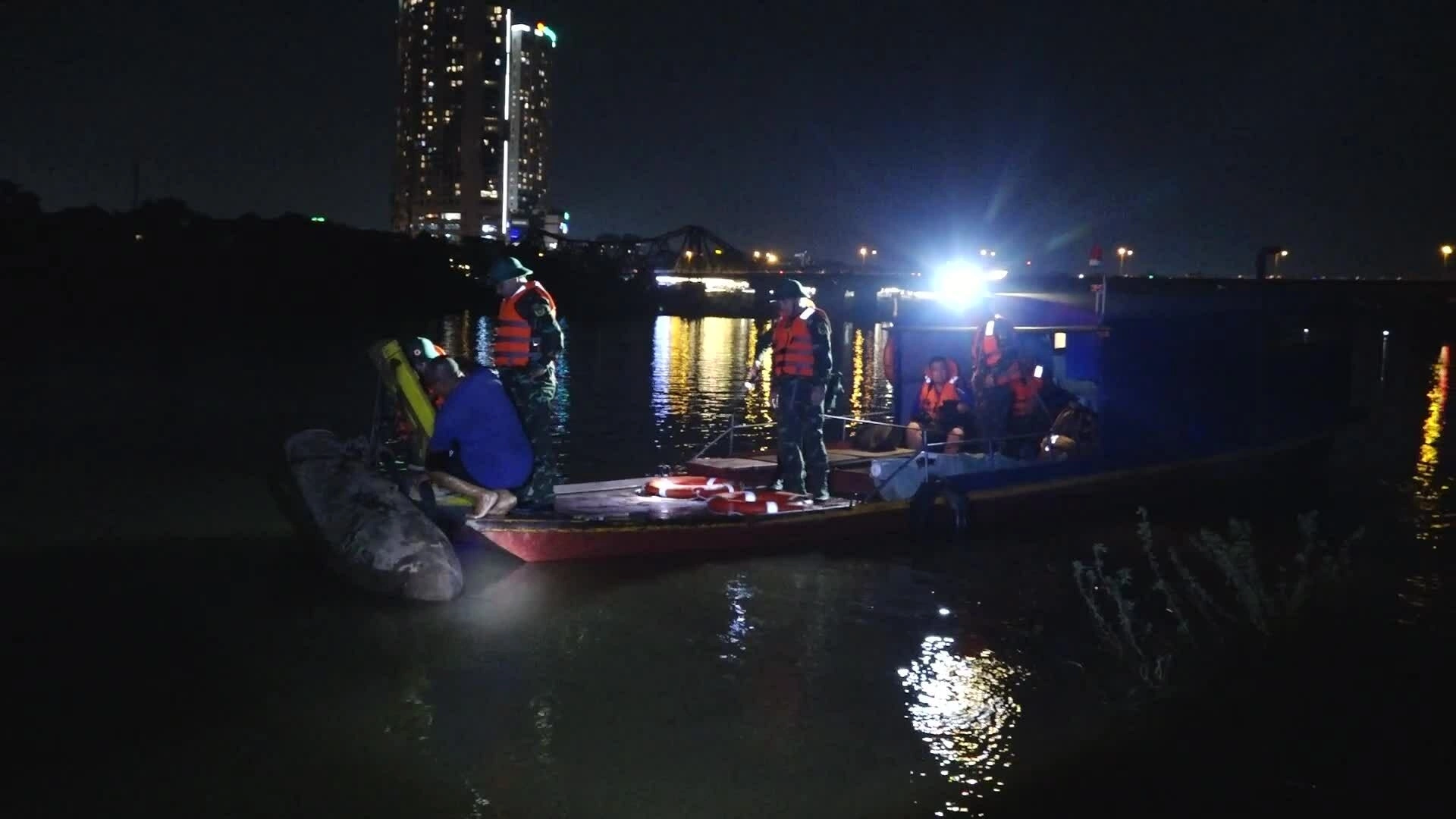
Soliders pick up two bombs in the Red River near Long Bien Bridge. Video by VnExpress/Huy Manh
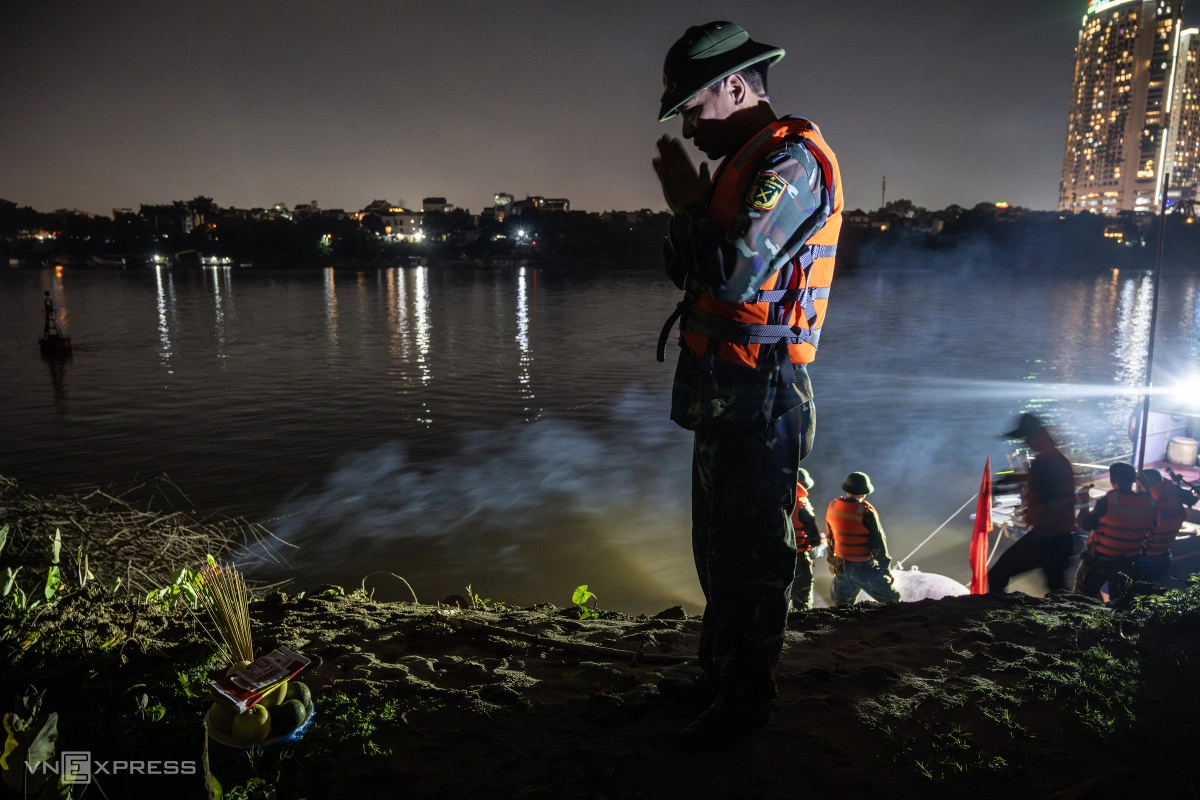
An incense offering was held before the engineers began work. Earlier, forces had installed floating barriers, cordoned off the danger zone, and restricted boat traffic near the site. The Capital High Command reported to the General Staff, which approved transporting the bombs to the TB1 Firing Range in Luc Ngan, Bac Ninh Province, nearly 200 km from Hanoi, for disposal.
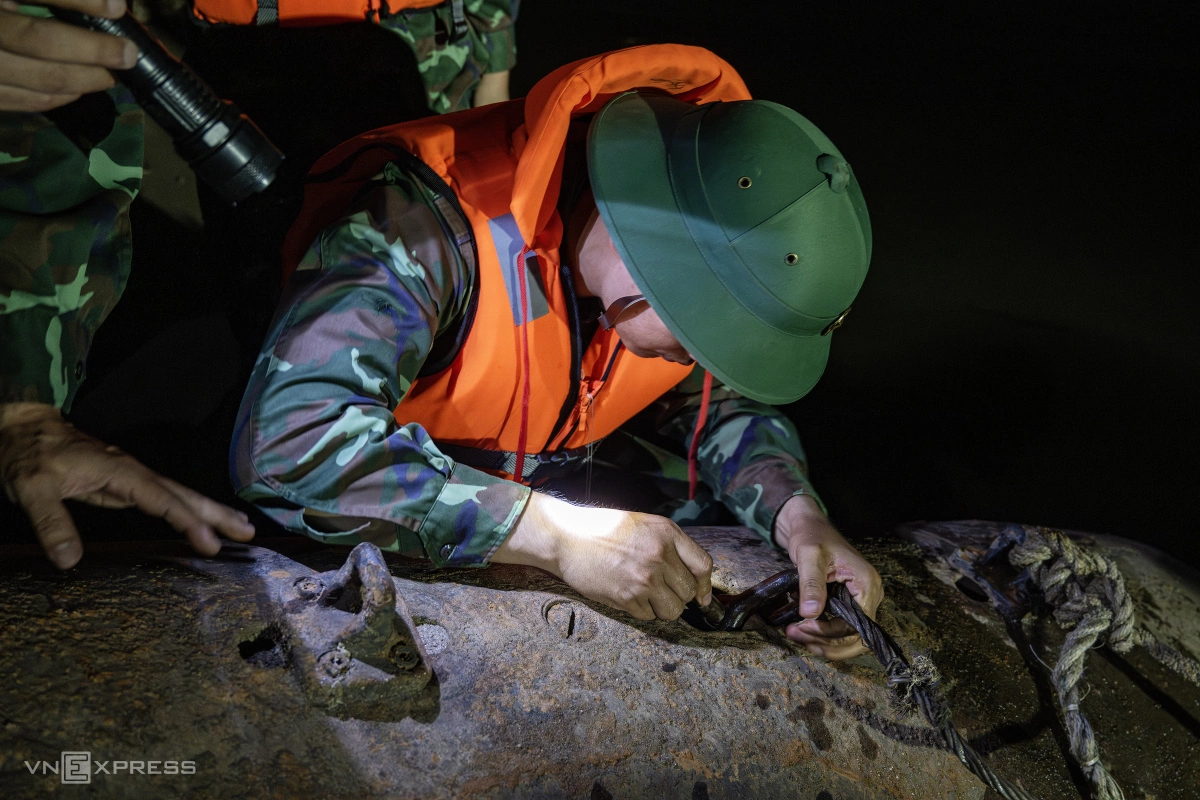
The bombs' exteriors were rusted but still retained their lifting lugs. Over the past 15 years, the Capital Command has collected and disposed of more than 1,700 explosive remnants of war, including 103 demolition bombs ranging from 250 to 3,000 lbs, over 940 cluster munitions, and 660 artillery shells, mortars, and other explosives.
Colonel Thang noted that many leftover munitions had armed fuzing mechanisms but failed to detonate due to malfunctions, insufficient rotor turns, or inadequate impact. They remain “extremely dangerous” and could explode at any time, he warned, urging the public to avoid suspected ordnance and immediately alert authorities for safe disposal.
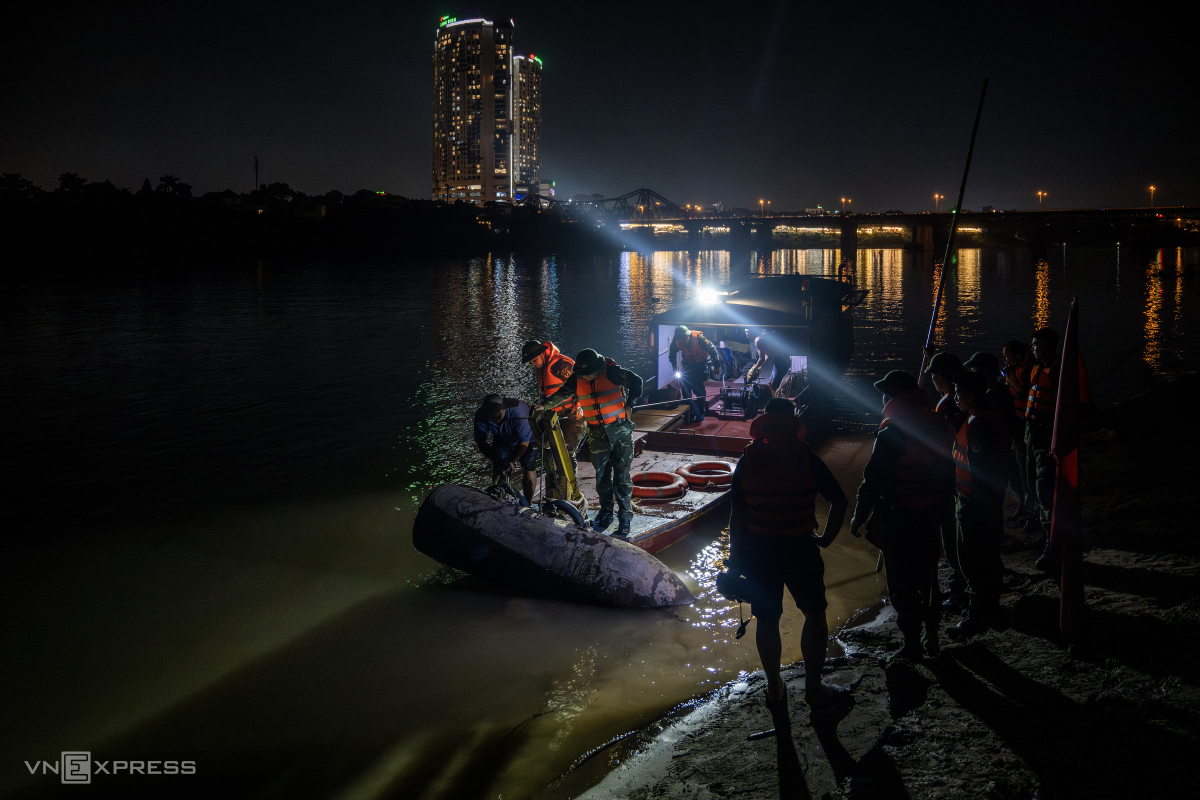
After 20 minutes, soldiers used steel cables to secure one bomb to a ferry’s stern and towed it about 2 km to Hoa Lang Port, where it was hoisted ashore.

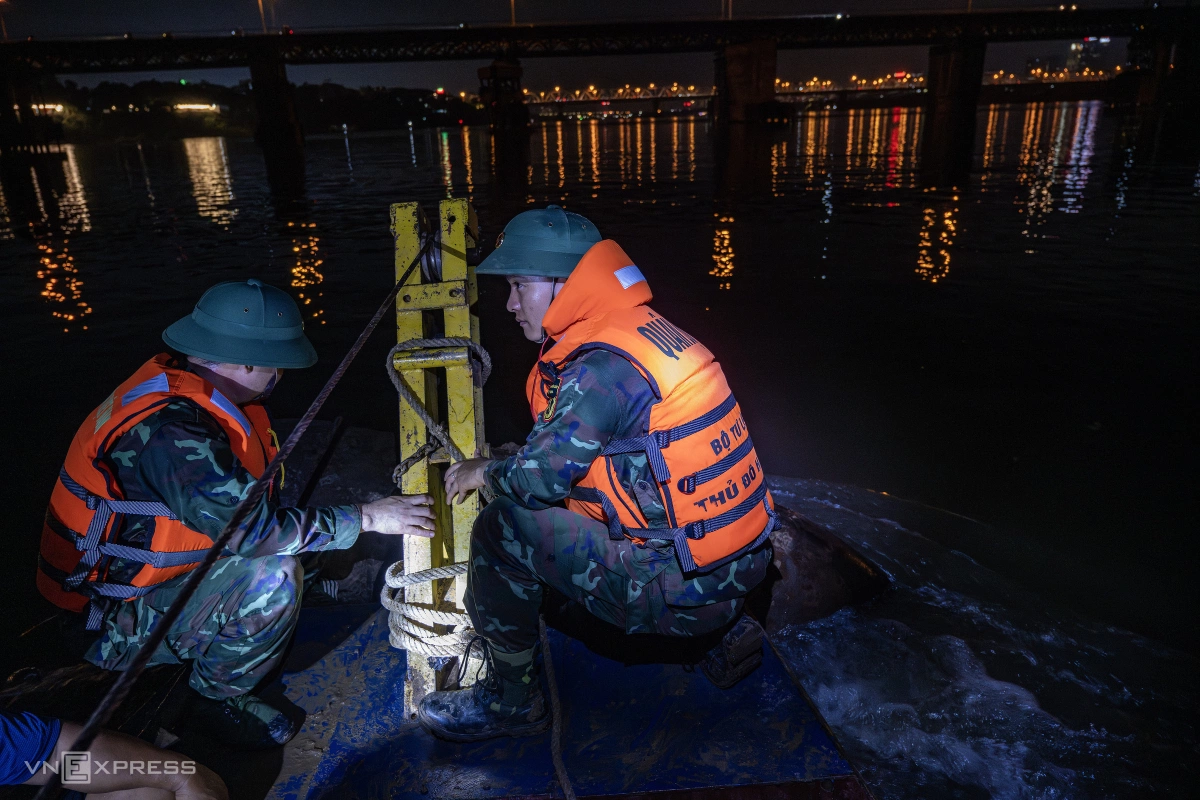
On the tow back to shore, engineers repeatedly checked the securing cables. All personnel involved demonstrated steady nerves and strong professionalism.

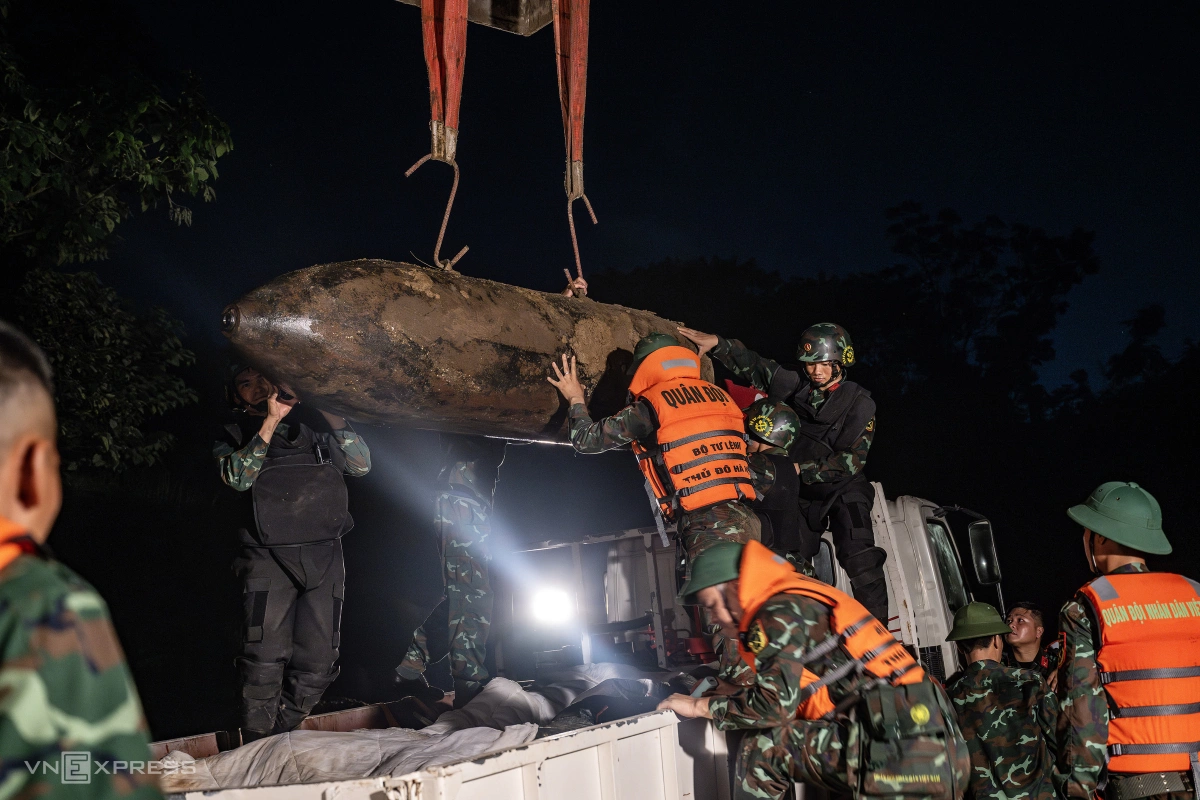
On-site commander Major Le Van Hung, commander of Engineer Battalion 544, said that because both bombs still had fuzes, every step had to follow strict procedures.
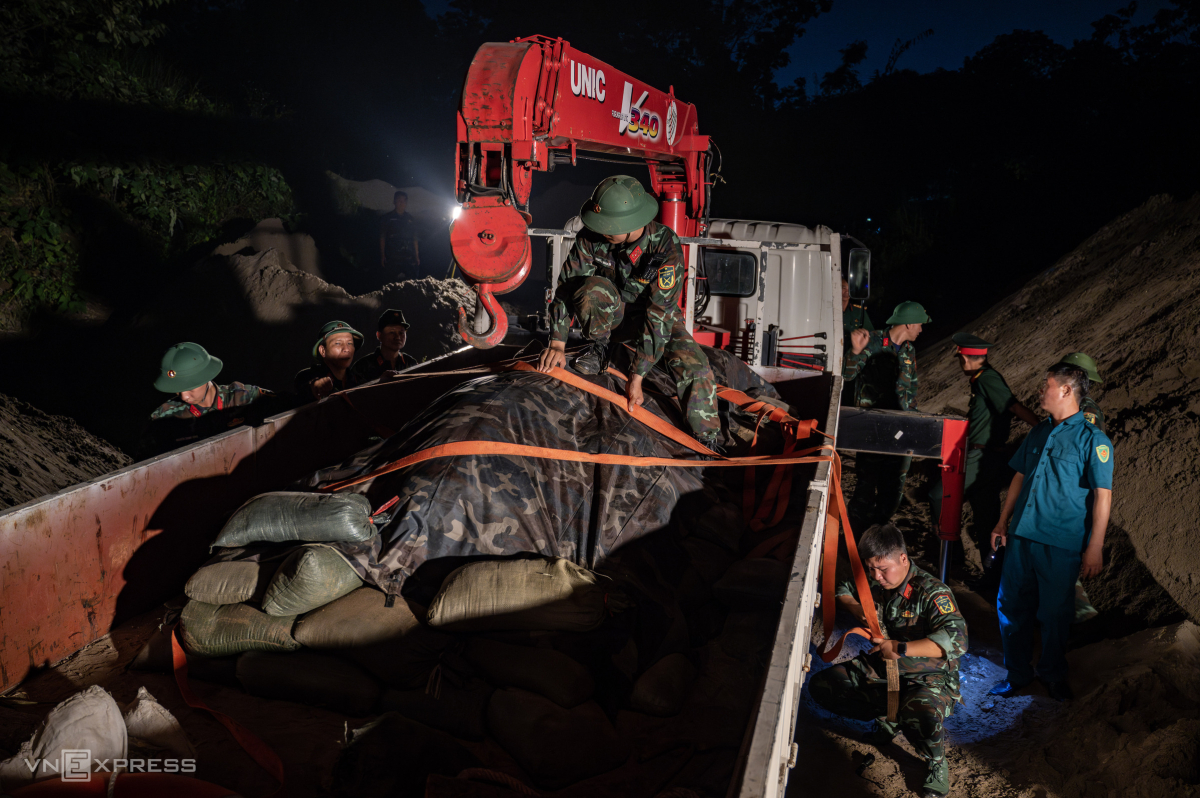
Troops and militia used wood and sandbags to brace and secure the loads during transport. An advance team from the Capital Command’s engineers departed earlier to coordinate with TB1 Firing Range personnel on preparing the demolition area, access roads, excavation pits, firing equipment, and perimeter warnings.
The bombs arrived at TB1 at 4 a.m. Friday and were destroyed at 6 a.m., without affecting the range's normal operations.
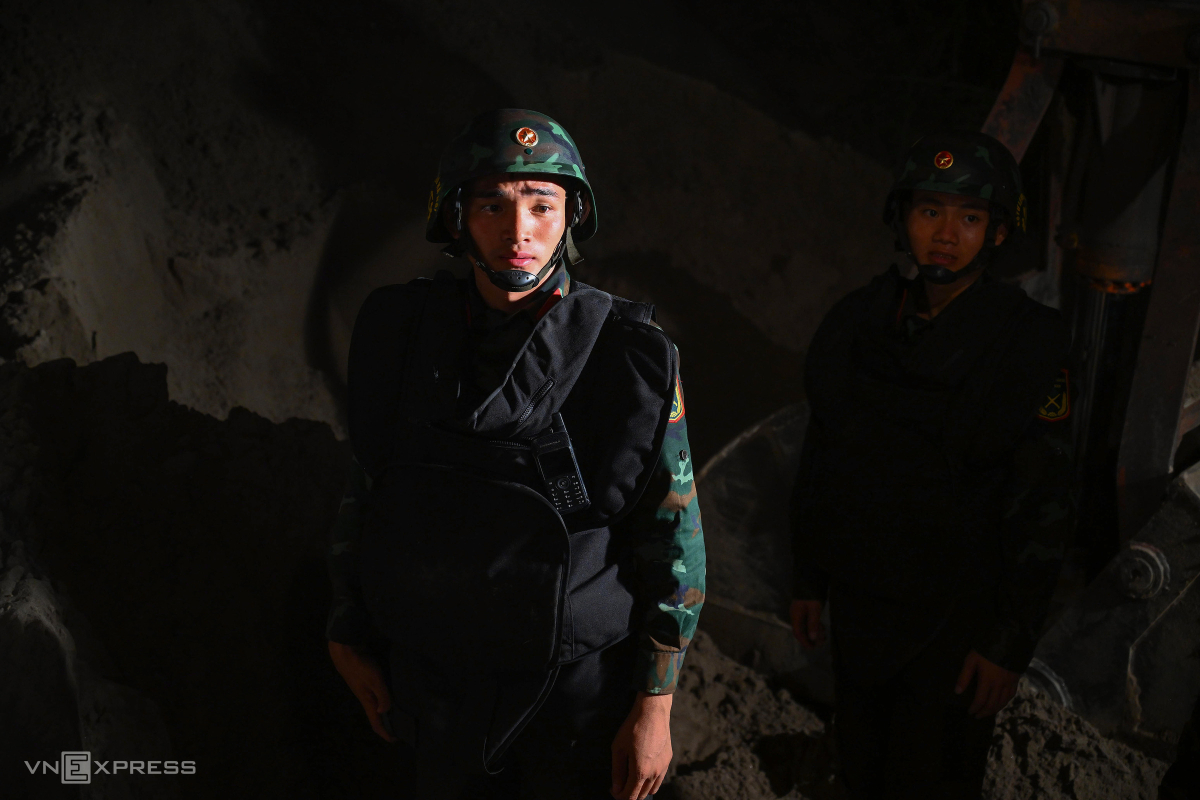
Nguyen Ba Dat, leader of Squad 4, Company 2, Battalion 544, donned a mine-protection vest and A2 helmet and carried a radio as he prepared to ride with the convoy to the TB1 range. His tasks included laying firing cables, setting the firing point, placing charges, and executing the demolition.
In his two years with the unit, Dat has participated in four demolitions of large bombs.
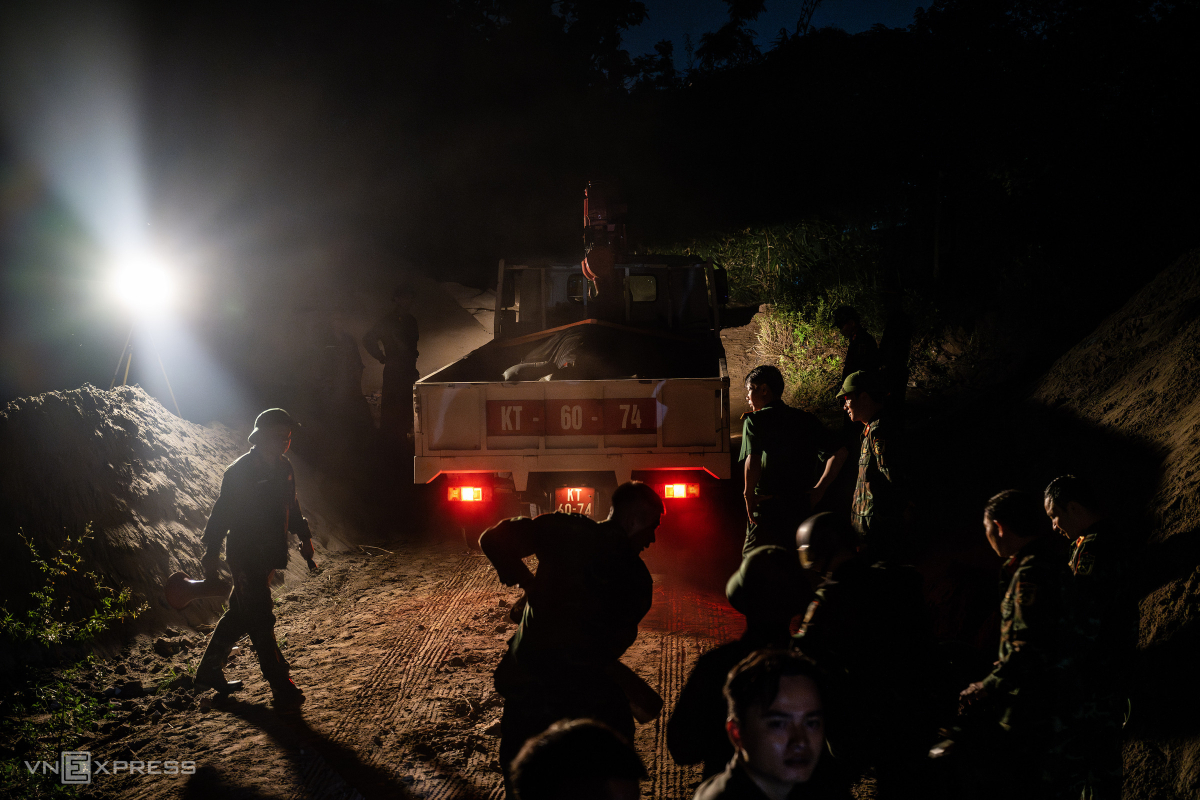
The convoy—one command vehicle, a troop carrier, two bomb carriers, and a support truck—left the city shortly after 9 p.m. On the 200-km route to TB1, the vehicles traveled in single file, spaced 100 meters apart, at a maximum speed of 40 kph.
All stages of recovery, transport, and destruction were conducted at night, when traffic and pedestrian density are lower, to ensure road safety and public security.


