


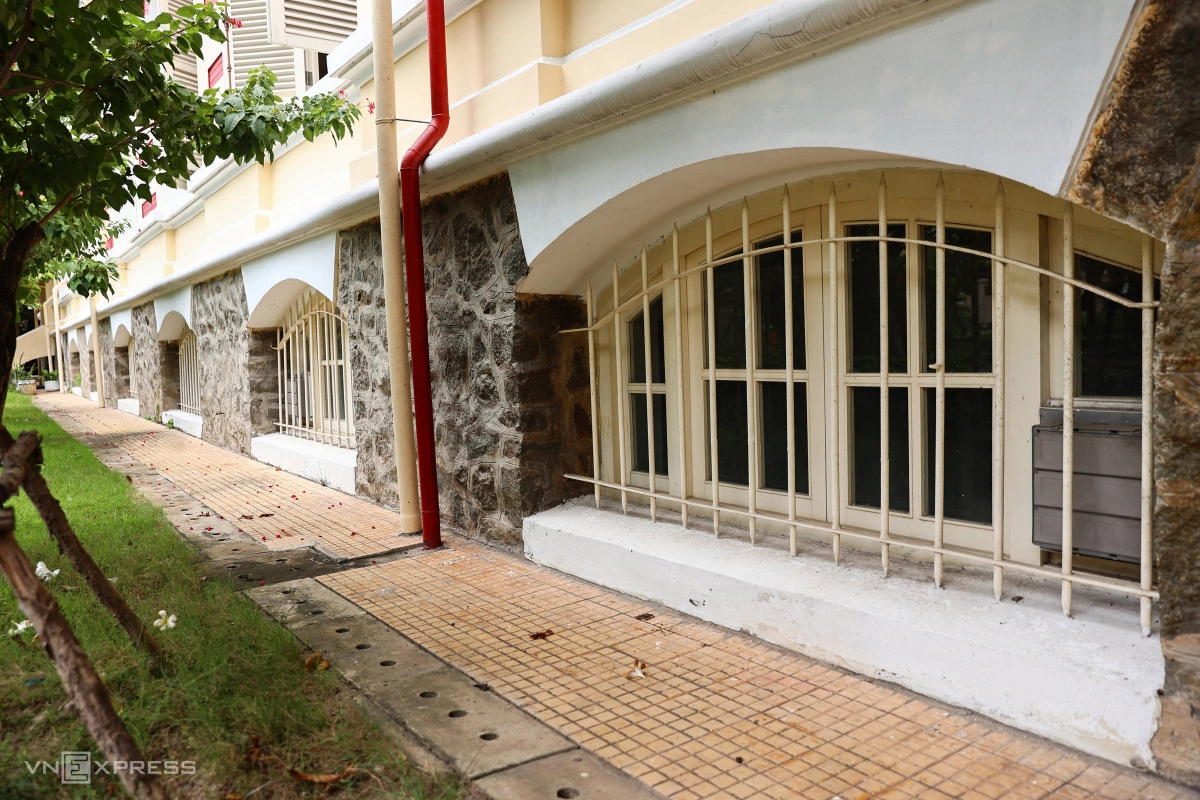
Unlike typical French buildings with two floors, the Pasteur Institute features a semi-basement that is partly above and partly below ground.
This semi-basement is made of sturdy stone.
Thanks to its partially above-ground design, this level has windows to allow natural light and ventilation. The basement is still used for staff offices and housing some of the institute's research equipment.

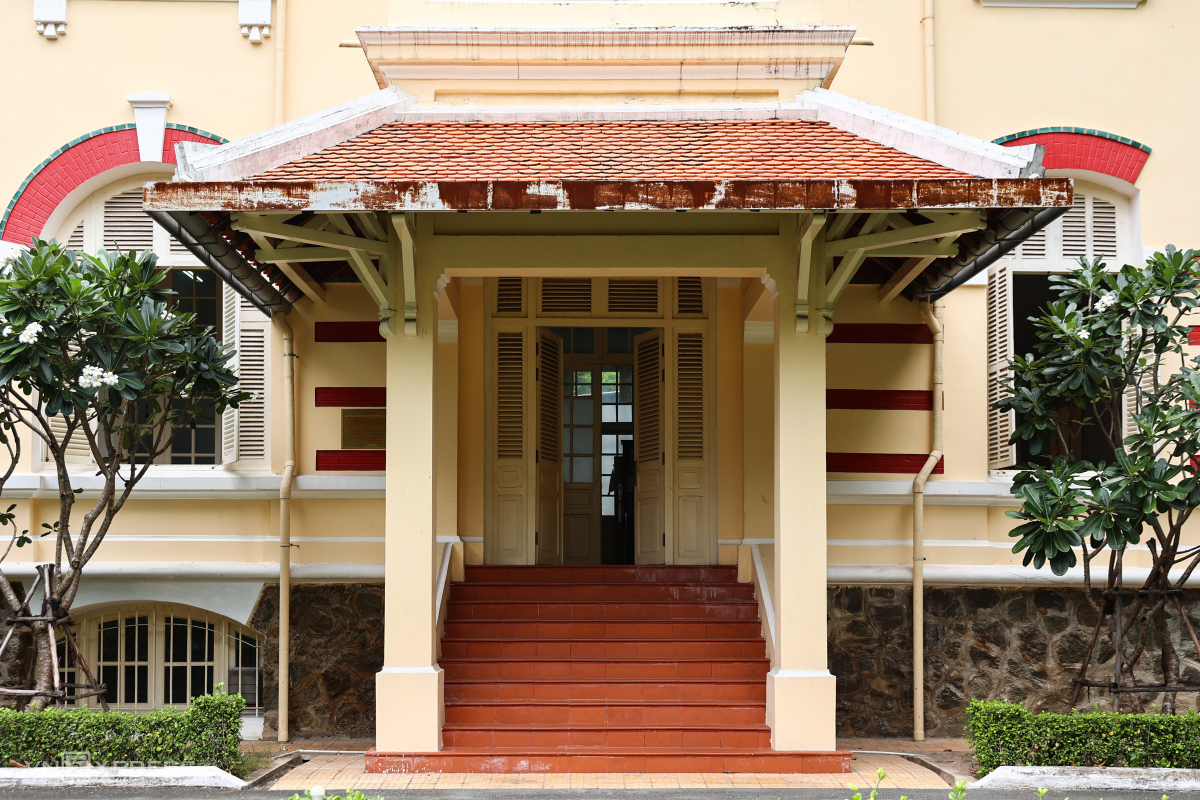
Each building has two symmetrical staircases leading to the hallway and functional areas. On their sides are low parapets that blend harmoniously with the overall architecture.


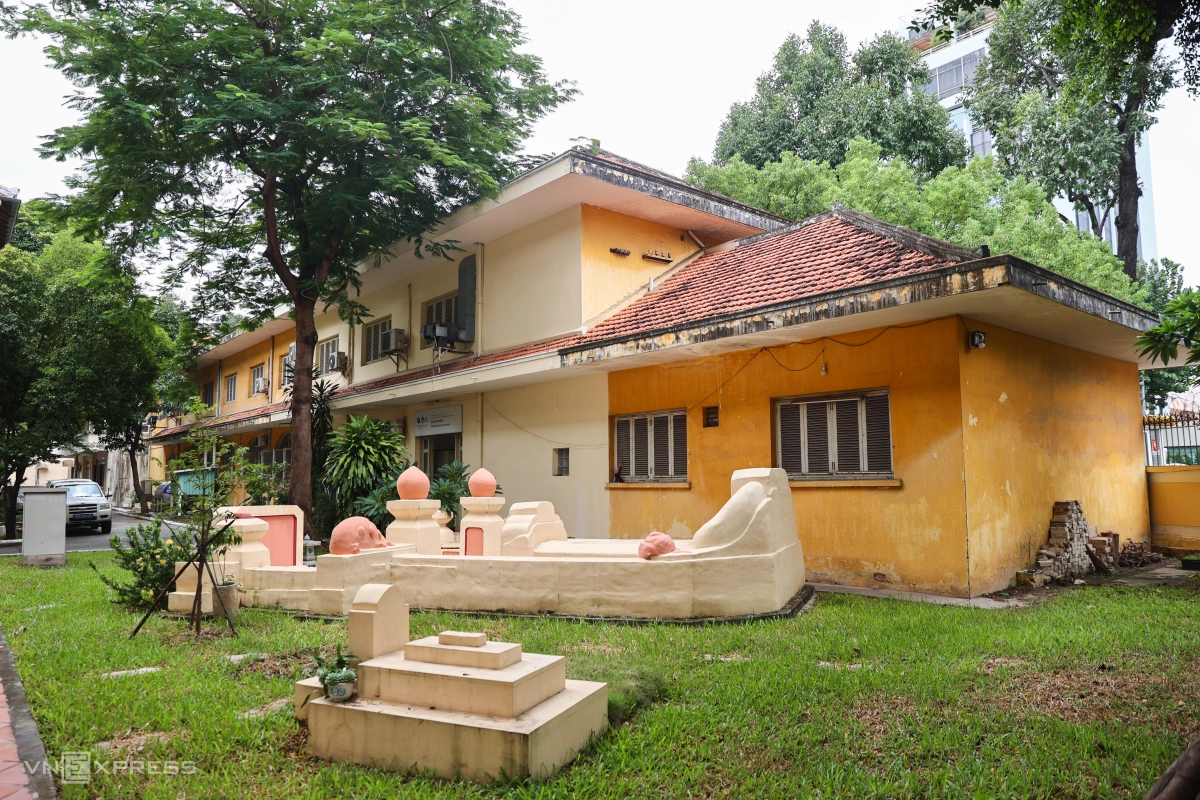
Within the Pasteur Institute's grounds are old tombs, some of which have been excavated. According to experts, the inscriptions, couplets, architectural features and materials suggest the tombs followed royal burial customs meant only for the aristocratic class.
In 2006 a team from the Ho Chi Minh City University of Social Sciences and Humanities excavated a tomb some 200 years old. The inscription on the tomb revealed that the person buried there was the wife of a high-ranking official in the Ministry of the Interior.

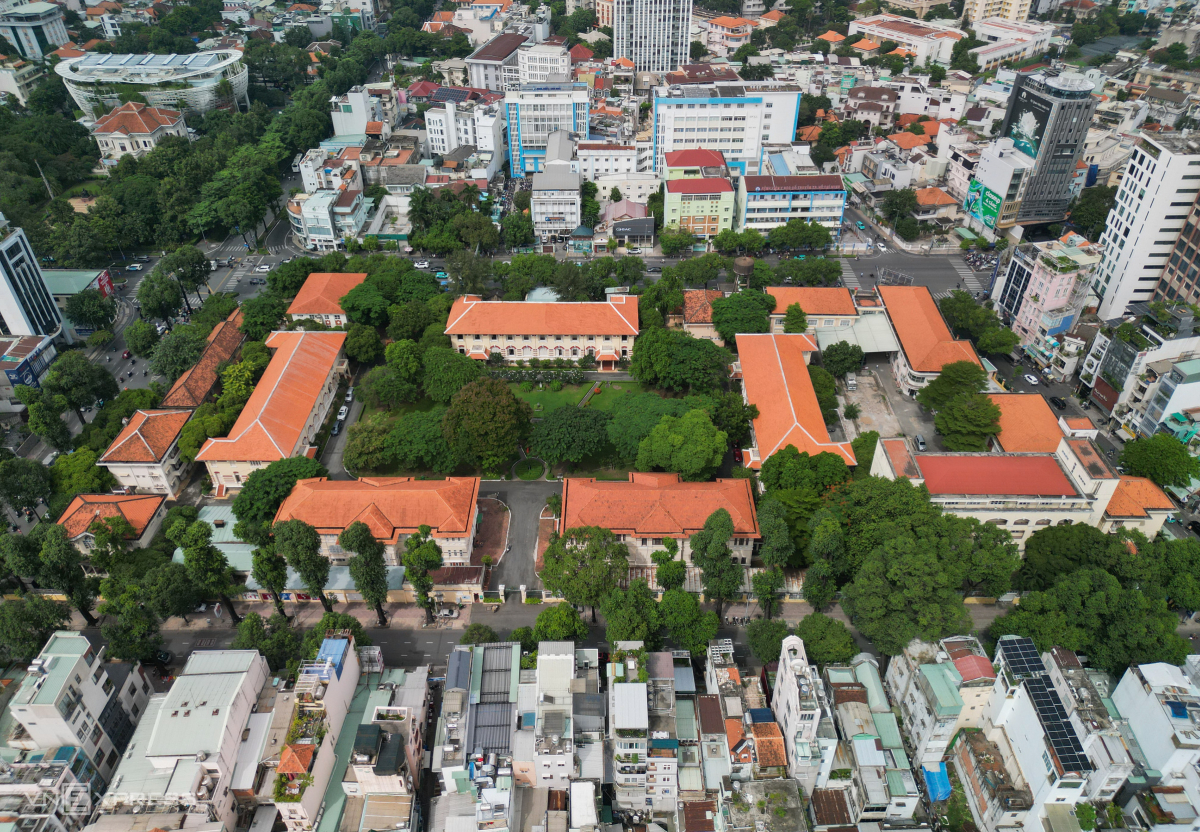
An aerial view of the Pasteur Institute in HCMC.
In 2015 the city authorities recognized the building as a cultural and architectural monument that needs to be preserved.
The three U-shaped buildings and the front courtyard, covering a total area of 8,590 sq.m, have been designated as a protected heritage site.
Later constructions, such as the staff parking lot, lecture halls, departments of infectious disease control, production facilities, and labs, were built using architecture and colors similar to the original structures to ensure harmony with the historical site.
