




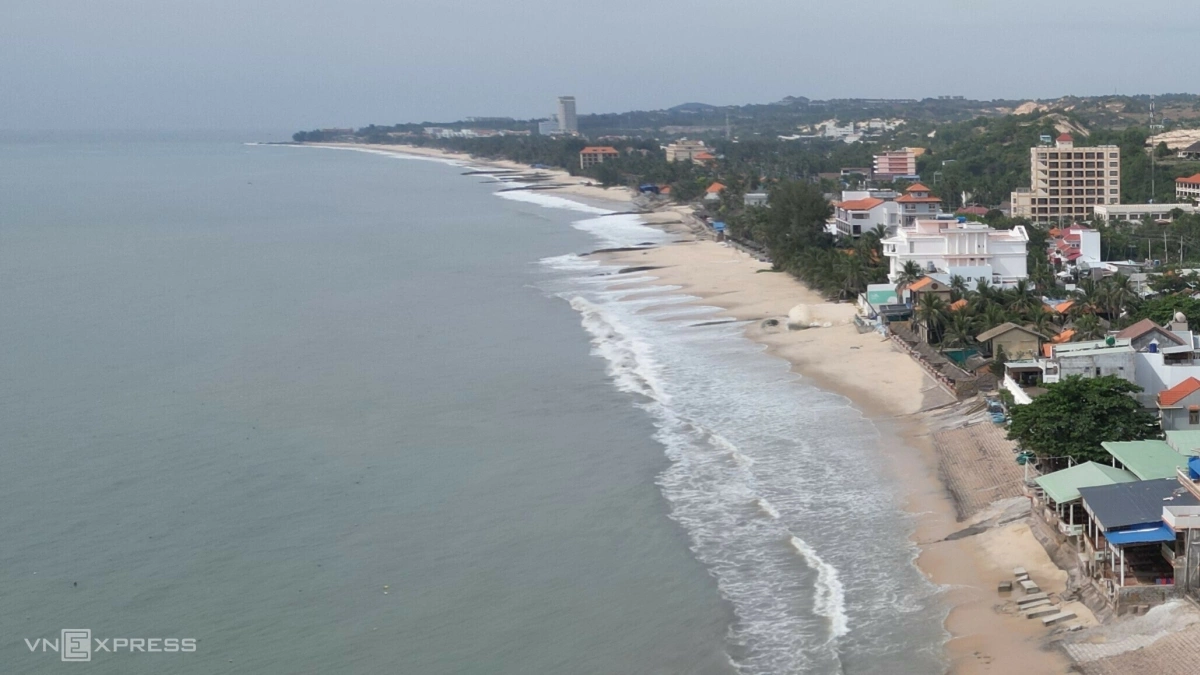
The crescent-shaped coastline of Mui Ne Bay, stretching about 10 kilometers from Ong Dia Rock Beach to Bo De fishing port, is home to hundreds of resorts, hotels and eateries.
It once helped foster tourism growth in Binh Thuan Province, now a part of Lam Dong Province, thanks to its warm climate, picturesque coconut groves and pristine sandy beaches.

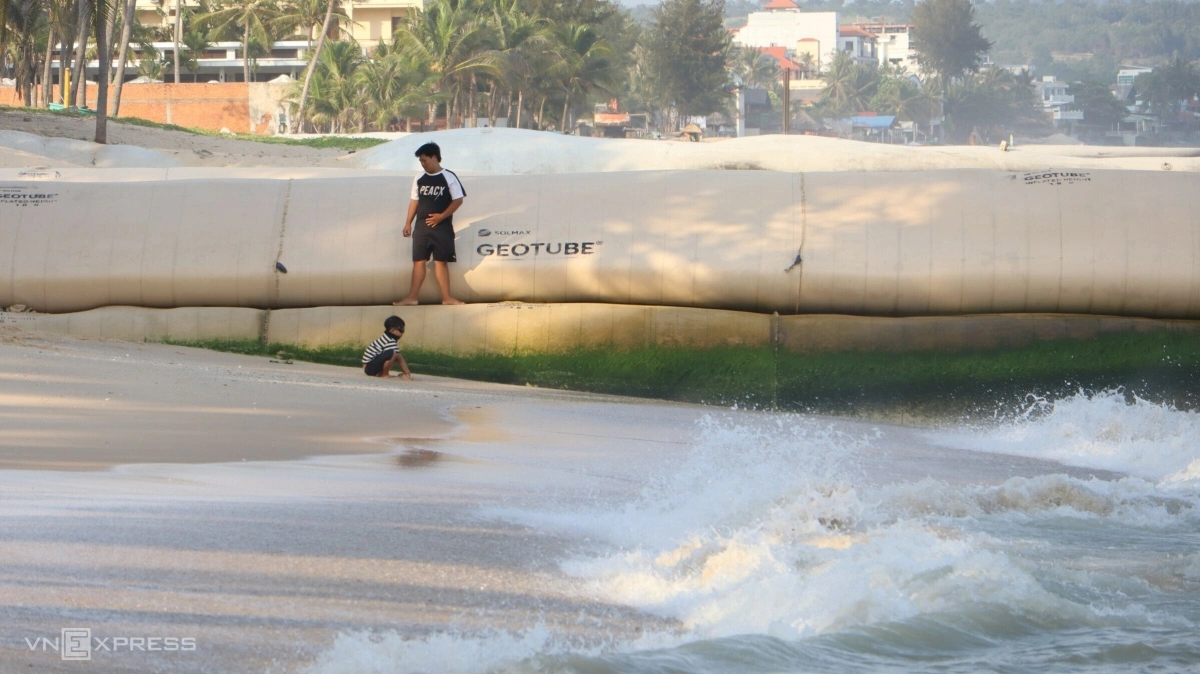
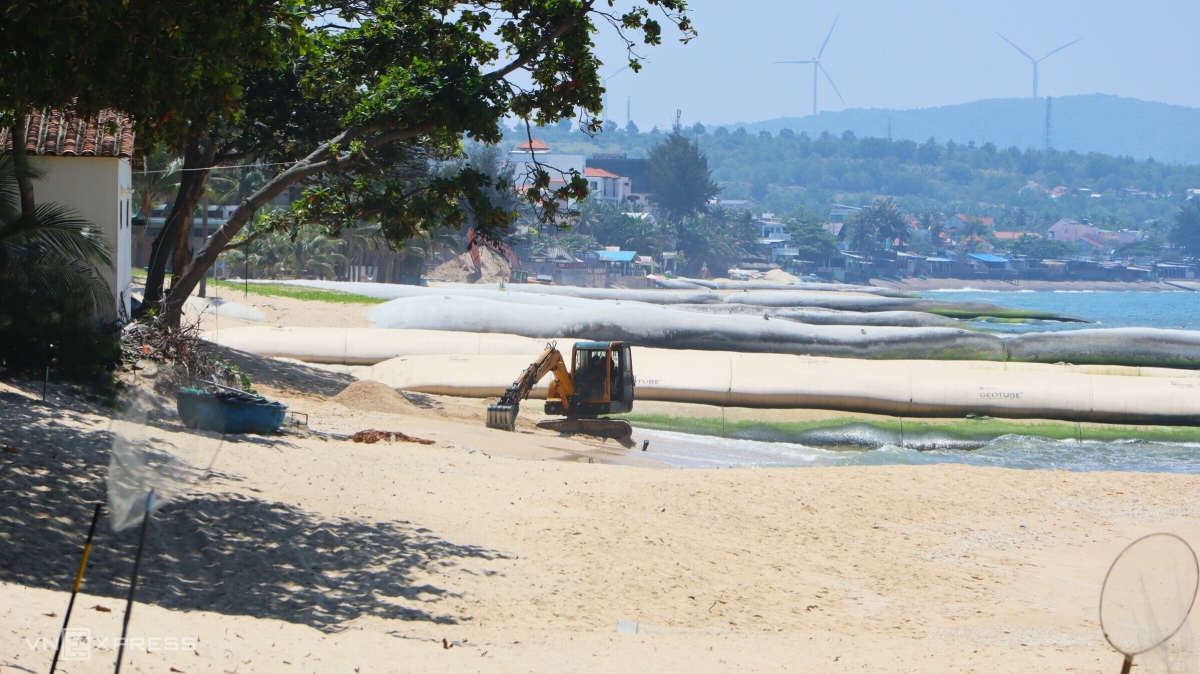
Dozens of temporary embankments have been built along the beach by tourism businesses.
In the photo above, fabric tubes filled with sand have been inflated into a soft barrier that stretches 20m long and 1.5m high to block waves from hitting tourist sites.
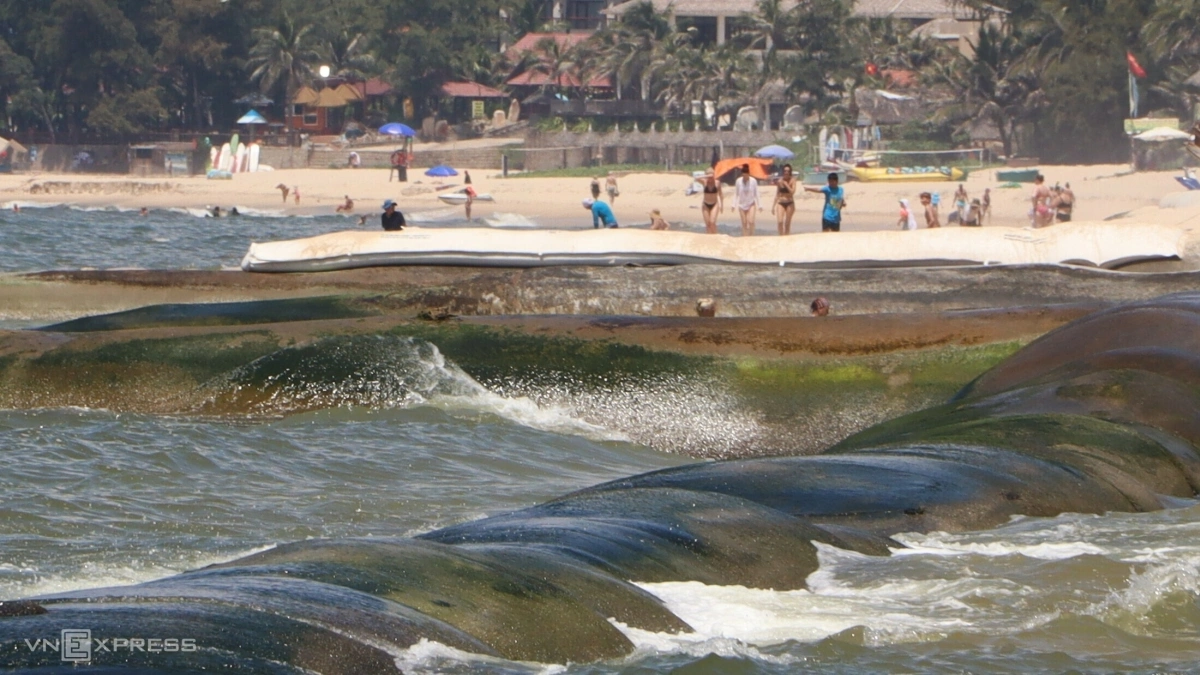
Massive barriers have been installed in front of resort beaches. Tourists now have to clamber over them, making walking on the beach inconvenient.
Luu Hao, a tourist from Ho Chi Minh City, says: "The sand-filled barriers are jagged and reach out awkwardly. When I step down to swim, I feel unsafe."
He hopes local authorities and the tourism industry will hit upon a coordinated solution to preserve the natural beauty of this destination.
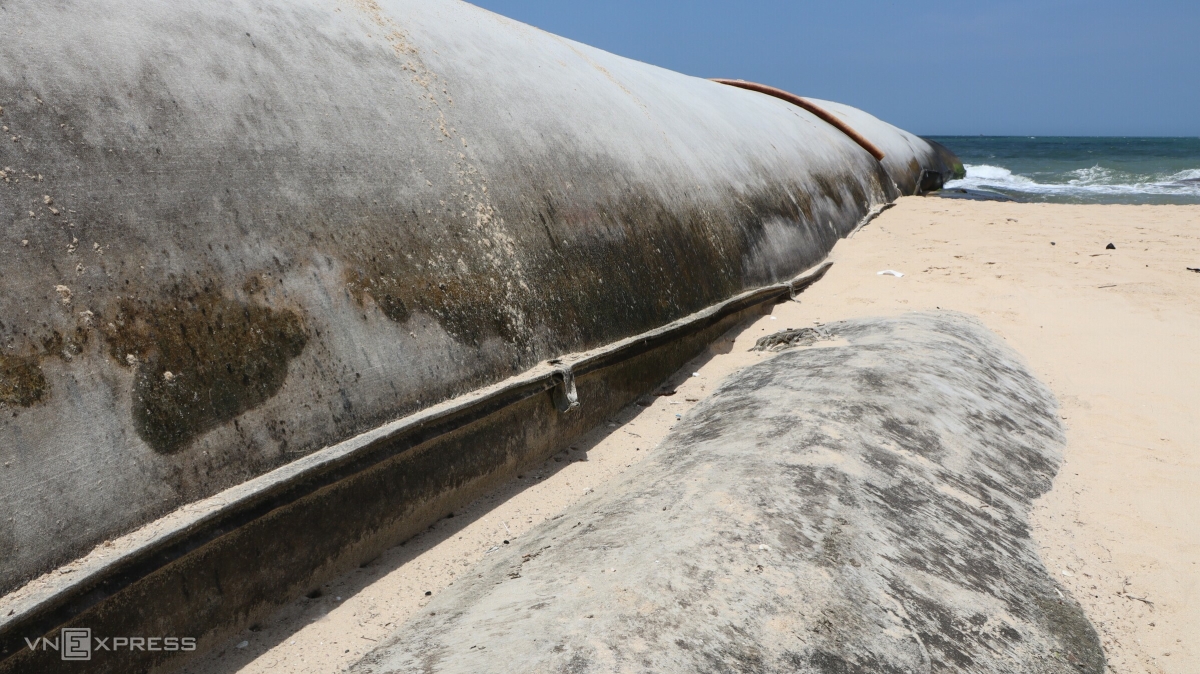
Some of the soft barriers are placed perpendicular to the shore, stretching over 20 meters into the sea in front of resorts.

Other resorts along the beach have built similar temporary barriers using fabric, concrete or stone. These structures run parallel to the coastline, extending into the water to break strong waves before they reach inland areas.

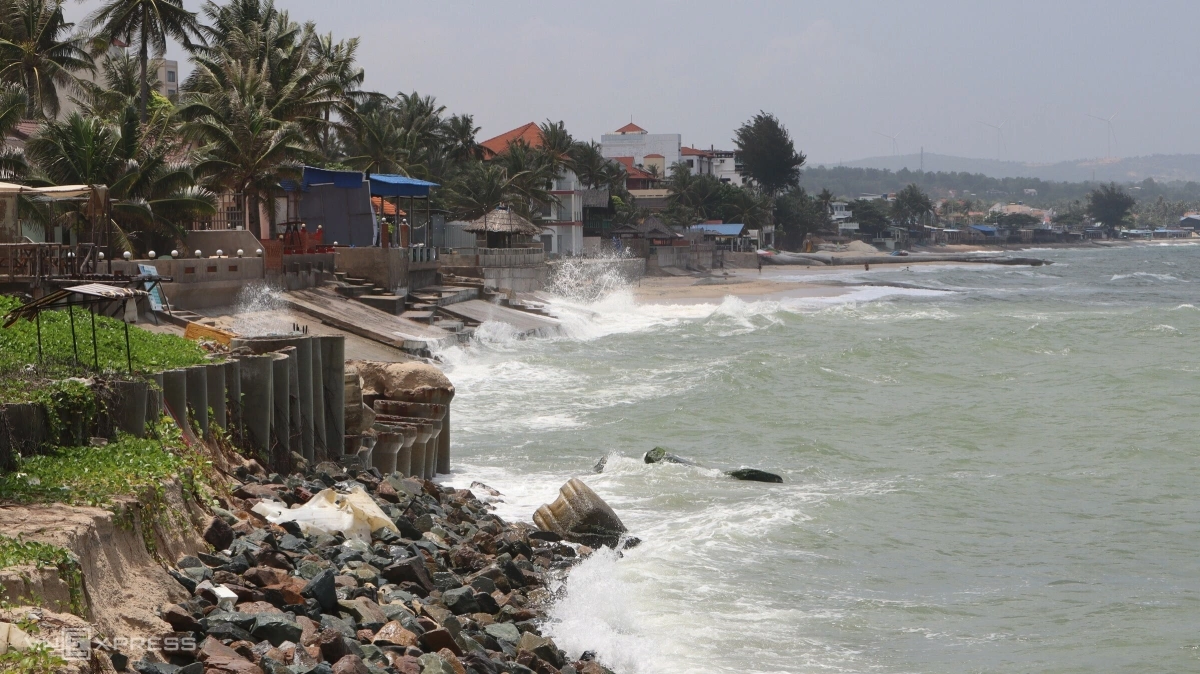
Nguyen Van Khoa, chairman of the Binh Thuan Tourism Association, says an emergency caused by the erosion meant many businesses have had to spend billions of dong of their own money to build temporary embankments to protect their property and retain their beachfront.
"However, in the absence of a coordinated solution for the area, each builds differently."
According to the Lam Dong Province People's Committee, the Departments of Agriculture and Environment have issued technical guidelines for constructing sandbag-based temporary embankments for tourism businesses in the Ham Tien – Mui Ne area, effective since July.
All new constructions must follow the approved procedures to ensure uniformity.
The province Department of Science and Technology is studying the causes of coastal erosion to propose structural solutions to protect and restore the Mui Ne shoreline. The task is expected to be completed by the end of 2026, and officials will come up with a comprehensive solution to restore and stabilize the beach long-term based on the findings.


