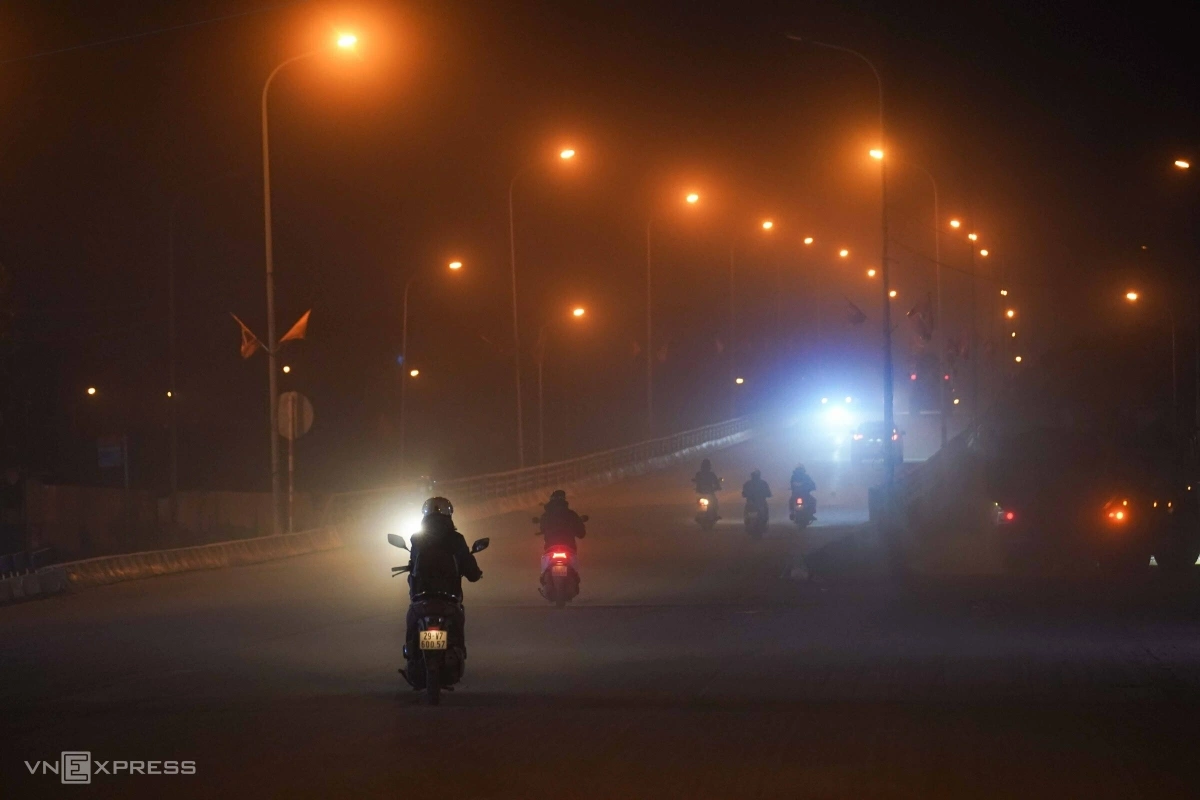



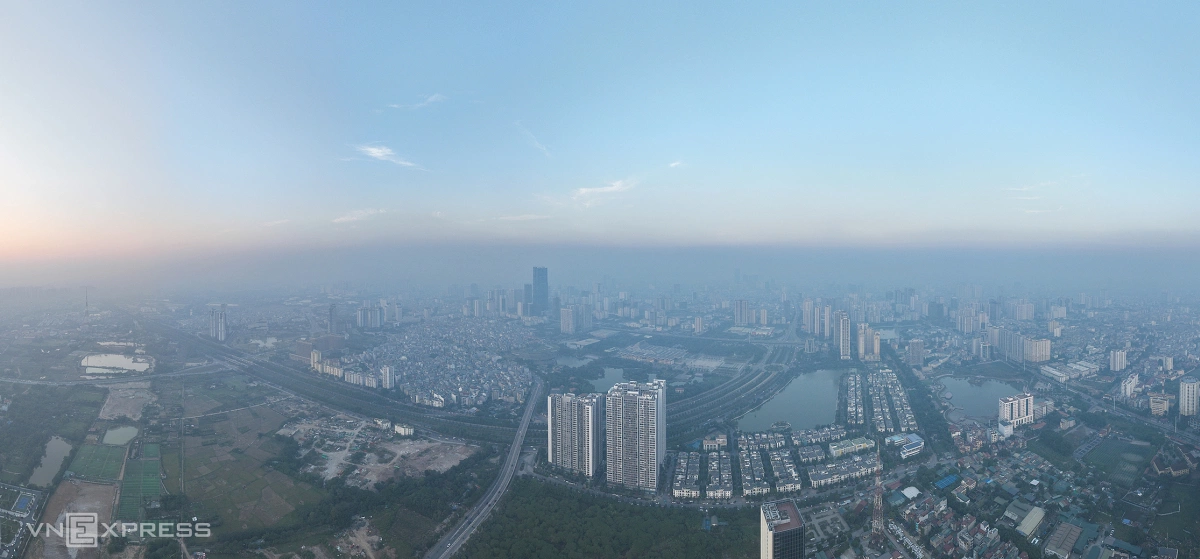
Hanoi has been experiencing dry, cold weather, with daytime temperatures ranging from 19–25 degrees Celsius. Temperatures would drop sharply to between 12–14 C during the night and early morning hours.
This diurnal temperature variation, combined with thermal inversion, has severely impeded the dispersal of fine dust. This atmospheric condition has prolonged the pollution, causing discomfort and affecting the daily activities of residents.
Aerial observations confirm a distinct atmospheric separation over the capital: a layer of highly polluted air is trapped close to the ground, while pollution levels visibly decrease with altitude.

People wearing masks sat by Hoan Kiem (Sword) Lake, where the iconic Turtle Tower appeared hazy, visibly obscured by air pollution.
The severity of the situation was confirmed on Tuesday morning, when Hanoi recorded alarming pollution levels, ranking it among the 10 most polluted cities in the world.

According to the AQI+ air quality monitoring software, AQI and PM2.5 concentrations reached dangerously high levels across Hanoi on Tuesday morning. At 7:14 a.m., the AQI hit 241 in Ha Bang Commune, more than 20 km west of the city center.
Simultaneously, data from IQAir showed numerous monitoring points in the inner city also reported “very unhealthy” air quality (AQI over 200). Specifically, Tay Ho recorded 224, Gia Lam 219, Long Bien 206, and Ha Dong 204. These levels are classified as hazardous, and residents are strongly advised to minimize all outdoor activities.



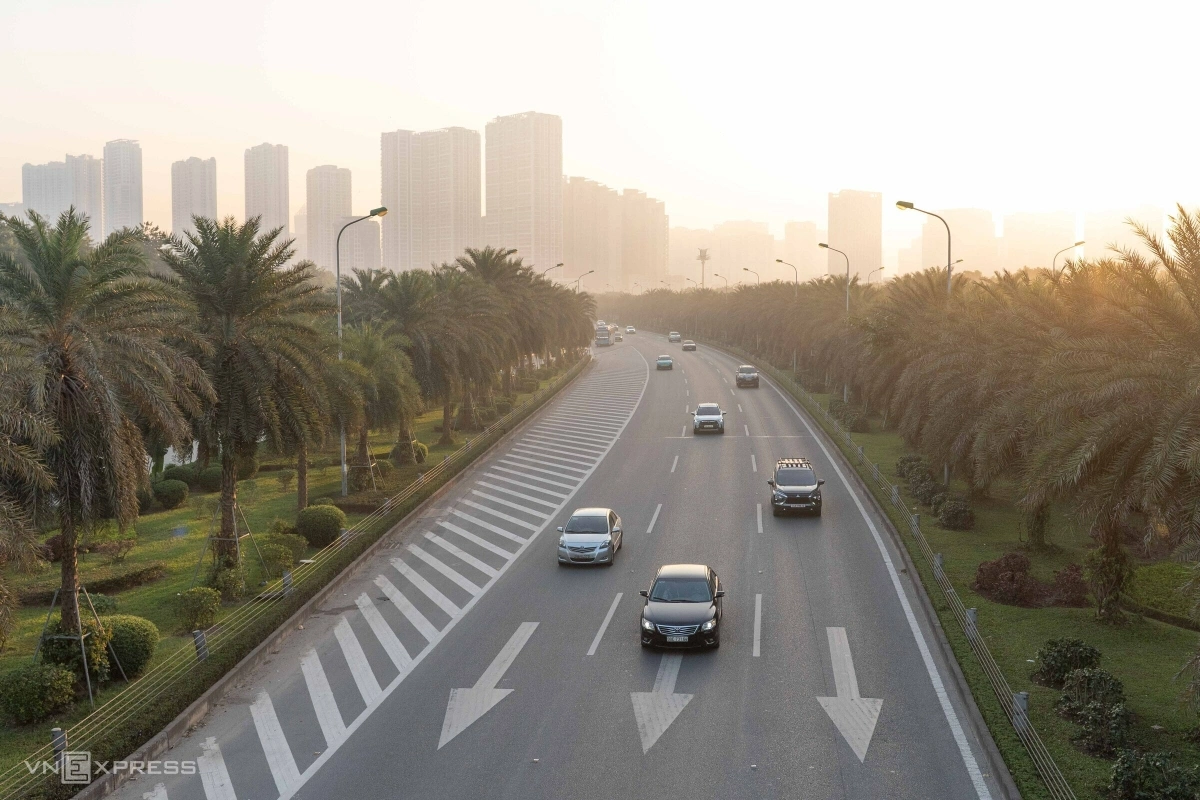


Hanoi has deployed multiple air monitoring stations to measure pollution levels. Many of these stations recorded a rapid increase in the AQI, pushing it into the “very unhealthy” category.
This marks the first such occurrence in the 2025–2026 winter season and poses significant health risks for residents.

In response to the prolonged pollution, many families have adjusted their daily routines. Thanh Nam, a resident of Tu Liem, shared that her family now closes all windows immediately and turns on air purifiers as soon as they return home from work or school.
“The moment we open the door, the machine immediately registers the high pollution levels. My eyes sting whenever I am outside,” she said.