




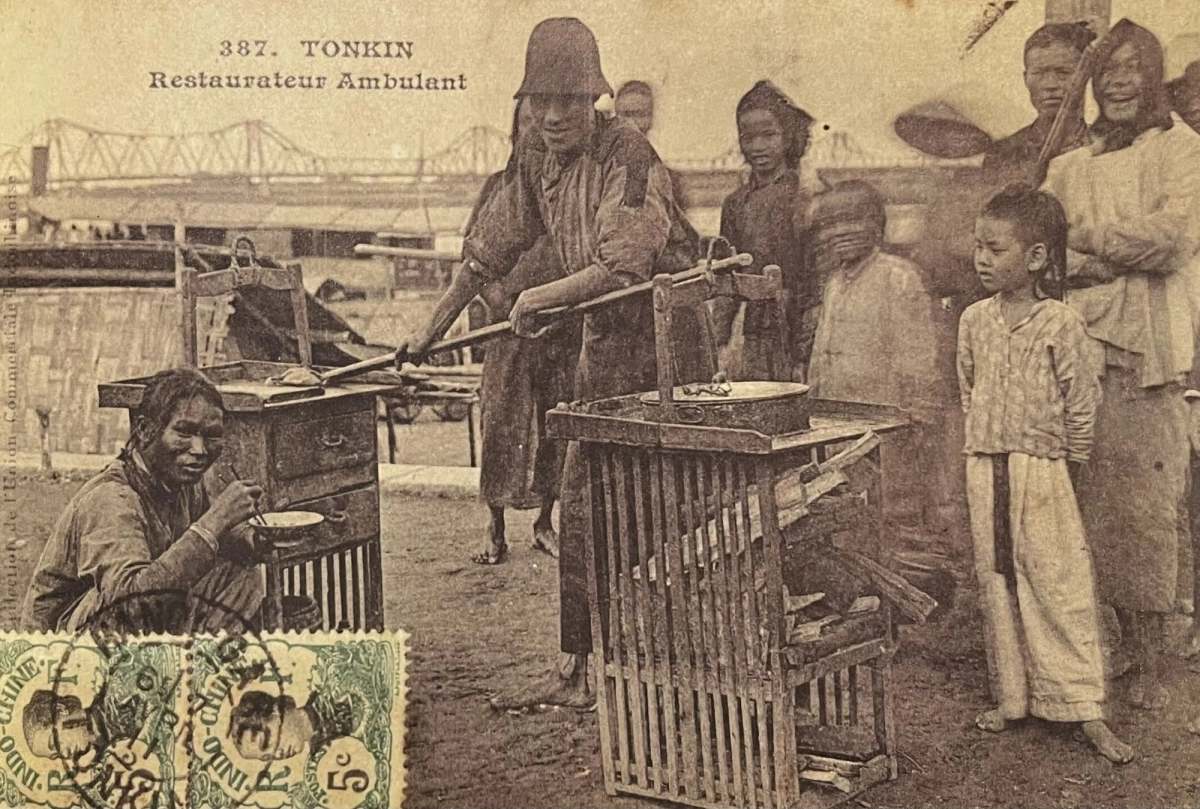
A woman eats a meal from a street vendor by the Red River, with the Doumer Bridge (now Long Bien Bridge) in the background in the early 20th century.
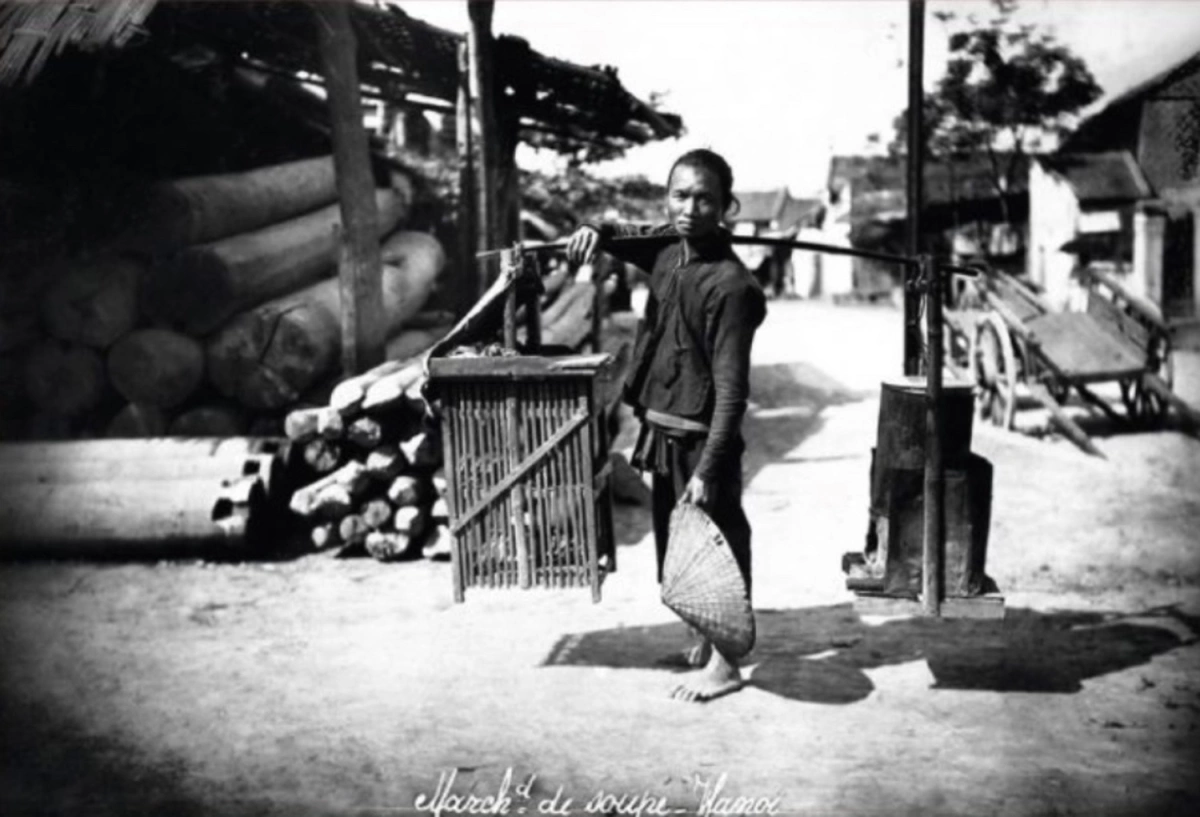
A pho vendor in the 20th century carries noodles, bowls, chopsticks, and spoons on one side of his shoulder pole, and a pot of broth on the other. Photo courtesy of the École française d’Extrême-Orient (EFEO, French School of Asian Studies).
Pho vendors would often hang two kilograms of boiled beef at the front of their pole using bamboo strings.
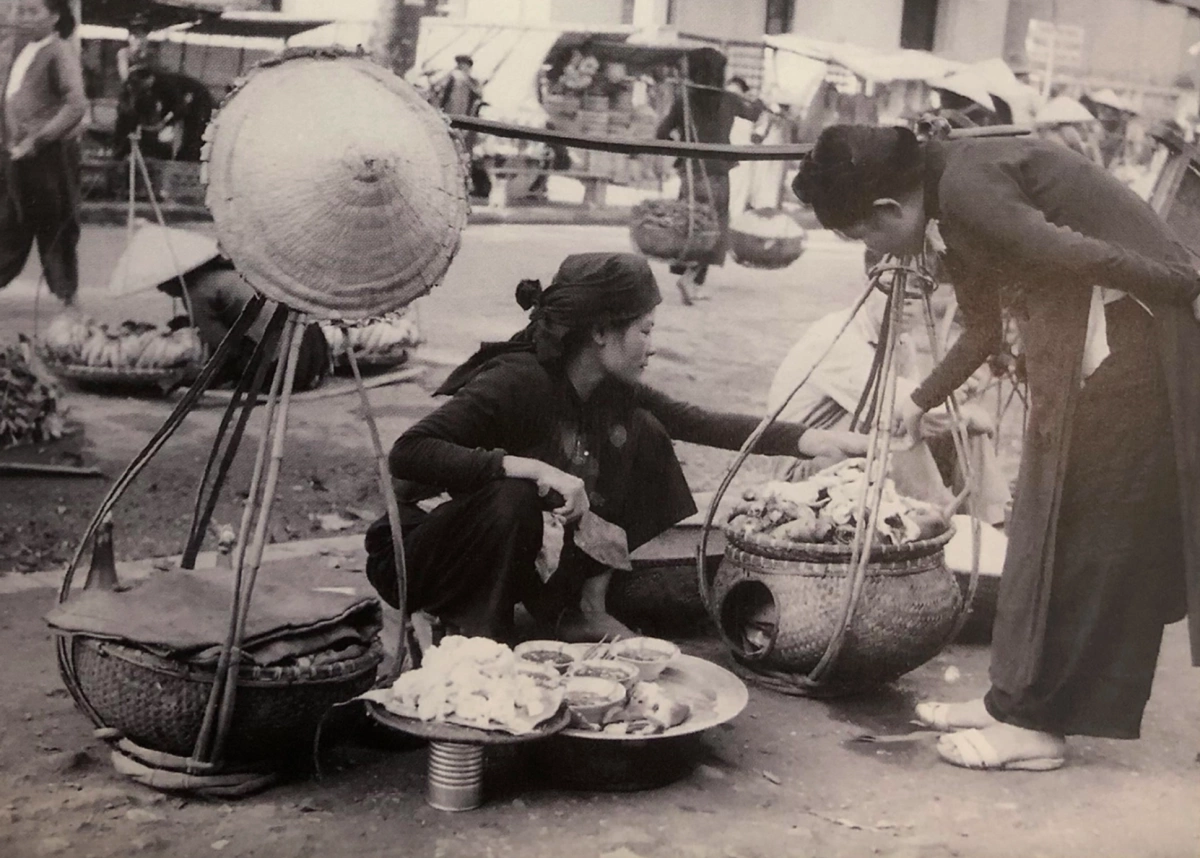
A woman sells 'tiet canh long lon' (pork offal soup) at Dong Xuan Market, Hanoi, in 1925. Photo courtesy of EFEO.
Historical records show that Thang Long, the former name of Hanoi, was named Ke Cho (Market People) after its dense population and bustling trade.
Street vendors often sold homemade goods in crowded areas everyday instead of waiting for market days.
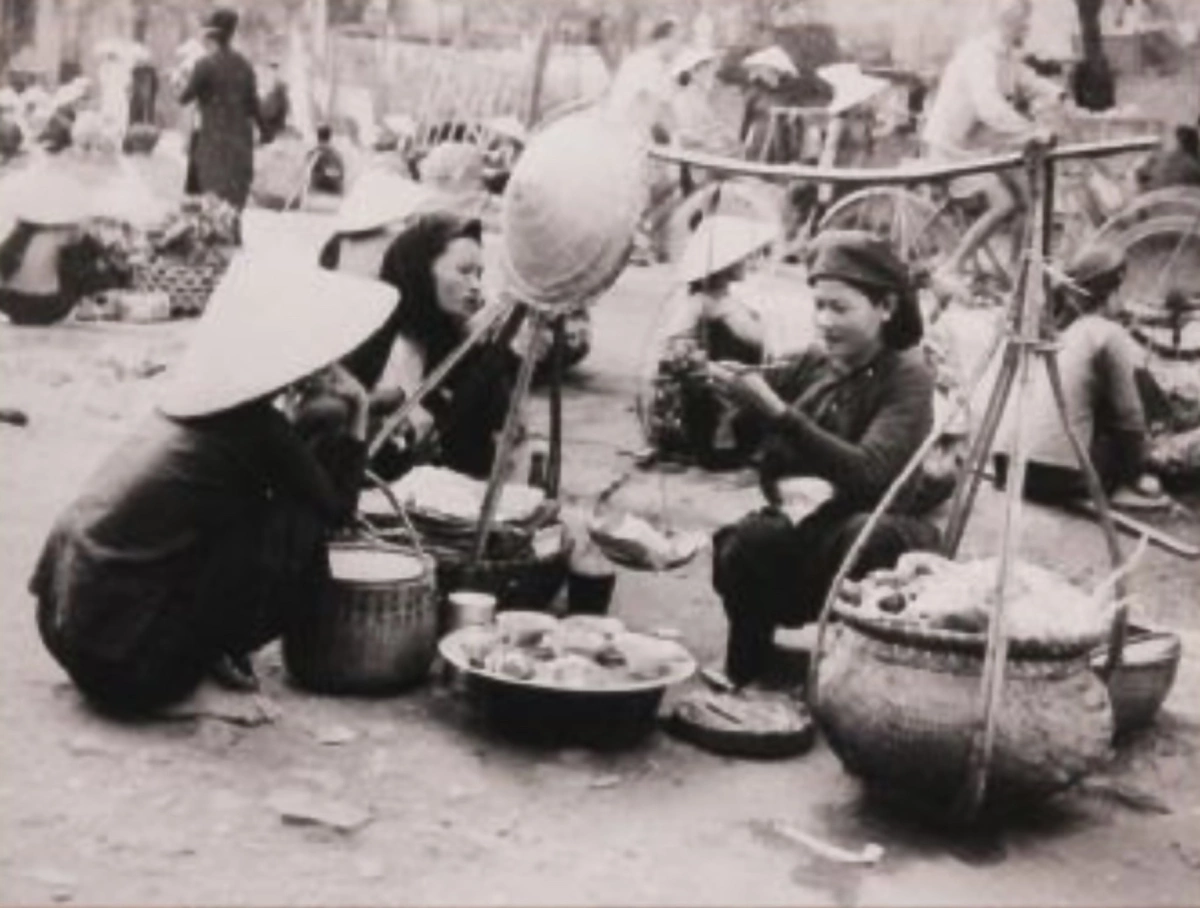
Most were farmers and craftsmen from nearby villages who doubled up as street vendors in Hanoi to sell their handmade products. Many could not afford to pay market taxes and fees. Photo courtesy of the National Archives Center I.
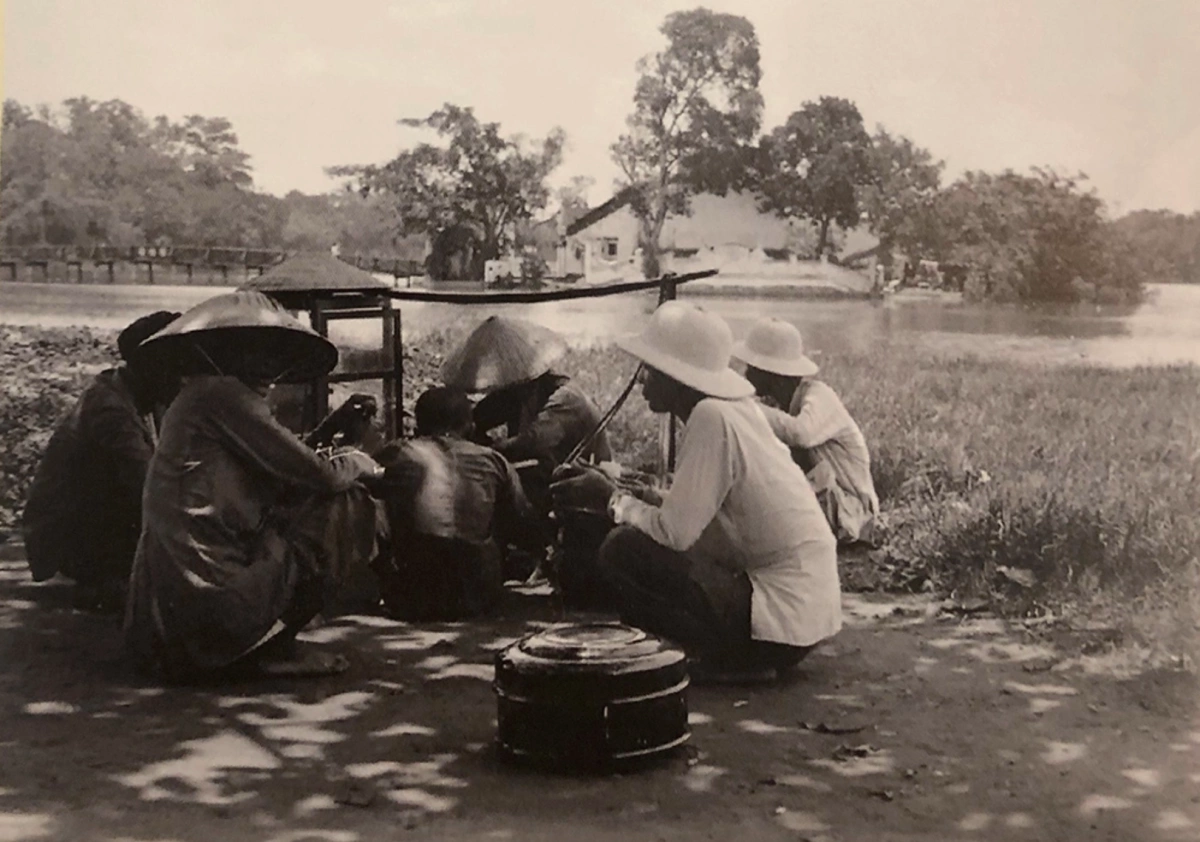
People gather around a street vendor by Hoan Kiem Lake. Photo courtesy of EFEO.
According to the National Archives Center I, Hanoi underwent significant changes after becoming a French concession in 1888. The government earned most of its revenues from market taxes and introduced regulations on using sidewalks for trading to keep streets clear. Street vendors were also subject to city taxes and fees.
A decree issued on June 10, 1933, allowed licensed street vendors who had paid taxes to move through the streets and stop for a fixed amount of time. But they were not allowed to stay in one place or block traffic.
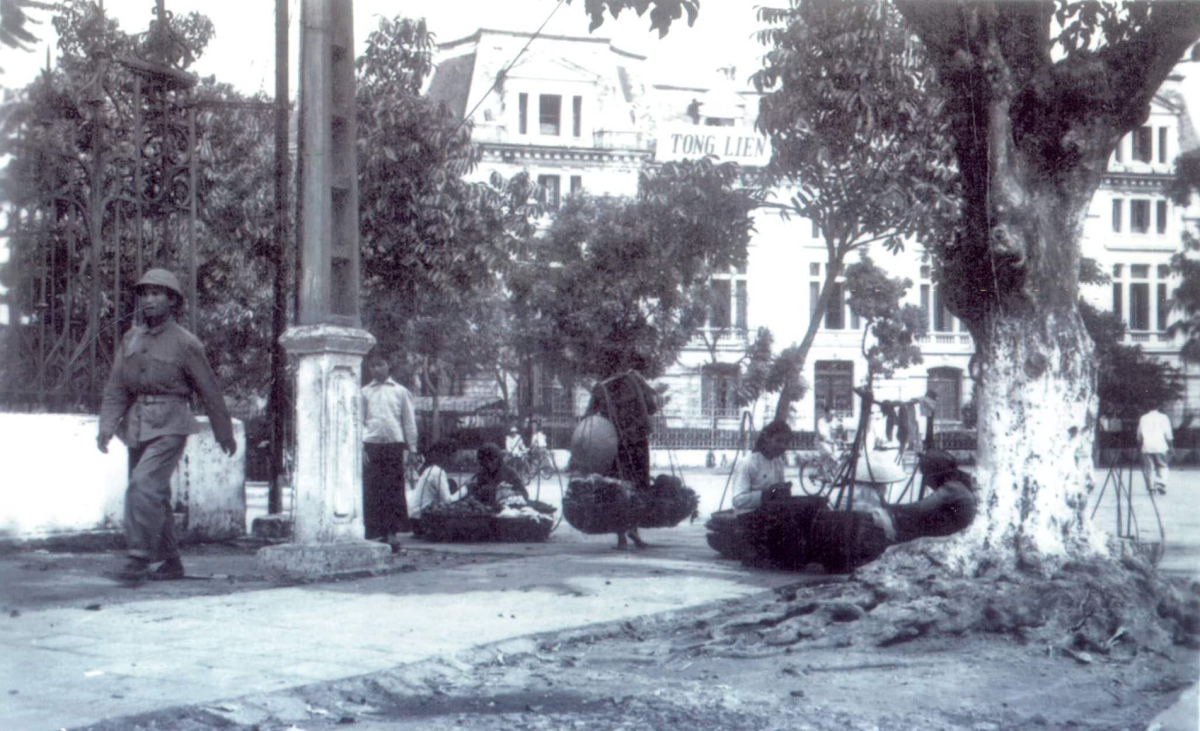
Street vendors were a familiar sound in old Hanoi. A 1935 Trung Bac Tan Van newspaper article on street vendors said: “Every day more and more vendors can be seen selling along the streets of Hanoi. From around 4:30 or 5 a.m. the cries of xoi, porridge, banh ran (glutinous rice balls), and pastries echo through the streets. By midday it’s ‘beef pho’ and then ‘chicken or duck porridge,’ which continued until 11 p.m., sometimes even as late as 1 or 2 a.m.”
Photo courtesy of the Institute of Social Science Information.


