
The most read Vietnamese newspaper
Edition: International | Vietnamese
© Copyright 1997 VnExpress.net. All rights reserved.
 Get VnExpress first in Google Search
 See more of the news you trust. Make VnExpress a preferred source to prioritise our updates in your Google search results
The government offered almost 50,000 baht towards installation costs for up to one million households, while also promising low-interest loans and tax benefits for those fitting panels to their homes or land.
"Today, we import a lot of our energy, we're among the top buyers globally," Finance Minister Ekniti Nitithanprapas told reporters.
But he said this "was not a sustainable solution".
The solar panel subsidy is expected to be approved at a Cabinet meeting on Oct. 27, with applications to open soon after, Ekniti said.
 |
|
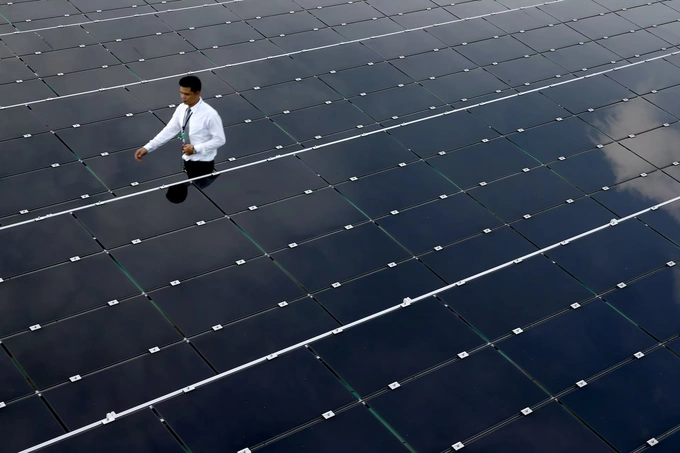
A man walks past solar panels on the roof of a building in Bangkok, Thailand, Aug. 9, 2017. Photo by Reuters |
It will be funded out of a 400 billion baht emergency borrowing package announced earlier in 2026 to cushion the economic impacts of the Middle East war.
Around 60% of electricity production in Thailand comes from natural gas, with renewables making up almost 11%, according to government data from January to July 2026.
Much of the gas has historically come from offshore production or via pipeline from Myanmar, but declining production has forced Bangkok to step up liquid natural gas (LNG) imports.
Imported LNG made up 32% of its natural gas in the January-July period. Qatar was a major supplier but its gas infrastructure has been hit by the U.S. and Israeli war with Iran, as has energy production across the region.
Thailand aims to have 51% of domestic electricity generated from renewable sources by 2037.