
The most read Vietnamese newspaper
Edition: International | Vietnamese
© Copyright 1997 VnExpress.net. All rights reserved.
 Get VnExpress first in Google Search
 See more of the news you trust. Make VnExpress a preferred source to prioritise our updates in your Google search results
The figure put Incheon ahead of London Heathrow Airport, which handled 37.79 million passengers, and Singapore Changi Airport, which recorded 34.53 million, according to international passenger traffic data compiled by Airports Council International.
Incheon's rise to the top underscores its growing role as a global aviation hub and highlights the impact of South Korea's long-term policy of developing the airport as a gateway to Northeast Asia, The Korea Times reported.
The airport ranked 10th globally in terms of international passenger traffic shortly after opening in 2001, climbed to fifth in 2018 and reached third in 2024 before taking the top spot this year.
 |
|
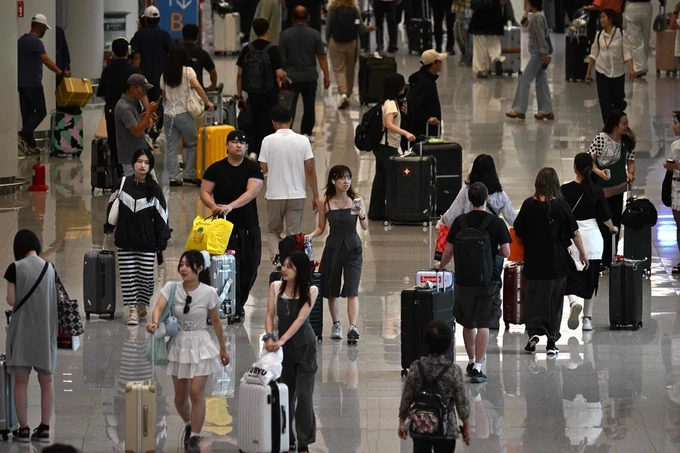
Passengers at Incheon International Airport, South Korea. Photo by AFP |




