The most read Vietnamese newspaper
Edition: International | Vietnamese
© Copyright 1997 VnExpress.net. All rights reserved.
 Get VnExpress first in Google Search
 See more of the news you trust. Make VnExpress a preferred source to prioritise our updates in your Google search results

The long break ended Sunday.
Data released by the Vietnam National Administration of Tourism showed average occupancy at hotels and other accommodation facilities stood at 70%, with major destinations such as Phu Quoc, Sa Pa and Phan Thiet reporting peak rates of 90-95%.
There were strong economic gains for destinations across the country, with many reporting tourism revenues in excess of VND1 trillion (US$38.1 million).
Ho Chi Minh City topped the list with over VND12.15 trillion, followed by Hanoi, Da Nang, Ninh Binh, Lao Cai, and Hue.
Officials described this year's Lunar New Year as an "especially vibrant travel period."
At several destinations, international arrivals were comparable to, even nearly matching, domestic visitor numbers.
In Da Nang, they accounted for 510,000 or nearly half of the total arrivals of 1.1 million. Hue recorded a similar pattern, with 240,000 foreign travelers out of 480,000 visitors overall.
Pham Hai Quynh, director of the Tourism Development Institute of Asia, said tourists are increasingly opting for four- to six-day itineraries rather than short, tightly scheduled trips.
Travelers also extended their spending beyond sightseeing, as demand for wellness services, premium dining experiences and shopping indicated.
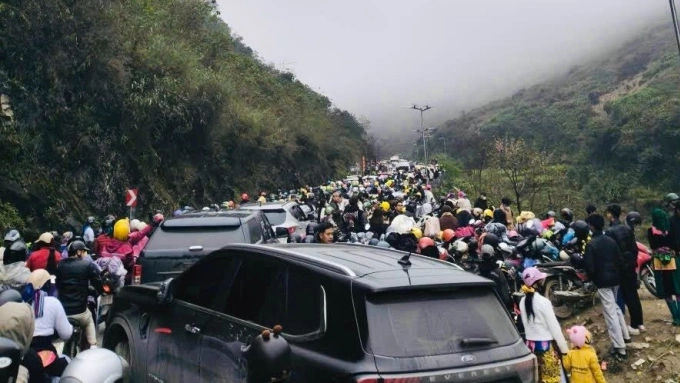
Nevertheless, industry insiders said there are recurring issues during peak holiday that need to be addressed, including overcrowding at tourism destinations, uneven service quality, especially with relation to pricing, and traffic congestion at major tourist sites.
On Feb. 20, the fourth day of the Lunar New Year, the Trang An Scenic Landscape Complex in Ninh Binh Province announced it had reached full capacity and stopped issuing tickets.
Its online booking platform was also suspended during the holidays.