
The most read Vietnamese newspaper
Edition: International | Vietnamese
© Copyright 1997 VnExpress.net. All rights reserved.
 Get VnExpress first in Google Search
 See more of the news you trust. Make VnExpress a preferred source to prioritise our updates in your Google search results
Dozens of scientists and experts have left the U.S. and Britain for China this year for reasons ranging from family considerations and research opportunities to funding concerns and limited leadership prospects.
In this story VnExpress International profiles seven prominent figures who have made the move.
1. Biologist Zhang Kai
 |
|
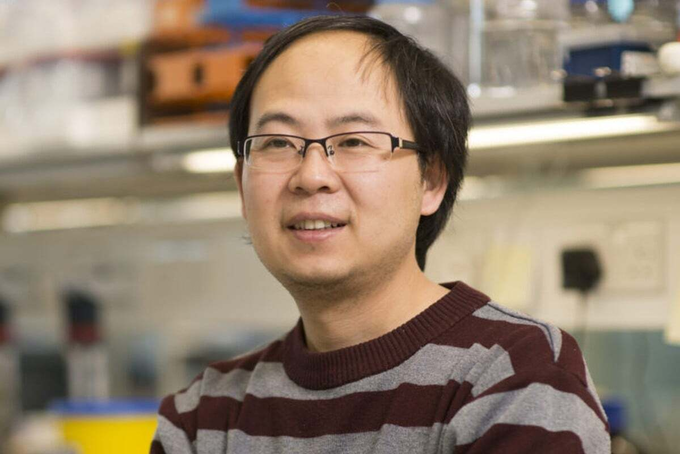
World-leading cryo-electron microscopy scientist Zhang Kai. Photo courtesy of Yale University |
Zhang, an influential researcher in cryo-electron microscopy, left his tenure-track position at Yale University on Jan. 12 to join the University of Science and Technology of China’s School of Life Sciences and Medicine.
The departure attracted attention because Zhang left the Ivy League university during a promising stage of his career rather than remaining to seek promotion.
He told the South China Morning Post in April that his decision was partly influenced by U.S. visa restrictions on Chinese students. A doctoral student in his laboratory had been unable to return to the U.S. and was forced to withdraw, he said, prompting him to reconsider where he could "fulfil my dreams and give more young people the chance to grow in a long-term, stable environment."
Zhang earned his bachelor’s degree from the Harbin Institute of Technology before joining the Chinese Academy of Sciences’ Institute of Biophysics.
After receiving his doctorate in biophysics in 2013, he conducted postdoctoral research at the Medical Research Council Laboratory of Molecular Biology in Cambridge, England, a leading structural biology center.
He previously told China Science Daily that it was "impossible for a Chinese scholar to take the lead" in projects requiring long-term funding and collaboration among multiple institutions, where Chinese researchers could face barriers to leadership roles.
He said he did not choose China because he wanted to "leave the U.S.", but because he "wanted to go to a place where my scientific ambitions were more likely to be realised." He described USTC as the "best fit" for pursuing his academic goals.
2. Nobel chemistry laureate Omar Yaghi
 |
|
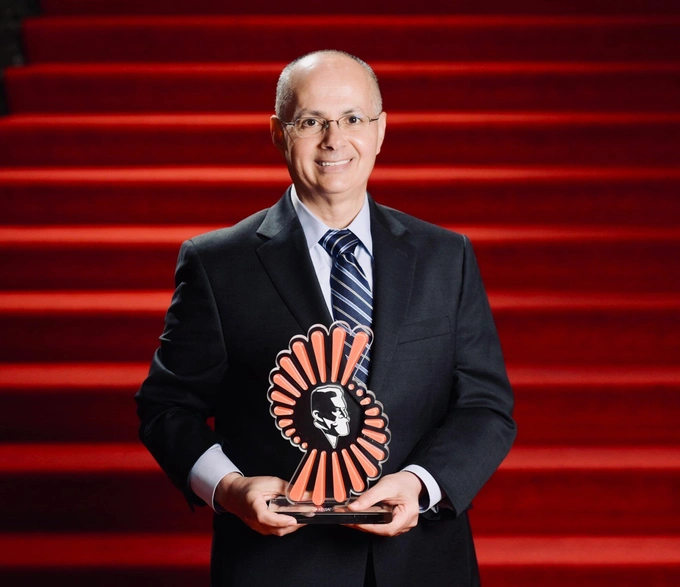
2025 Nobel chemistry laureate Omar Yaghi. Photo courtesy of Atoco |
Yaghi, who won the 2025 Nobel Prize in Chemistry, has taken charge of Tsinghua University’s AI for Chemistry and Materials Science Research Center after working at the University of California, Berkeley, Tsinghua announced on July 3.
The 61-year-old scientist will lead research into using artificial intelligence to accelerate the design and production of new materials, potentially reducing development time "by orders of magnitude."
Yaghi, who has maintained close ties with Tsinghua for years, said at his appointment ceremony that he hoped to develop materials addressing water scarcity, carbon neutrality and sustainable development. He also plans to train young scientists in AI-driven chemistry.
Born into a Palestinian family in Amman, Jordan, Yaghi moved to the U.S. at 15 and earned his doctorate in chemistry from the University of Illinois Urbana-Champaign.
Before joining UC Berkeley, he taught at Arizona State University, the University of Michigan and the University of California, Los Angeles.
He is also the founder and chief science officer of Atoco, a U.S. climate technology company. He recently established the Yaghi Science Initiative, a nonprofit research and education network connecting scientists in the U.S., South Korea, the U.K., Italy, Saudi Arabia, the United Arab Emirates and China, according to The European Magazine.
3. Cambridge architecture pioneer Francois Penz
 |
|
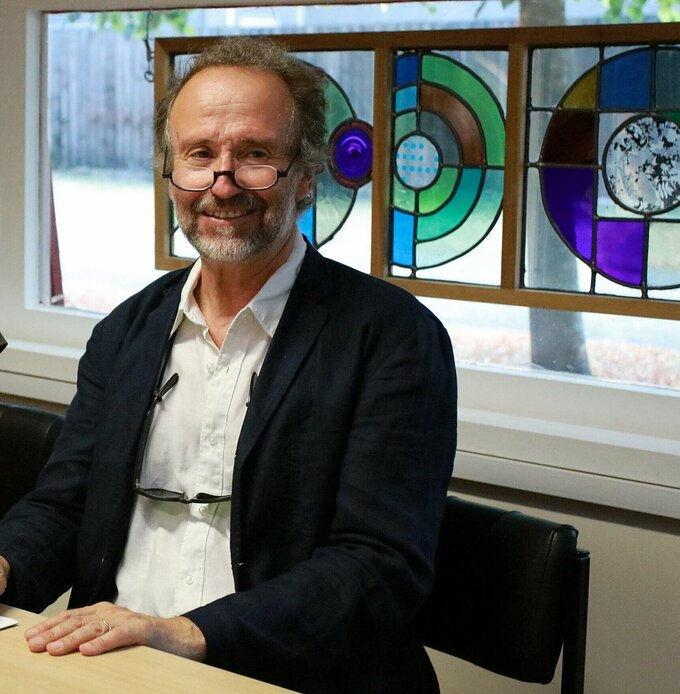
French professor Francois Pen. Photo courtesy of University of Cambridge |
Penz, a pioneer in integrating computer science, film and architecture, joined Nanjing University after a career spanning about 45 years at the University of Cambridge, U.K., the Chinese university announced in March.
The 76-year-old scholar had worked closely with Nanjing University in recent years, delivering lectures and organizing architectural film exhibitions in China.
Born in France, he studied architecture at the Swiss Federal Institute of Technology Lausanne, Switzerland, in the early 1970s, where he began combining architectural research with computer science.
He earned his doctorate in 1983 and joined Cambridge’s architecture department in 1988 after completing postdoctoral research there. He helped establish film and architecture as a formal academic field and promoted photography and moving images as architectural design tools.
The French government awarded him the Chevalier de l’Ordre des Palmes Académiques, one of the country’s highest academic honors, in 2009 for his contributions to education and scholarship.
4. Semiconductor materials expert Shi Guojun
 |
|
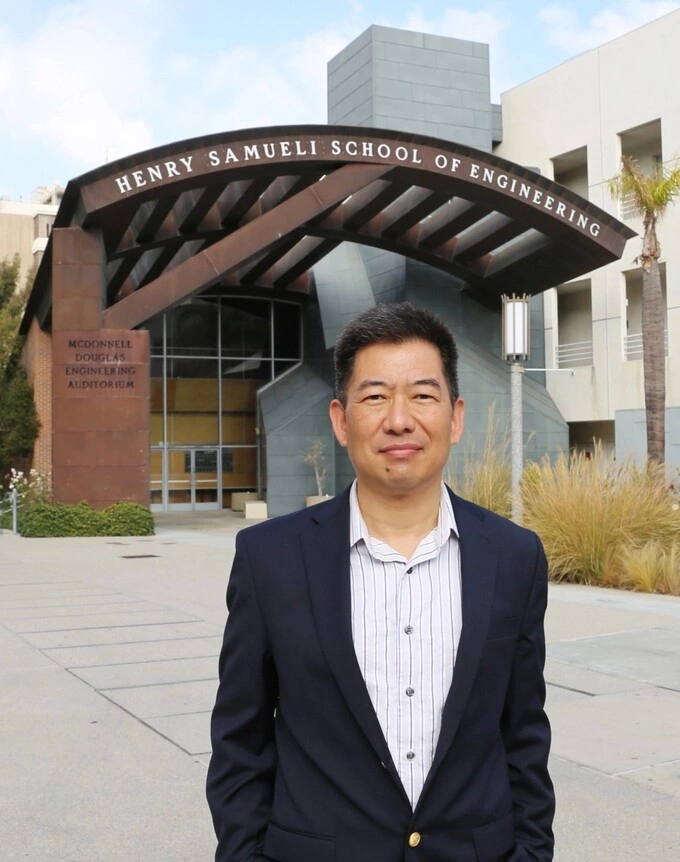
Semiconductor packaging expert Shi Guojun. Photo courtesy of University of California, Irvine, U.S. |
Shi left the University of California, Irvine, U.S., after more than 20 years to become chief strategic scientist and director of the Future Industry Research Institute at DK Electronic Materials.
DK Electronic Materials, a major supplier of photovoltaic metallization paste used in solar cells, announced his appointment in March. Shi will oversee planning and development in emerging industries, focusing particularly on the company’s expansion into semiconductor memory.
He earned a bachelor’s degree in agricultural meteorology from the Nanjing Institute of Meteorology in 1983 and a master’s degree in micrometeorology from the University of Guelph in Canada.
After shifting his research toward materials science, Shi earned a doctorate in chemical engineering and materials science from the California Institute of Technology in 1992.
He later joined UC Irvine, where he became a tenured professor, taught for more than two decades and published over 200 academic papers.
The IEEE Components, Packaging and Manufacturing Technology Society gave Shi its Outstanding Sustained Technical Contribution Award in 2010 for his work on optoelectronic packaging, advanced device materials and manufacturing.
5. Neurobiologist Chih-Ying Su
 |
|
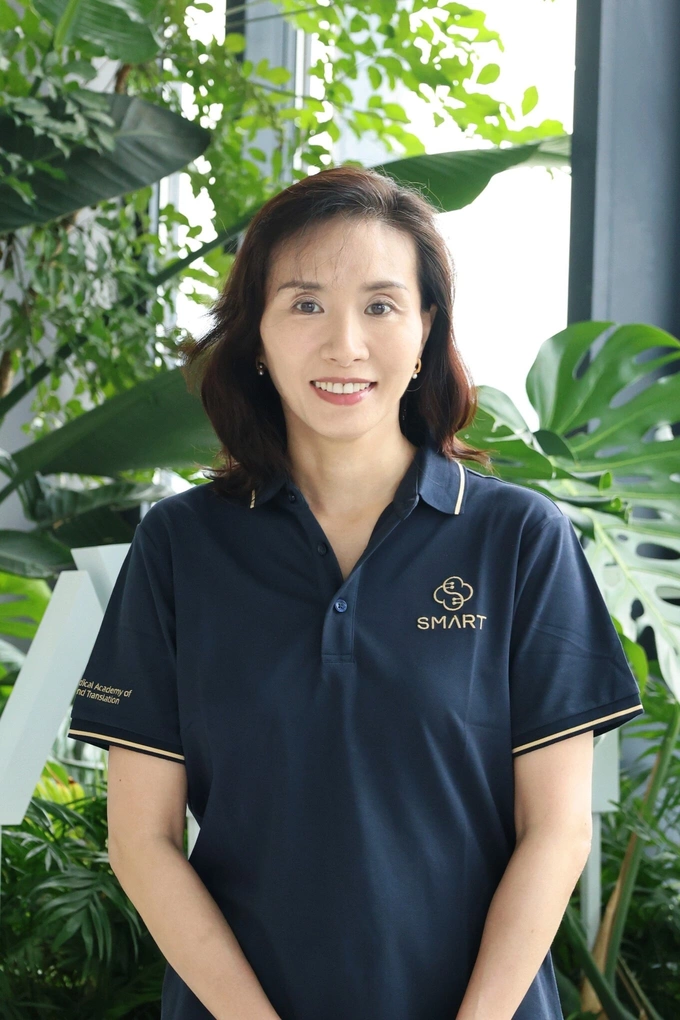
Taiwan-born neurobiologist Chih-Ying Su. Photo courtesy of SMART |
Taiwan-born neurobiologist Su left the University of California San Diego to join the Shenzhen Medical Academy of Research and Translation as a senior investigator after nearly 30 years in the U.S.
The academy, known as SMART, announced her appointment on July 2.
"I decided to join SMART at the end of last year, deeply impressed by the advanced hardware conditions and the strong academic atmosphere of the research institute," Su said in an email interview with SCMP. "The outstanding leadership and academic vision of [SMART] president Yan Ning deeply attracted me."
Born and raised in Taiwan, Su received her bachelor’s and master’s degrees from National Taiwan University, where she captained its taekwondo team.
She moved to the U.S. in 2000 and earned a doctorate in neuroscience from Johns Hopkins University in 2006 before beginning her career in olfactory neuroscience, the study of how nervous systems process smell.
Su joined UC San Diego’s Department of Biological Sciences in 2013. She became an assistant professor of neurobiology in 2020 and was promoted to full professor and department vice chair in 2024.
Her research examines how smell influences animal behavior. Using fruit flies, she studies how relatively simple brains identify food, mates and danger through odors, offering broader insights into how brains process information.
Her work also covers mosquitoes. In 2025, her team published a study in PNAS explaining how Aedes aegypti mosquitoes detect carbon dioxide exhaled by humans to locate hosts. Her research has appeared in journals including Nature, Neuron and Nature Communications.
6. Chipmaking engineer Xu Zhenpeng
Advanced manufacturing researcher Xu left the U.S. and joined Shanghai Jiao Tong University as a tenure-track assistant professor in January, he said in an social media post in January.
Before returning to China, he led a team at California startup Atomic Semi, developing 3D printing methods designed to make chip production faster and cheaper than conventional systems that use large, multimillion-dollar machines.
Xu said Shanghai Jiao Tong University’s manufacturing research and industry ties would support his work.
"In my previous role in the semiconductor sector in the U.S., increasingly strict policies and corporate compliance requirements limited my international mobility, which became a constraint on sustained research development," Xu told SCMP. "Meanwhile, China’s advanced manufacturing research ecosystem is evolving rapidly."
Xu earned his doctorate from the University of California, Los Angeles, in 2023 and specializes in large-area, micron-precision 3D printing for electronics manufacturing.
During his doctoral and postdoctoral research at UCLA and the University of California, Berkeley, he contributed to U.S.-funded projects and developed high-speed techniques for printing tiny components capable of glowing, bending or responding to touch.
7. Biomedical scientist Chen Weiqiang
 |
|
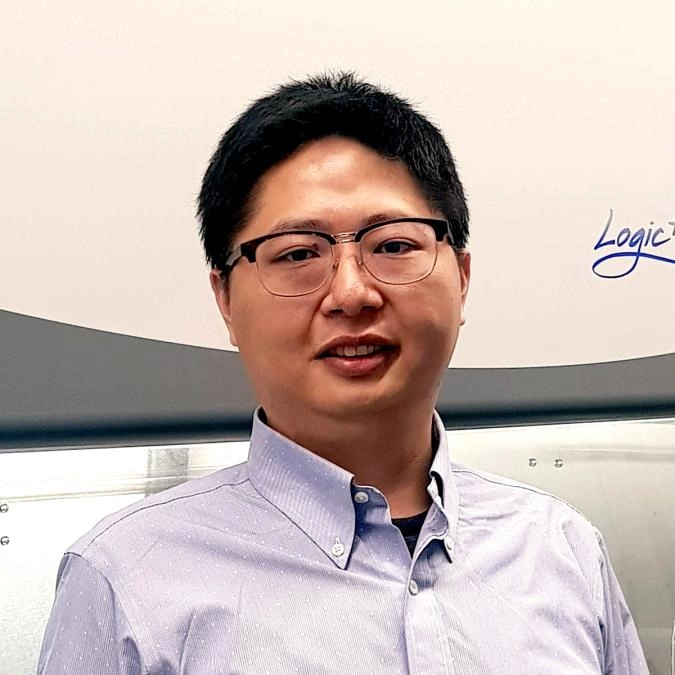
Chinese biomedical scientist Chen Weiqiang. Photo courtesy of New York University's Tandon School of Engineering |
Chen, formerly a professor and director of graduate education at New York University’s Tandon School of Engineering, joined Nanjing University’s School of Biomedical Engineering on June 1.
At Chen’s welcome ceremony, Nanjing University assistant president Jiang Tian praised his research in cellular biomechanics and organ-on-a-chip technology, which uses small devices containing living cells to simulate how human organs function.
"He chose to join Nanjing University during his peak academic years and this heartfelt dedication and high level of trust are truly moving."
Chen said his return was primarily motivated by career development and family considerations. He plans to continue advanced research while training talent and strengthening collaboration among universities, research institutions and companies.
He graduated from Nanjing University’s School of Physics in 2005 and earned a master’s degree in electrical engineering from Shanghai Jiao Tong University in 2008. He later moved to the U.S., receiving a master’s degree from Purdue University in 2009 and a doctorate in mechanical engineering from the University of Michigan in 2014.
He became an associate professor of mechanical and biomedical engineering in 2020 and was elected a fellow of the American Heart Association three years later for his contributions to biomedical science. He became a tenured full professor in March 2024.
According to Nanjing University, Chen has published nearly 70 peer-reviewed papers and led more than 20 major international research projects with combined funding exceeding 63 million yuan (US$13.2 million). He also helped establish the world’s first data research center dedicated to alternatives to animal testing at NYU.