
The most read Vietnamese newspaper
Edition: International | Vietnamese
© Copyright 1997 VnExpress.net. All rights reserved.
 Get VnExpress first in Google Search
 See more of the news you trust. Make VnExpress a preferred source to prioritise our updates in your Google search results
Dr. Nguyen Huy Hoang of the Vietnam Society of Diving and Hyperbaric Medicine says many everyday habits that appear harmless can act as "levers" that raise stroke risks.
He advises high-risk individuals, including those over 65, and people with hypertension, diabetes, cardiovascular disease, obesity, or a history of stroke, to have regular health check-ups, adhere strictly to prescribed medications, stay hydrated, and avoid going out during peak heat hours.
Warning signs such as severe headache, dizziness, slurred speech, facial drooping, weakness or paralysis on one side of the body, or confusion should raise suspicion of stroke or heatstroke.
In such cases, call emergency services or take the person to the nearest capable hospital immediately.
It is recommended to limit high-risk people outdoor activities between 10 a.m. and 4 p.m.
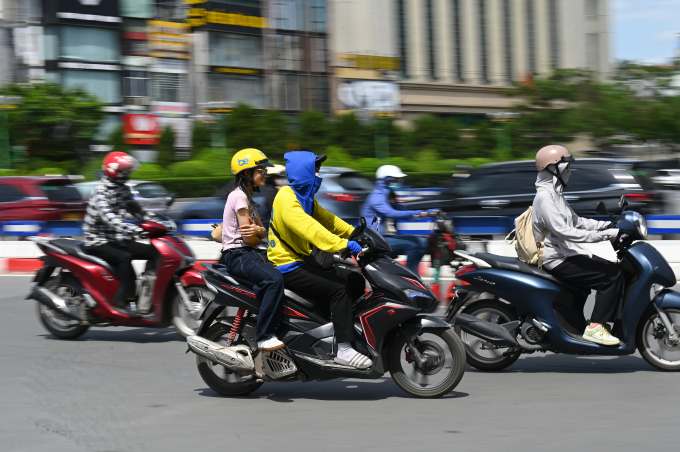
Those who must work outside, including taxi and ride-hailing drivers, delivery workers, and construction laborers, should divide work into shorter shifts, rest in shaded and ventilated areas and drink water regularly.
They should wear wide-brimmed hats, sunglasses and light-colored, breathable, sweat-absorbing clothing and cover the neck.
 |
|
People ride motorbikes in the heat. Photo by VnExpress/ Giang Huy |
One major risk factor is sudden temperature changes.
Many people sit for long periods in air-conditioned rooms at 24-25°C (75–77°F) and then immediately step into outdoor temperatures of 36-37°C (97–99°F) and vice versa.
This sharp temperature difference can cause blood vessels to constrict or dilate abruptly.
Similarly, taking a cold shower immediately after returning from the heat does not give the body time to adapt.
Sudden temperature shifts prevent the body from adapting in time, leading to abrupt vasoconstriction and dizziness.
Heat shock and even strokes can occur, especially among high-risk groups, and the body needs a gradual transition period rather than an abrupt switch between hot and cold.
Taking very hot showers in enclosed spaces also poses risks.
Hot water rapidly dilates blood vessels, potentially causing a sudden drop in blood pressure. Combined with poor ventilation, this can lead to dizziness or fainting in the bathroom.
Another mistake is exercising at the wrong time or pushing too hard.
On extremely hot days, roads and pavements retain heat even in the early morning. Cycling or running at high intensity in such conditions causes the body to absorb heat from the surroundings in addition to generating its own, overloading the cardiovascular and respiratory systems.
Exercising under the harsh midday or early afternoon sun significantly increases the risk of heatstroke, exhaustion, arrhythmia, and stroke.
Drinking beer or carbonated soft drinks to "cool down" is another common misconception.
Alcohol dilates blood vessels, increases fluid loss through urination and reduces awareness of symptoms such as fatigue and dizziness.
Beverages high in caffeine and sugar also have diuretic effects, leading to dehydration.
A diet high in salt and fat during hot weather can also be harmful. Excess salt from sauces and processed foods increases fluid retention and blood pressure, putting additional strain on the heart and brain’s blood vessels.
Over the longer term, consuming large amounts of red meat, fried food, fatty dishes, sweets, and fast food accelerates atherosclerosis, narrows blood vessels and raises the risk of stroke and heart attack.
People should not attempt folk remedies such as coin rubbing (gua sha), pricking fingers for bloodletting or drinking lemon salt water or self-administer fever reducers since they do not address the root cause and could waste the "golden" time needed for emergency treatment.