Get VnExpress first in Google Search
 See more of the news you trust. Make VnExpress a preferred source to prioritise our updates in your Google search results
During a working trip to a province, Dr. Vo Xuan Hoai, deputy director of the National Innovation Center (NIC), recalls a local leader telling him: "We need top‑tier experts who can set direction and chart a development path that fits our local realities."
Similar requests, he says, have come from leaders in Hanoi, Ho Chi Minh City, Da Nang, and Bac Ninh. They want introductions to true sector leaders: chief architects capable of advising, setting strategy, and guiding their provinces onto the right track.
Dr. Dang Minh Tuan, director of the CMC Institute of Research and Application of Technology, adds that localities and businesses often reach out looking for a chief architect to advise, design, and build roadmaps for digital transformation programs.
To break through, places need more than capital and infrastructure; they need talent with vision, able to run projects and build connections. At the national level, that need is even sharper: Vietnam is targeting 11 strategic technology sectors, yet the bench of chief architects for large‑scale technology projects is thin—and hard to find.

In a list signed by the prime minister in June, Vietnam set 11 strategic technology sectors, including semiconductors, AI, cybersecurity, biotechnology, aerospace, and robotics/automation, as priorities for development.
According to Dr. Hoai, each sector needs at least one chief architect: someone with long‑term vision who understands both technology and economics, and who can organize, lead, and turn ideas into concrete projects. In other words, not only a technical expert, but a person who can see the whole system and sketch the blueprint for an entire industry.
"Without that, and with only individual experts, we are like blind men feeling an elephant," he says.
Taiwan offers a classic example: Morris Chang, founder of TSMC. After years in the U.S., he understood the global semiconductor value chain and chose the foundry path, helping deliver Taiwan’s miracle. Vietnam, says Hoai, has no such figures yet. "Each person looks from one angle; each place does one part. We lack someone to shape the whole of a sector," he stresses.
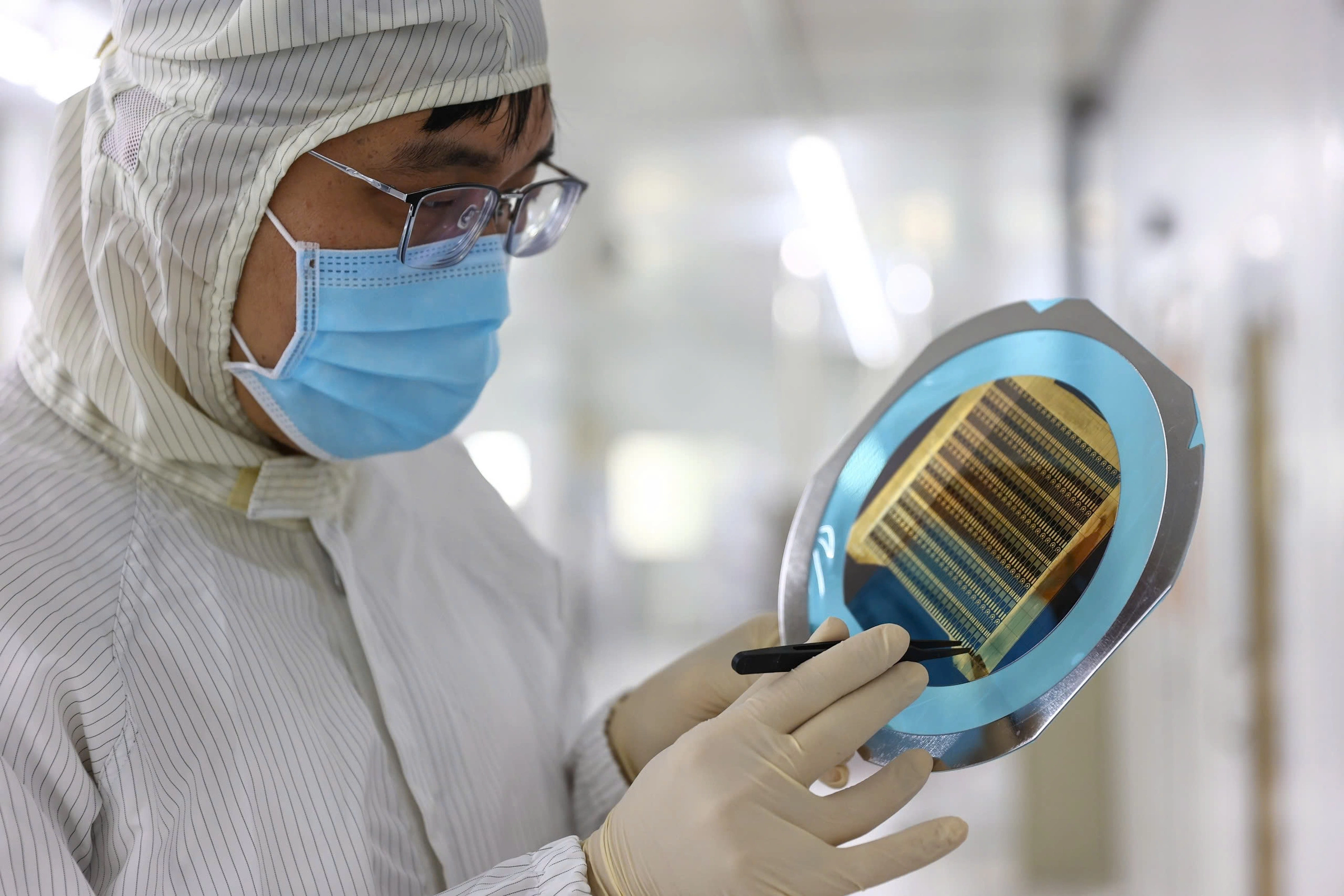
Vietnam does not lack experts of international caliber. Dr. Hoai cites Loi Nguyen, former vice‑president at Marvell, who founded Inphi Corporation and sold it for more than $10 billion; and Nguyen Bich Yen, vice‑president at Soitec (U.S.), a major figure in the global semiconductor industry. To look for chief architects, the NIC has connected more than 2,000 experts inside and outside Vietnam, and set up 10 country networks and 5 industry networks in strategic areas.
Still, says Hoai, to truly play the chief‑architect role, people need a "problem statement"—real, large‑scale projects and the trust to pursue them. "Without a concrete problem, it is hard to show what you can do. Many do not need the money; they need trust and respect," he says.
Dr. Dang Minh Tuan agrees: any plan needs goals and a roadmap, whether drafted by an individual, a team, or an agency; the same applies to developing the 11 strategic tech sectors.
There is no official tally of how many chief architects are missing. But, he notes, Vietnam does have people already doing similar work, as seen in large‑scale systems with massive user bases deployed in recent years.
From a business lens, Vuong Quang Khai, founder of Zalo, says the technical ability of Vietnamese engineers has been proven at home and at top Silicon Valley companies. But to build world‑class tech products, Vietnam must cultivate another capability: product design. The difference is like an architect vs. a construction engineer. The architect decides what to build for function and aesthetics; the engineer decides how to build it safely and efficiently. "We have many computer engineers, but very few technology architects," Khai says.
A resolution of the National Assembly’s Standing Committee on developing and using high‑quality human resources warns that Vietnam risks a shortage of top experts and chief architects in emerging fields like semiconductors, AI, and biotechnology.
Data from the Ministry of Science and Technology show Vietnam has more than 167,000 people working in R&D, but 84% are in the state sector.
Vietnam’s full‑time equivalent (FTE) researchers number 72,991, that is 7.6 FTE researchers per 10,000 people, ranking fourth in the region after Singapore (69.2), Malaysia (23.6), and Thailand (12.1). There are 14,376 PhDs, but only 30% are proficient in a foreign language for international work. In science and technology, Vietnam has a large number of PhDs by headcount, but overall standards do not yet meet international norms.
In R&D and technology innovation, scientists have pursued applied research, creating many new technologies and products, but the work is still seen as fragmented and small‑scale. The R&D workforce is thin, especially in frontier, decisive fields such as biotechnology and new materials; technology transfer after research remains weak.
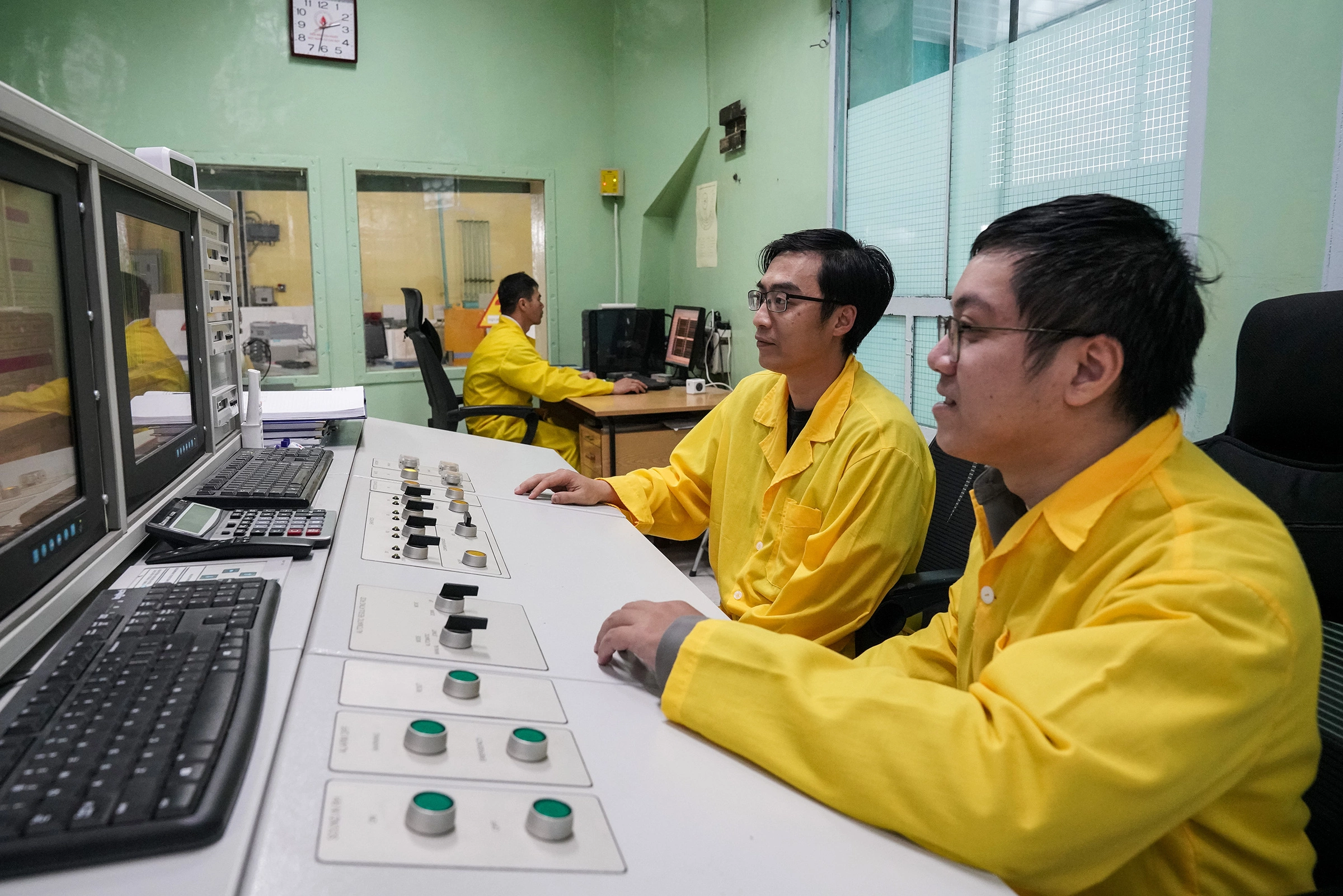
According to the NIC’s deputy director, Vietnam has many professors and PhDs, but, relative to the total population, the ratio is still low by global standards. At many universities, the share of faculty who are professors or PhDs does not reach 20–30%.
Hoai adds that Vietnam’s absolute number of professors and PhDs looks large partly because the country has more than 100 million people, which makes the total seem bigger than in countries with only a few million. "We are only talking ratios here, not even quality yet," he says.
Vietnam may have tens of thousands of researchers with PhDs or higher, but most are academically oriented. A chief architect must pair deep technical knowledge with an understanding of what to build for economic impact. Dr. Hoai points again to Morris Chang, who led Taiwan into chip foundry because the U.S., strong in research and design, did not want to manufacture, given the capital intensity and risk. A chief architect must "see the future," understand value chains and market opportunities, not just the technical side.
Since Resolution 57 on breakthroughs in the development of science, technology, innovation, and national digital transformation was issued late last year, Vietnam has pushed "lab to market," moving research results into the marketplace, a first step toward forming a new generation of chief architects.

According to the Department of Personnel Organization under the Ministry of Science and Technology, Vietnam’s talent policy focuses on three tracks: specific missions, fit‑for‑purpose work environments, and commensurate incentives.
The state now directly assigns high‑tech and strategic‑tech tasks to organizations and enterprises that can attract talent to execute them. On work conditions, key national laboratories are being invested in; public S&T organizations get greater autonomy to top up income and craft flexible policies to attract and retain talent.
Notably, the Law on Science, Technology, and Innovation (passed in June) creates legal room to accept risk in research and testing. If procedures are followed properly, scientists are exempt from administrative, civil, and criminal liability in case of damage. "This encourages talent to venture into new, breakthrough fields without fearing failure," the department representative says.
Incentives are financial and non‑financial. Talent can receive negotiated salaries, funding for international publications, intellectual‑property protection, and at least 30% of profits when research results are commercialized. They are exempt from personal income tax on science‑and‑technology activities, offered housing, and honored for standout contributions. For foreign experts, Vietnam waives visas and work permits to encourage collaboration and service.
These new policies show Vietnam is gradually removing barriers to attract and nurture talent, especially the chief architects of technology. Experts say the path will be long and challenging, but it is a necessary step if Vietnam is to master strategic technologies and power the country forward.
Trong Dat