
Over the past three decades, Samsung has been the largest foreign investor in Vietnam, with investments exceeding $23.2 billion. The technology giant views the country as a new center for innovation and talent development. During this transformation, Samsung aims to support Vietnam's growth in AI leadership through research, collaboration, and the development of smart ecosystems.
CU Kim - President and CEO of Samsung Southeast Asia and Oceania, shared with VnExpress Vietnam's pivotal role in Samsung's global strategy and the company's commitments to realizing its AI ambitions.

- How do you assess Vietnam's role in Samsung's growth in Southeast Asia?
Vietnam has always been an important part of Samsung's journey. Over the years, we have built a strong foundation with six manufacturing factories and large-scale sales and marketing offices. In 2022, we launched our largest research and development center in Southeast Asia, located in Vietnam.
In short, Vietnam is a strategic base for innovation and production in the region.
This move wasn't driven by a single factor but a combination of Vietnam's expanding technological capabilities, vibrant talent pool, and the country's clear ambition to lead in digital transformation. We saw opportunities to deepen our commitment by investing in production, innovation, and local expertise.
Today, Vietnam is one of Samsung's most important strategic bases in the region and globally. We collaborate closely with local partners to foster talent and co-create solutions relevant to emerging markets. Our goal is to support Vietnam in taking a leading role in the AI era, not just as a manufacturer, but as a rising hub for innovation and talent.

- What are Vietnam's advantages in technology development and innovation?
Vietnam and Southeast Asia stand out for their distinct dynamism and optimism. There's a remarkable passion for technology among the younger generation here. They're not just adopting AI but actively integrate it into daily lives for learning, future work, and driving community change.
Young consumers here are practical and creative. They quickly discern and embrace innovations that offer genuine value. This mindset is reflected in how students across the country are engaging with technology, not just as users, but as problem-solver. Through our "Solve for Tomorrow", we have seen students apply STEM knowledge to address real-world challenges.
Since its launch in Vietnam in 2019, participation has grown from 500 to over 560,000 students, making it one of Samsung's most impactful initiatives. In 2024, winner Nguyen Hoang Dung was even named a global ambassador for the Digital Olympic Community, inspiring young Vietnamese to engage on the global stage.
Vietnam's pace of tech adoption is fast-moving and I see that the energy here is driven by a generation of digital natives who are eager to learn, create and lead. Across the region, we see innovation taking shape in many forms and in Vietnam, it's also purposeful and rooted in an ambition to grow. That's what makes it so exciting for the future of technology in Southeast Asia.

- Regarding human resources, how do Vietnamese engineers and technology students meet global corporate demands, and what can improve?
Vietnam's young engineers and techology students show great potential with strong STEM foundations and agile, dedicated mindsets. At Samsung, we have seen this through our recruitment exercises and internship programs, where many candidates grow into full-time roles and contribute to advanced projects across R&D and manufacturing.
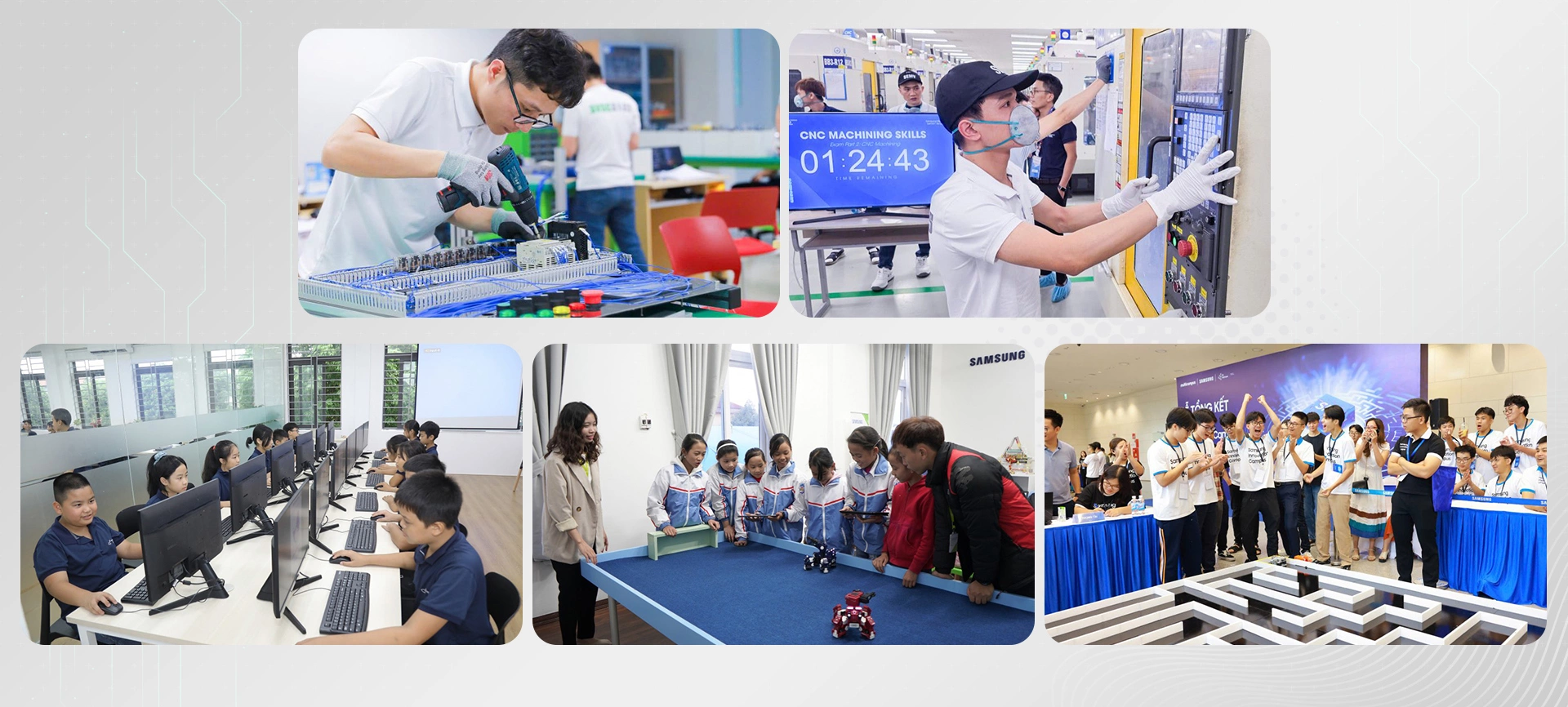
To succeed, they should continue to deepen expertise in emerging technologies like AI and cybersecurity, while also strengthening soft skills in communication, collaboration, and critical thinking. Samsung supports this through initiatives like the "Samsung Innovation Campus" (SIC), which provides AI, big data, and programming skills, along with career guidance and soft skills training.
To date, SIC has trained over 19,000 students nationwide. And through the "Samsung Hope School" project, we are expanding educational access to thousands of children across the country.

- What is Samsung's direction in integrating AI into products in Vietnam, particularly in the mobile and home appliance segments?
All our work in AI has been in the direction of a core strategy, to use smarter technologies to make life better for all, for every unique user, in the way that works for them.
For years, Samsung has prioritized personalization because we know everyone uses technology differently and has different expectations of where it fits into their lives. This remains the same in Vietnam, where we see AI as an essential driver of meaningful innovation that enriches people's lives and supports the country's growing digital economy.
- How have Samsung's AI-integrated products supported users' daily lives?
It has been more than a decade since Samsung began developing AI, yet we continue to push the boundaries of innovation to deliver the best integrated experience for our users. From Galaxy AI and Bespoke AI to Vision AI, we are delivering smarter, more personalized and more intuitive experiences to Vietnamese consumers, in order to enhance communication, productivity, creativity, health monitoring, and connected living. The Galaxy Z Series exemplifies the integration of AI, hardware, and design to bring meaningful benefits to our users.
The trust our users place in us is important. That's why security and privacy are foundational to everything we do. Samsung Knox ensures that personal data remains protected at every level. We believe innovation should be both smart and responsible, balancing cutting-edge technology with ethical AI use, robust privacy protections, and a deep understanding of local market needs.

- How do Southeast Asian consumers adapt to AI in home devices?
Consumers in Vietnam embrace smart technologies that simplify daily life and adapt to personal habits. Samsung's Bespoke AI makes the Smart Home experience even more intuitive and personalized, as devices can learn about user preferences or the usage environment and automatically make recommendations for recipes, set the air conditioner temperature, or reduce energy consumption.
When combined with screens, the connectivity of appliances becomes more seamless and intuitive, whether it's managing chores the smarter way or better caring for your family through meal planning or pet monitoring. We're not just connecting devices but strengthening user's experience at every touchpoint.
- How does Samsung make AI integration affordable?
Samsung designs AI features like AI Energy Mode in SmartThings Energy to optimize appliance performance, save energy, and reduce bills. Refrigerators and washing machines equipped with AI Energy Mode can save up to 10-70% energy.
For example, this mode can adjust the compressor speed and defrost cycle based on usage patterns to save up to 10% of energy usage in refrigerators. For drum-type washers, using a cycle that operates in AI Energy Mode can intelligently reduce the washer's energy usage by up to 70%, thanks to AI Ecobubble, which washes using cool water. And even for our new washing machines that do not feature AI Energy Mode, we have improved the technology to achieve better energy grades for these models.
Our vision of "AI for All" aims to ensure that our innovations benefit as many people as possible. AI capabilities are built into a broad range of products, not just premium ones, so more people can enjoy smart, energy-saving technology. Recently, we have launched an affordable new washer in Vietnam, the Bespoke AI Top Load Washer, which features three AI functions - AI Wash, AI Energy Mode, and AI Vibration Reduction Technology Plus (VRT+). By strengthening local manufacturing and R&D capabilities and aligning product planning with market needs while reinforcing distribution channels and deepening local partnerships, we hope to be able to offer meaningful innovation at competitive prices.

- How does Samsung incorporate Vietnamese consumer habits into AI?
Localization ensures AI meets the needs of Vietnamese consumers. Engineers at Samsung Research and Development Institute Vietnam (SRV), developed Vietnamese support for Galaxy AI, completing the model in four months and addressing dialects, slang, and real-world testing. These engineers aren't just contributors but co-creators. They work closely with our global R&D hubs in South Korea and India on AI architecture, training methods, and testing tools. Their work ensures that our AI features are built with Vietnamese users in mind.
As AI becomes more central to the user experience, we'll continue investing in local talent and infrastructure to ensure our technology reflects the language, culture and expectations of the people who use it.


- How is Vietnam a gateway for Samsung to expand AI products in Southeast Asia and Oceania?
Vietnam is a strategic foundation for manufacturing and R&D, including the contributions to Galaxy AI. This local expertise and these insights allow us to develop and refine AI-integrated features that are relevant to emerging markets.
Vietnam's manufacturing capacity has produced over 2 billion Galaxy ecosystem products, including smartphones, tablets, and wearables, to date. This scale and depth give us a unique advantage in bringing AI-powered innovations to market quickly and efficiently.

- Which areas should Vietnam focus on to become a regional technology hub?
Continued investment in human resources, digital infrastructure, and innovation is critical to maintaining Vietnam's strong progress in digital transformation. Government initiatives promoting technology and education are providing a solid foundation for long-term growth. Samsung will support Vietnam on this journey through partnerships, training programs, and youth initiatives.
- What is the outlook for Vietnam's innovation ecosystem?
Vietnam's innovation ecosystem is gaining real momentum, supported by government initiatives, a growing startup scene, and global technology partnerships. Programs like Techfest, AI startup support, and workforce upskilling help Vietnam climb global innovation rankings and attract investors.

- How will Samsung's relationship with Vietnam evolve in the next five years?
Samsung and Vietnam share a partnership spanning over three decades, with Samsung as the largest foreign investor (US$23.2 billion). The SRV now handles mobile phones, laptops, and network equipment, leading projects in hardware, software, and mechanical design, including testing network quality for 35 global carriers.
We are also investing in green transformation with rooftop solar projects at Bac Ninh and Ho Chi Minh factories, reducing our carbon footprint. Initiatives like smart factory cooperation improve domestic suppliers' competitiveness and integrate them into the global value chain.
Samsung remains committed to working closely with the Vietnamese government and local partners to address challenges and contribute towards the country's long-term sustainable tech innovation journey.

Content by Hoai Phuong - Thy An
Designed by Hang Trinh
Photos courtesy of Samsung


