


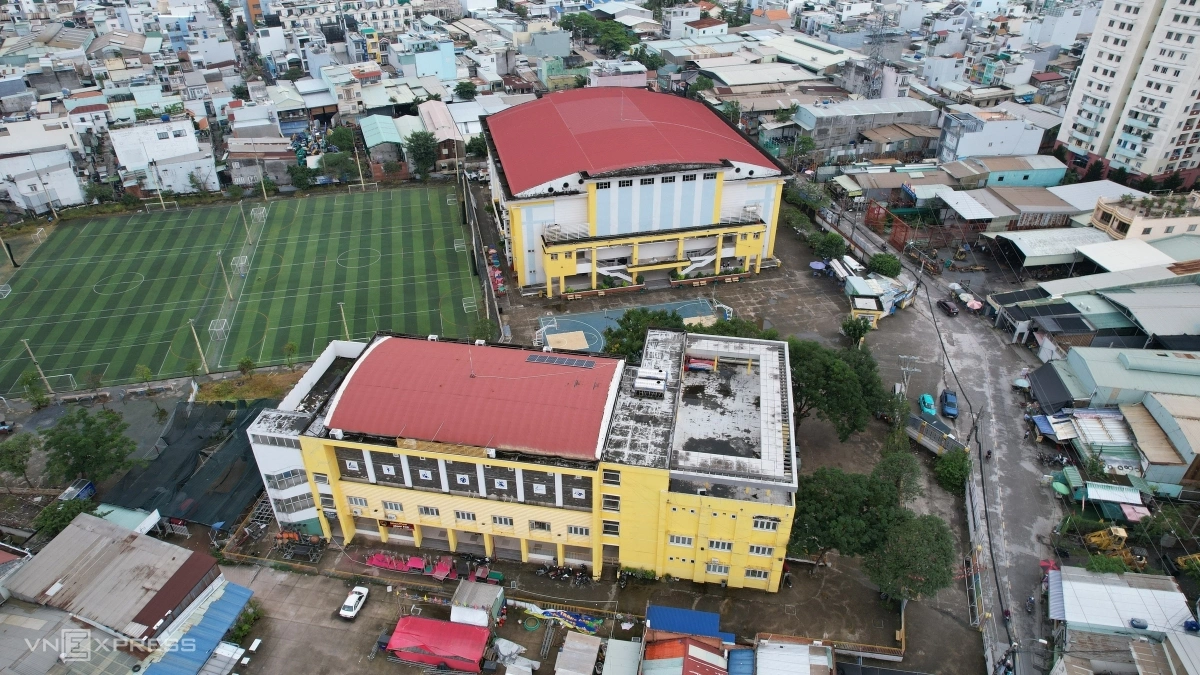
The An Lac Ward Cultural and Sports Center, consisting of two buildings, is the most severely affected by the subsidence.
According to data from the Southern Water Resources Planning and Investigation Federation, An Lac is the most rapidly subsiding area in HCMC, sinking by 81 cm since 2005 or more than three times the city average of around 23 cm.
The causes include weak soil, low-lying terrain, excessive groundwater extraction causing soil voids, and rapid urbanization.

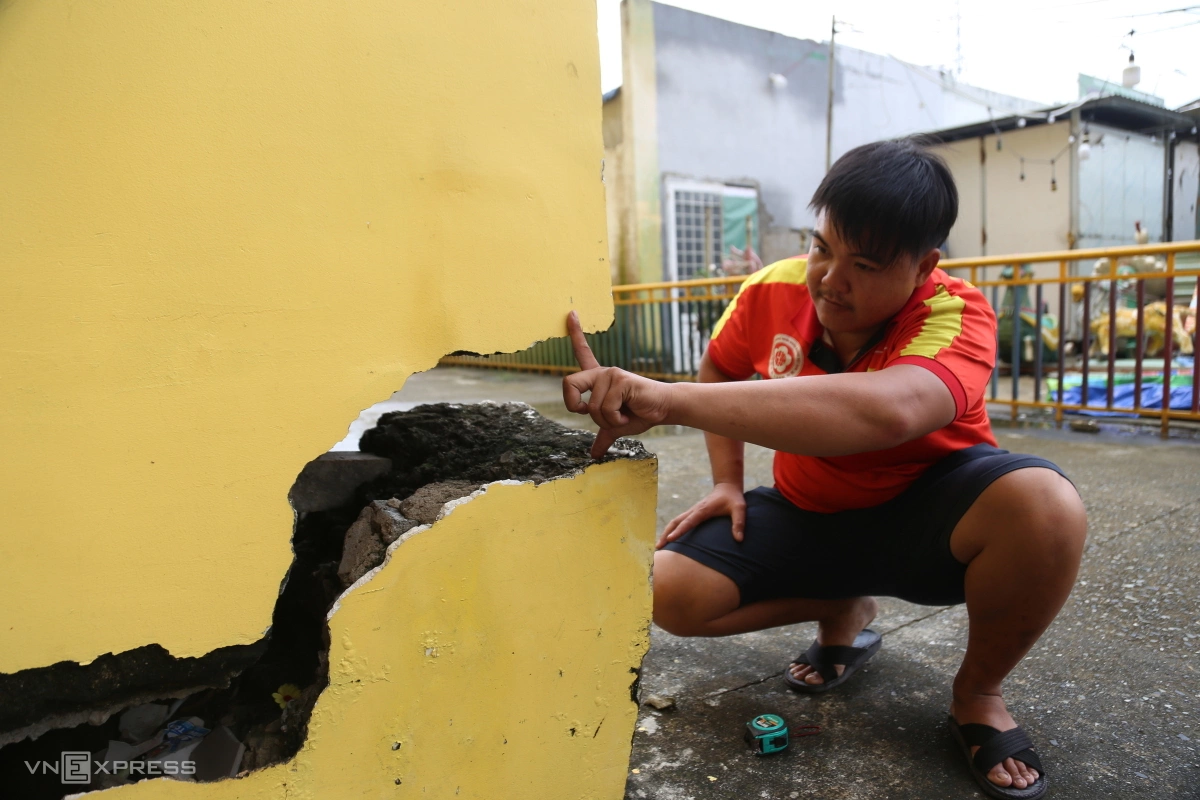
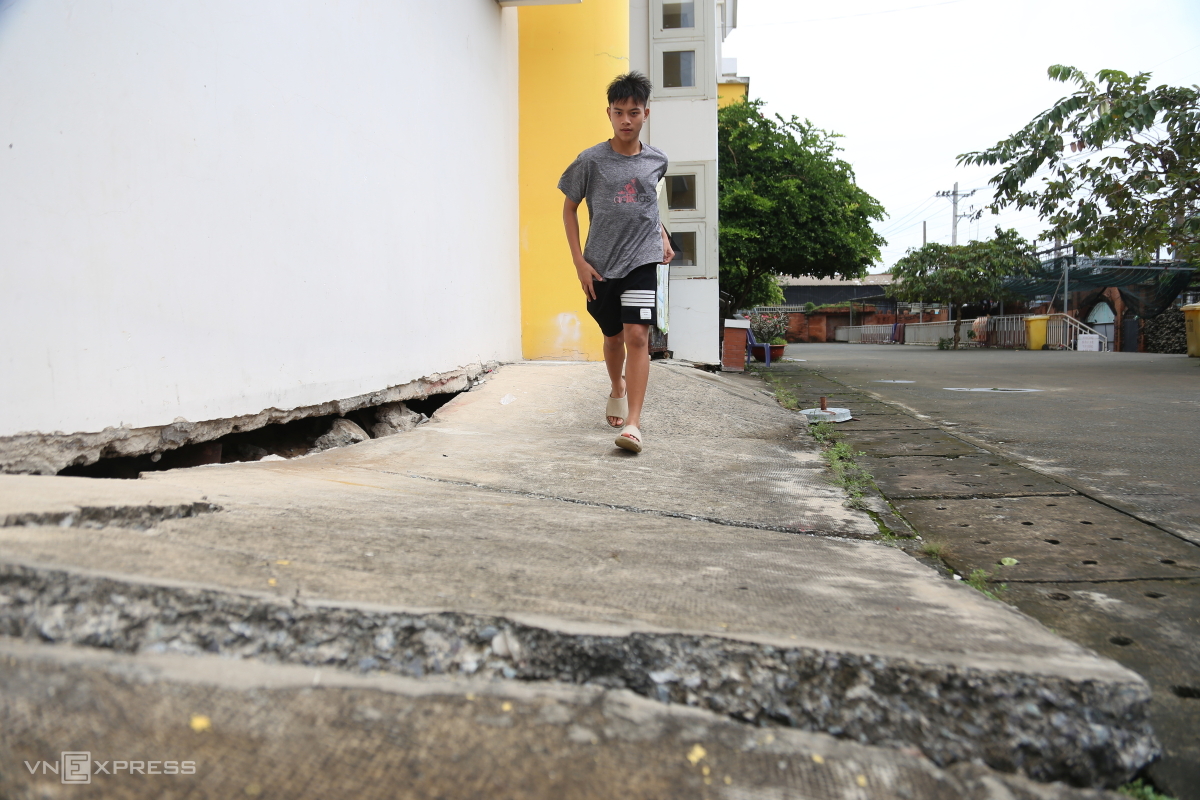
The building at the back serves as living and training quarters for more than 30 fencing athletes. Here, walls and columns are damaged, the surrounding cement floor is cracked and uneven with raised and sunken areas.
Nguyen Quoc Khanh, chairman of An Lac Ward, blamed the area's weak soil for the severe impact. Authorities have found damages to many houses, public buildings and government offices, including courts and the prosecutor's office.
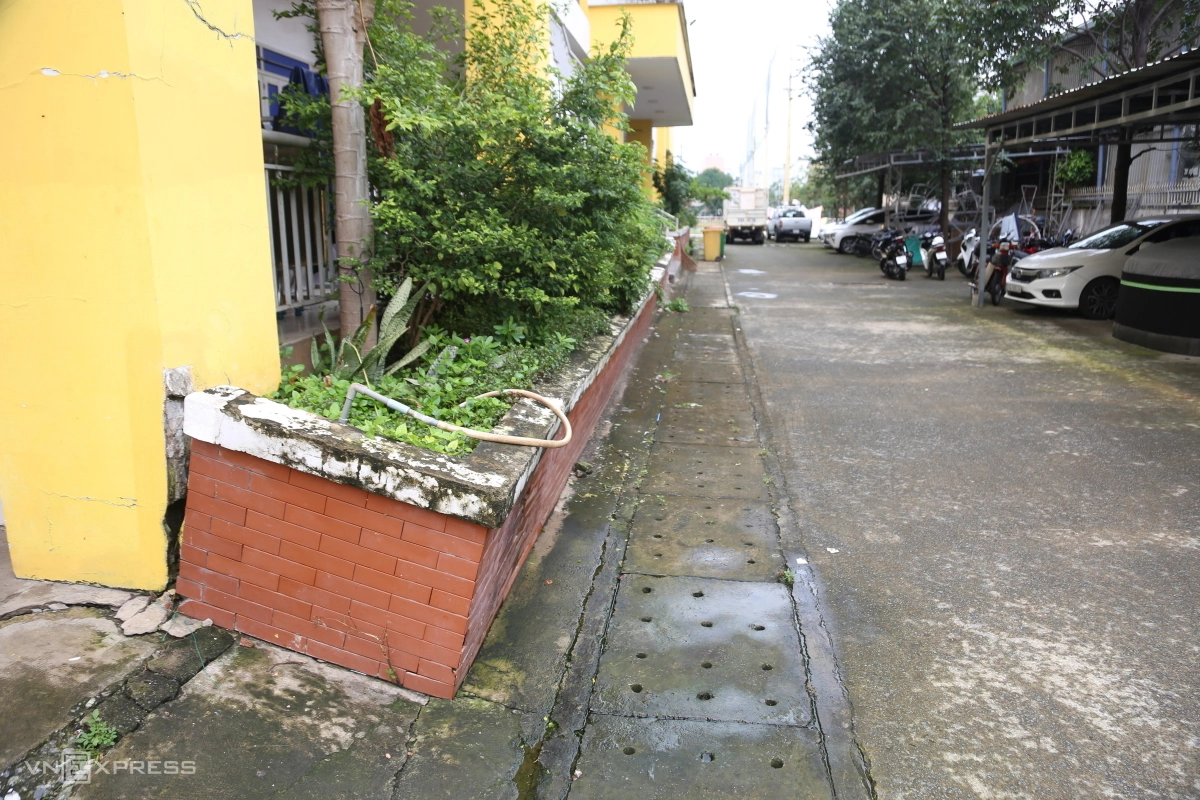
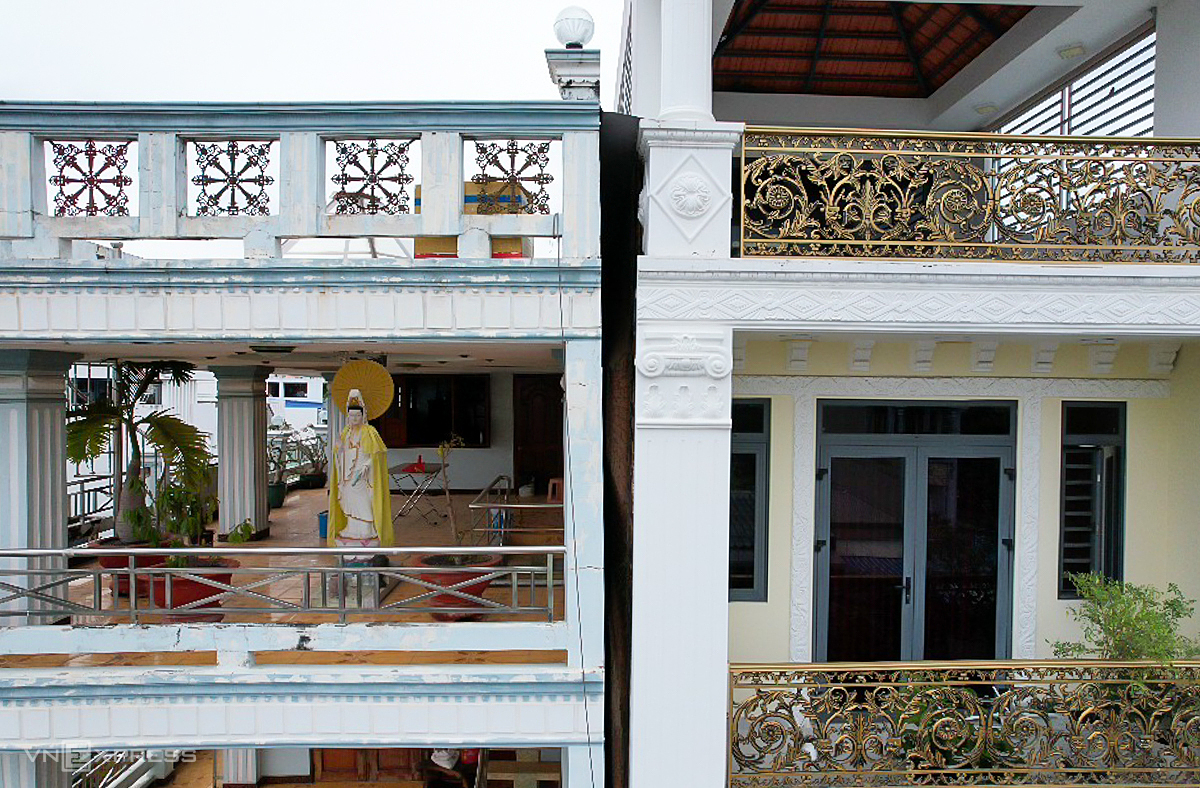
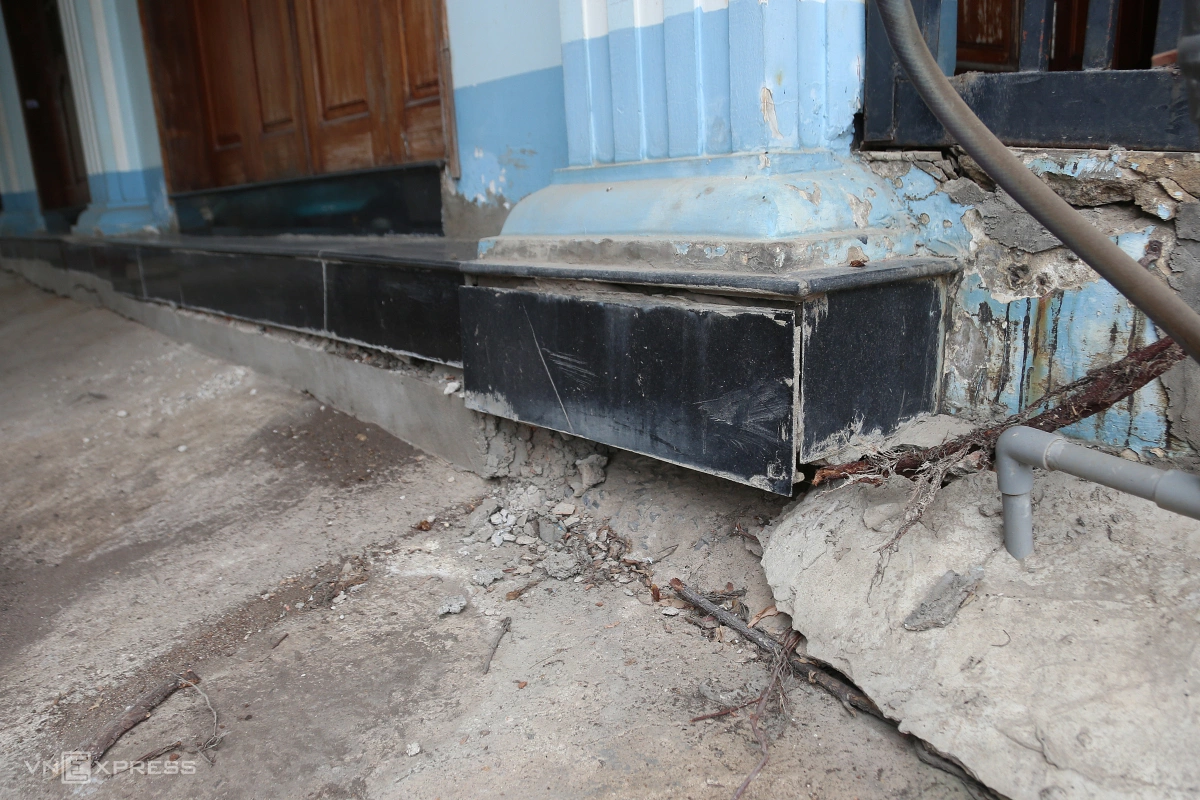
At the base of Dao's house, a 20-meter-long crack runs along the wall, and surrounding cement floors have multiple fractures.
Dao said the house was built in 2003 and began to gradually subside soon afterward.
In 2008 she hired workers to cut piles and raise the house by 30 cm, but the situation did not improve. Concerned about safety, she commissioned a professional survey and plans to repair it next year.
"I estimate it will cost around VND2 billion (US$76,000) to fix," she said.
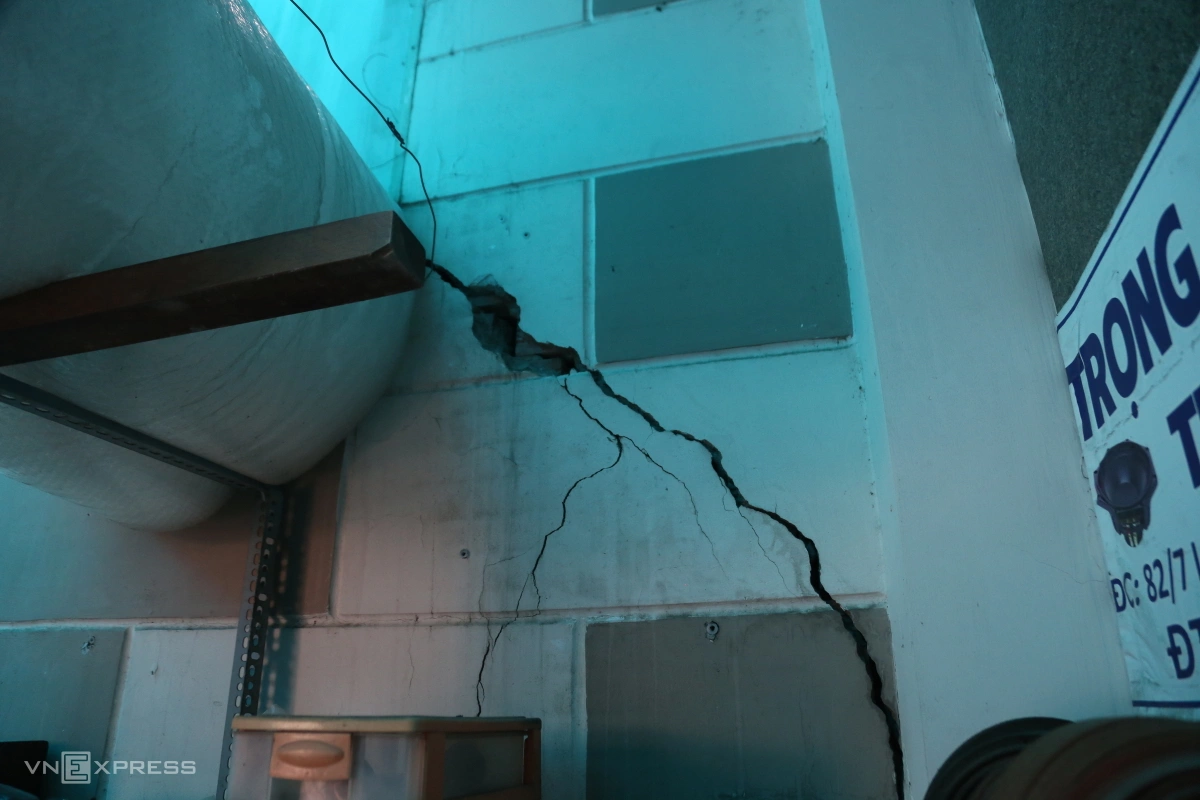
Many houses on alleys off Le Co Street are also cracking and subsiding.
In the house of 44-year-old Xuan Trong, cracks in the living room have lengthened and continued to spread. He said for nearly 10 years now the house floor has been sagging, causing tiles to break and misaligning door frames.
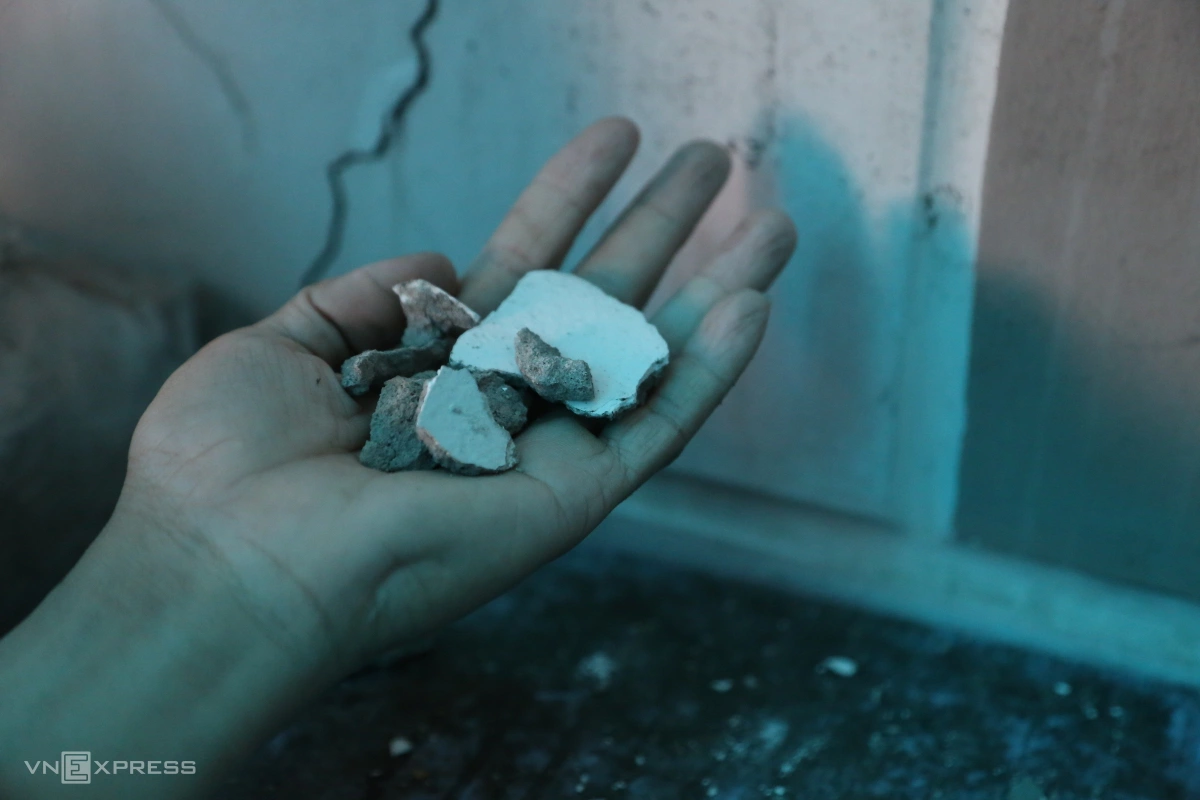
Cement and dust fall regularly from the cracks, causing inconvenience for the occupants. "I've repaired the house several times but the condition has not improved; now the only solution seems to be rebuilding the house with a stronger foundation," Trong said.
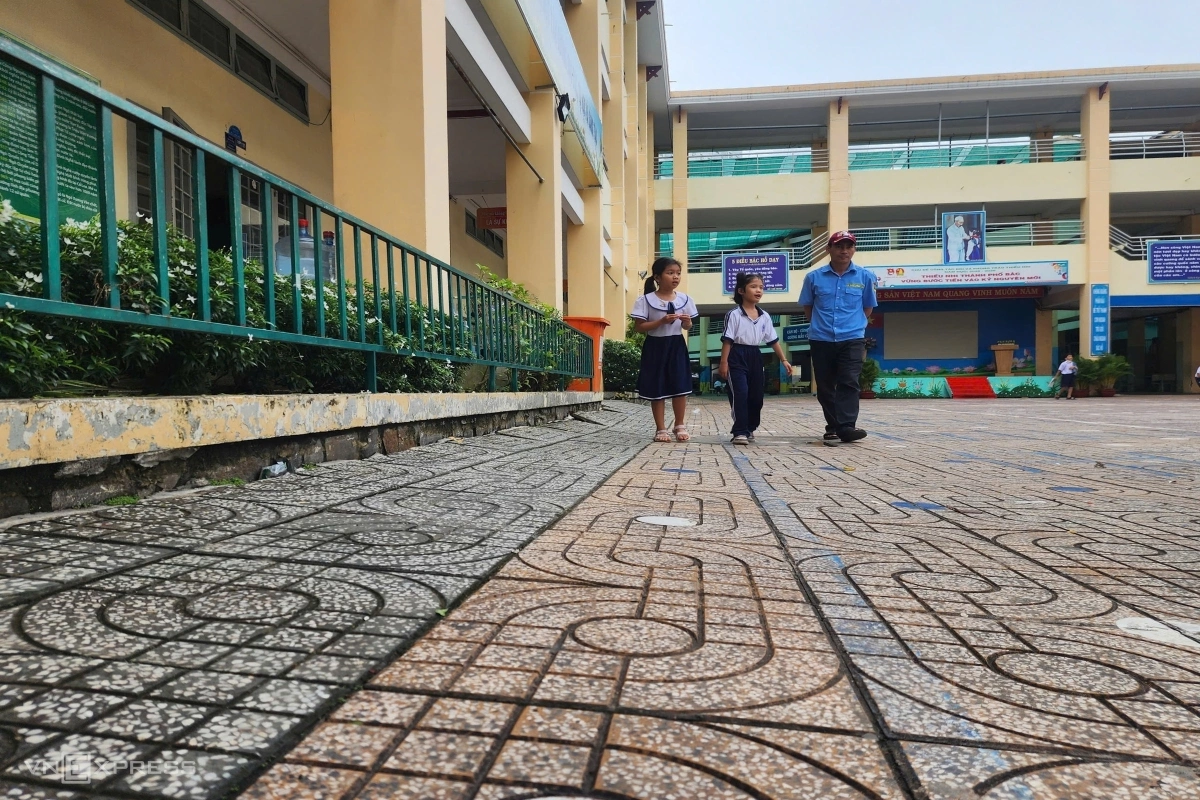
The grounds of An Lac 1 Primary School and the Ho Ngoc Lam apartment complex have also been affected by the subsidence, developing uneven surfaces and sunken areas.
Pham Kiem Phuoc, a representative of the Ho Ngoc Lam apartment management, said walkways around the building subsided soon after the complex opened in 2019. The complex has been repaired three times since, but the damage restarted soon afterward each time.

